A loan default can reduce your CIBIL Score and make future loans or credit cards harder to obtain. However, a default does not mean your credit profile can never recover. Once overdue debt is dealt with and you start maintaining consistent repayment behaviour, your credit profile can gradually improve.
The important part is to first understand exactly what your CIBIL Report shows and then fix the problem in the correct order.
First Understand What “Loan Defaulter Status” Means
CIBIL does not maintain a general “defaulters list.” It maintains credit information supplied by banks and other lending institutions. Your CIBIL Report can instead show late payments, overdue amounts and account statuses such as settled, written-off or suit-filed, depending on what the lender has reported.
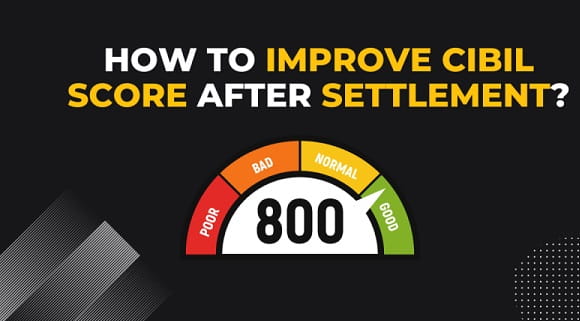
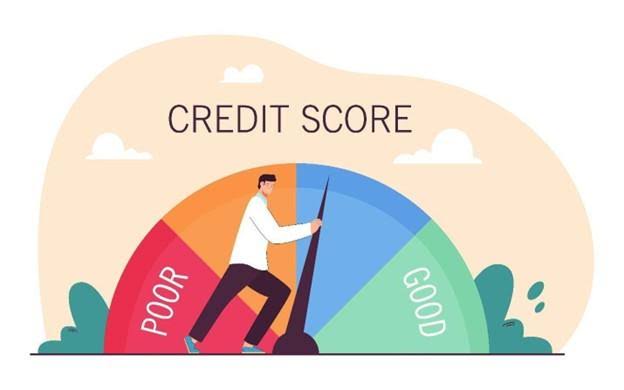
Your CIBIL Score normally ranges from 300 to 900. A higher score represents a stronger credit profile, although every lender follows its own approval policy. CIBIL says a score above 700 is generally considered good.
Therefore, improving your score after a default starts with correcting the underlying loan account rather than simply trying to increase the score itself.
Step 1: Download Your Latest CIBIL Report
Start by obtaining your latest CIBIL Score and Credit Information Report directly from TransUnion CIBIL.
Do not look only at the score.
Open the Account Information section and identify the loan or credit card that caused the problem.
Check:
- lender’s name;
- loan account;
- current balance;
- amount overdue;
- payment history;
- account status;
- date of last payment;
- date last reported;
- settled amount, if any;
- written-off amount, if any.
This tells you exactly what needs to be corrected.
Also check whether there are any loans or credit cards that you never opened. An incorrect account can damage your credit profile and should be disputed immediately.
Step 2: Clear Any Current Overdue Amount First
If the loan is still active and an overdue amount is showing, clearing the overdue should normally be your first priority.
Contact the lender and ask for the exact amount required to regularise the account.
If you cannot pay the entire overdue amount immediately, speak directly with the bank or NBFC about available repayment arrangements instead of simply ignoring collection calls or missed EMIs.
Continuing to miss payments can add further negative repayment history.
Once the account becomes regular, make every subsequent EMI on or before the due date.
Payment history is one of the important factors affecting the CIBIL Score, and late or missed payments can negatively affect it.
Step 3: Deal With a “Settled” Account Properly
A major problem occurs when a borrower believes that “settled” means successfully closed.
It does not.
A loan is normally reported as settled when the lender accepts an amount lower than the total amount that was originally payable.
For example, if ₹1 lakh remained payable but the lender accepted ₹70,000 as a settlement, the account may be reported as “Settled” rather than “Closed.”
Lenders may view this negatively because the full contractual obligation was not repaid.
If financially possible, contact the lender and ask whether you can pay the remaining amount required to convert the account from Settled to Closed.
After making the required payment:
- collect the payment receipt;
- obtain a No Objection Certificate or closure confirmation;
- ask the lender to update the account with the credit bureaus;
- check your fresh CIBIL Report after the update;
- raise a dispute if the old status continues despite the lender confirming full repayment.
CIBIL itself gives an example where repayment of the remaining amount, followed by an NOC and lender confirmation, allowed a “settled” account to be changed to “closed.”
Step 4: Take a “Written-Off” Status Seriously
A written-off account is more serious than an ordinary delayed EMI.
It generally indicates that the lender treated an unpaid amount as a write-off after prolonged non-payment.
If your report shows Written-Off, contact the lender and ask:
- how much remains payable;
- whether the debt is still recoverable;
- how the account will be reported after payment;
- what documentation will be provided after repayment.
Do not assume that simply paying the amount will instantly remove all previous history.
The lender must send the updated information to the credit bureau, and historical repayment behaviour may continue to form part of your credit profile.
Your immediate objective should be to make the account accurately reflect its present position and stop further unpaid amounts from being reported.
Step 5: Check Whether the Default Is Actually Correct
Not every default appearing in a credit report is genuine.
Errors may occur because of:
- an EMI that was actually paid;
- an account belonging to another person;
- incorrect overdue amount;
- loan closure not being updated;
- incorrect account status;
- duplicate loan accounts;
- incorrect personal information;
- fraudulent credit opened using your identity.
Compare your CIBIL Report with your bank statements, loan statement, repayment receipts and closure documents.
If the lender’s reporting is incorrect, you have the right to challenge it.
Step 6: Raise a CIBIL Dispute for Incorrect Information
You can raise an online dispute with CIBIL when information in your report is inaccurate.
However, CIBIL cannot simply change a lender’s data on its own. The disputed information normally has to be verified and confirmed by the institution that originally reported it.
For this reason, it is often useful to contact both:
the lender that reported the incorrect information, and
TransUnion CIBIL through its dispute process.
Keep supporting documents such as:
- loan closure certificate;
- NOC;
- bank statement;
- EMI receipt;
- settlement or repayment letter;
- lender email confirming correction.
Under RBI’s credit-information framework, complaints involving correction or updation of credit information are expected to be resolved within 30 calendar days. Where the applicable conditions are met, delayed resolution can attract compensation of ₹100 per calendar day.
Step 7: Wait for the Lender’s Updated Reporting
Paying a loan today does not necessarily change your CIBIL Report instantly.
Since January 1, 2025, RBI requires credit institutions and credit information companies to update credit information on a fortnightly basis — as of the 15th and the last day of each month — or at shorter mutually agreed intervals. Credit institutions generally have seven calendar days after the relevant reporting fortnight to submit the information.
Therefore, allow time for the lender’s updated information to reach the credit bureau.
After the expected reporting cycle, download or refresh your report and check:
- current balance;
- overdue amount;
- account status;
- last reported date;
- payment history.
If the update still does not appear, contact the lender before repeatedly submitting new loan applications.
Step 8: Never Miss Payments on Your Remaining Loans
Once the old default has been dealt with, rebuilding begins with consistency.
Every active EMI and credit-card bill should be paid on time.
Set up:
- auto-debit;
- standing instructions;
- calendar reminders;
- payment alerts.
Keep enough money in the repayment account before the EMI date.
A single new missed EMI while rebuilding credit can slow your progress because it suggests that the repayment problem is continuing rather than remaining in the past.
Step 9: Keep Credit Card Balances Under Control
High credit utilisation can also negatively affect your credit profile.
If you have a credit card with a large outstanding balance, gradually reduce it instead of repeatedly using almost the entire available limit.
For example, having a ₹1 lakh limit does not mean you should regularly spend close to ₹1 lakh.
Use credit only for expenses you can comfortably repay.
Whenever possible, pay the total amount due rather than repeatedly carrying large balances forward.
CIBIL specifically identifies credit utilisation as one of the factors affecting the credit score.
Step 10: Avoid Applying for Many Loans at the Same Time
After a default, borrowers sometimes apply to several banks, NBFCs and loan apps hoping that at least one will approve the application.
This can be counterproductive.
Every formal credit application may result in a lender enquiry appearing in your credit report.
Several enquiries within a short period can indicate that you are aggressively seeking additional credit.
Apply only when necessary and when you have a reasonable chance of approval.
CIBIL specifically recommends applying for new credit in moderation.
Step 11: Use New Credit Carefully to Rebuild Your Record
If all previous loans have been closed and you have little active credit history remaining, responsible use of a suitable credit product can help establish fresh repayment behaviour.
Depending on eligibility, one option may be a credit card issued against a fixed deposit.
Use it for small regular expenses and pay the bill completely and on time.
The aim is not to borrow heavily. The purpose is to create a record showing that newer credit obligations are being handled responsibly.
Do not take an expensive personal loan merely for the purpose of increasing your CIBIL Score.
Step 12: Maintain a Healthy Credit Mix
Your overall credit profile can include secured credit, such as a home or vehicle loan, and unsecured credit, such as personal loans or credit cards.
CIBIL recommends maintaining a healthy credit mix and warns that excessive unsecured borrowing may be viewed negatively.
This does not mean you should take additional loans unnecessarily.
Credit mix should develop naturally according to genuine financial requirements.
Step 13: Check Joint, Co-Signed and Guaranteed Loans
A default does not always originate from a loan you use personally.
If you are a:
- joint borrower;
- co-borrower;
- guarantor;
- co-signer,
missed payments on the associated account may affect your credit profile as well.
CIBIL specifically recommends monitoring joint, guaranteed and co-signed accounts because repayment problems can affect the other responsible parties.
Check these accounts regularly until they are fully closed.
Step 14: Do Not Pay Anyone Who Promises to “Delete” a Genuine Default
Be cautious with agencies claiming that they can:
- erase a genuine default;
- instantly increase your CIBIL Score;
- remove a settled loan without repayment;
- delete correct written-off records;
- guarantee a score of 750 or 800 within a few days.
Accurate credit information cannot simply be removed because a borrower wants a higher score.
CIBIL itself cannot independently delete or change correctly reported lender information.
A genuine error can be corrected. Accurate negative history has to be addressed through repayment, lender reporting and better future credit behaviour.
How Long Does It Take to Improve CIBIL Score After a Default?
There is no fixed number of days or months in which every borrower’s CIBIL Score will recover.
The result depends on factors such as:
- seriousness of the previous default;
- how recently it occurred;
- whether dues are still unpaid;
- whether the account shows settled or written-off;
- subsequent repayment history;
- existing debt;
- credit utilisation;
- number of new enquiries;
- length and overall quality of the credit history.
Correcting an inaccurate entry may produce a change once the lender’s updated information reaches CIBIL.
Recovering from a genuine default normally takes longer because the borrower must establish a sustained period of better credit behaviour.
Can a CIBIL Score Reach 750 Again After a Loan Default?
It is possible for a credit profile to improve significantly after a previous default, but no bank, credit bureau or third party can guarantee that your score will reach exactly 750.
Focus instead on the factors you can control:
clear overdue debt → correct settled or inaccurate accounts → pay every EMI on time → reduce excessive card balances → avoid unnecessary applications → monitor your CIBIL Report regularly.
As positive repayment behaviour builds over time, the score can gradually recover.
Final Words
A previous loan default does not permanently prevent you from building a stronger credit profile. Deal with unpaid or settled accounts first, make sure the CIBIL Report is accurate and then maintain a clean repayment record. There is no instant repair method—the strongest improvement comes from correct reporting and consistent payments over time.