India’s listed Central Public Sector Enterprises, the broader public-sector universe that includes several Miniratna companies, had a total market value or market capitalisation of INR 38.57 lakh crore as of March 31, 2025, compared with INR 37.23 lakh crore a year earlier. Miniratna itself is not a separate commercial market with an independent market-size figure; it is a status granted by the Department of Public Enterprises to eligible CPSEs that meet prescribed performance conditions. The category gives qualifying enterprises greater financial and operational autonomy within defined limits.
Miniratna status is divided into Category I and Category II, and the official list changes as companies are upgraded, reclassified or newly recognised. These enterprises work in very different fields, including defence manufacturing, aviation, telecommunications, petroleum, engineering, mining, healthcare and tourism-related services. Therefore, comparing them only by revenue or market capitalisation would not give a complete picture. Their strategic role, operating scale, public-service importance and contribution to key sectors also matter. Based on the current DPE classification and their significance within India’s public-sector economy, the following are 10 prominent Miniratna companies in India in 2026.
1. Airports Authority of India
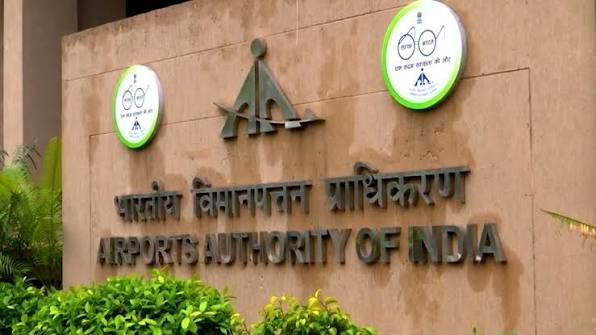
Airports Authority of India is a Miniratna Category-I public sector enterprise under the Ministry of Civil Aviation. It manages a large network of airports and aeronautical communication infrastructure across the country. AAI’s role extends beyond terminal operations to air-navigation services, airport development and the infrastructure needed to connect smaller cities with India’s expanding aviation network.
What stands out:
- Central role in airport and air-navigation infrastructure
- Owns or manages a large network of operational airports
- Important to regional connectivity and aviation expansion
2. Bharat Dynamics Limited
Bharat Dynamics Limited is a Miniratna Category-I defence PSU under the Ministry of Defence. Established to manufacture guided weapon systems, it now produces anti-tank guided missiles, strategic weapons, underwater weapons, launchers, decoys and related equipment. Its work places it directly inside India’s push for greater self-reliance in defence manufacturing and indigenous missile systems.
Where it is strong:
- Specialises in missiles and guided weapon systems
- Key supplier to India’s armed forces
- Expanding indigenous defence manufacturing capabilities
3. BEML Limited
BEML is a diversified engineering CPSE with businesses spanning defence and aerospace, mining and construction equipment, and rail and metro products. Its manufacturing base produces equipment such as armoured and military vehicles, earthmoving machinery and metro coaches. This spread across strategic and infrastructure sectors makes BEML one of the most recognisable Miniratna engineering companies.
A quick look:
- Works across defence, mining and rail mobility
- Manufactures heavy equipment and metro rolling stock
- Strategically important domestic engineering base
4. Bharat Sanchar Nigam Limited
BSNL remains one of India’s most important public telecom enterprises, particularly because of its reach outside the largest urban markets. The company provides mobile, fixed-line, broadband and enterprise services and has been rolling out indigenous 4G infrastructure with a path toward 5G. Its public-service role is especially visible in rural and remote connectivity.
Its main strengths:
- Large nationwide telecom network
- Important presence in rural and remote regions
- Rolling out indigenous 4G technology at scale
5. Chennai Petroleum Corporation Limited
Chennai Petroleum Corporation Limited operates refineries in Tamil Nadu and is a subsidiary of Indian Oil Corporation. Its refining operations supply petroleum products to a major consumption region and make it an important part of southern India’s energy infrastructure. The company is also involved in refinery modernisation and projects aimed at improving product quality and operational efficiency.
Why it matters:
- Major petroleum-refining presence in Tamil Nadu
- Part of the Indian Oil group
- Strategic supplier to southern energy markets
6. Goa Shipyard Limited
Goa Shipyard Limited is a Schedule-A Miniratna Category-I defence PSU engaged in shipbuilding, ship repair and engineering. It has built offshore patrol vessels, fast patrol vessels and other platforms for the Indian Navy, Coast Guard and overseas customers. The company is also expanding capacity as India’s naval and coast-guard procurement increasingly favours indigenous construction.
What to know:
- Specialises in defence and patrol vessels
- Serves Indian and overseas maritime customers
- Important part of India’s indigenous shipbuilding ecosystem
7. Hindustan Copper Limited
Hindustan Copper is India’s only vertically integrated public-sector copper producer with activities that span mining, beneficiation, smelting, refining and casting. Copper demand is rising with power networks, renewable energy, electric vehicles and electronics, which has made the company’s expansion plans more strategically important. In 2026 it was still a Miniratna Category-I CPSE while pursuing Navratna status.
Key areas:
- Integrated presence across the copper value chain
- Mining assets are important to domestic copper security
- Pursuing a major increase in ore production
8. Indian Railway Catering and Tourism Corporation
IRCTC is one of the most visible Miniratna companies because millions of passengers interact with its digital ticketing platform. Beyond online rail reservations, it operates catering, packaged drinking water and tourism services. Its combination of a high-traffic digital platform and railway-linked services makes it unusual among public sector enterprises and gives it direct consumer reach.
Its market presence:
- Runs Indian Railways’ major online ticketing platform
- Operates catering, tourism and Rail Neer businesses
- Directly serves a very large consumer base
9. HLL Lifecare Limited
HLL Lifecare is a public-sector healthcare company with activities spanning contraceptives, medical products, diagnostics, healthcare services and procurement support. Its roots are in public-health manufacturing, but its role has expanded across several healthcare programmes and institutional needs. The company is relevant because Miniratna enterprises are not limited to heavy industry or infrastructure.
What defines the company:
- Manufactures and supplies public-health products
- Operates in diagnostics and healthcare services
- Supports government and institutional healthcare requirements
10. MECON Limited
MECON is one of the newest companies to enter Miniratna Category-I in 2026. The engineering consultancy and project-management company works across metals, mining, energy, infrastructure and industrial projects. Its elevation followed a return to sustained profitability and stronger net worth, and it gives MECON greater autonomy to pursue investments and business opportunities.
At a glance:
- Granted Miniratna Category-I status in July 2026
- Engineering and project-management specialist
- Works across metals, mining, energy and infrastructure
Conclusion
Miniratna status is best understood as a measure of delegated autonomy, not as a ranking of every government company from best to worst. The list also changes when a CPSE qualifies for Navratna or receives a new category. In 2026, checking the current DPE or administrative-ministry status is therefore essential before calling a company Miniratna. The ten enterprises above show how widely the category stretches, from airports and telecom to missiles, copper, healthcare and engineering consultancy. The category should therefore be understood as a governance and autonomy classification, not as a label for ten companies that compete in one market. Some Miniratnas operate commercial consumer-facing businesses, while others serve strategic government or industrial needs. Their future paths can also diverge: stronger CPSEs may be considered for higher status, while policy restructuring can change ownership or classification. For readers, checking the latest DPE status is essential before relying on an older Miniratna list.