Futures and Options (F&O) trading is a segment of the Indian stock market that allows traders to take positions based on the expected price movement of shares or market indices. It can help experienced market participants manage risk, but it can also expose inexperienced traders to substantial financial losses.
In India, the Securities and Exchange Board of India (SEBI) has introduced several restrictions and safeguards for equity derivatives trading. These measures are intended to reduce excessive speculation, strengthen market stability, and protect investors from risks they may not fully understand. However, SEBI has not imposed a complete ban on individual investors trading F&O.
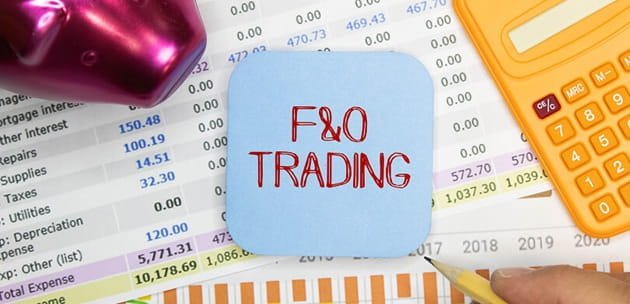
Understanding how these contracts work and why the rules changed can help investors make better-informed financial decisions.
What Does F&O Trading Mean?
F&O stands for Futures and Options. These are financial derivatives because their value depends on an underlying asset, such as a stock or an index like the Nifty 50 or Sensex.
A futures contract creates an obligation for the parties to settle the contract according to its terms. Traders may use futures to speculate on price movements or hedge an existing investment. Because futures involve leverage and margin requirements, even a relatively small market movement can produce significant gains or losses.
An options contract gives the buyer a right, but generally not an obligation, to buy or sell an underlying asset at a specified strike price under the contract’s terms. A call option is associated with the right to buy, while a put option is associated with the right to sell.
For example, a trader who expects a stock index to rise might buy a call option. If the market moves favourably, the option may increase in value. If the expected movement does not occur, the buyer may lose the premium paid. An option seller, on the other hand, receives a premium but takes on contractual obligations and may face much larger losses.
Unlike buying shares for long-term ownership, F&O trading often involves short-term price movements, expiry dates, leverage, and additional trading costs.
Why Did SEBI Restrict F&O Trading?
SEBI’s measures were driven by concerns about the rapid growth of retail participation in equity derivatives and the large number of individual traders losing money.
In its September 2024 study, SEBI reported that approximately 93% of individual traders in the equity F&O segment incurred losses between financial years 2021–22 and 2023–24. Their combined net losses exceeded ₹1.8 lakh crore over those three years, including transaction costs. The findings are available in SEBI’s official study announcement.
SEBI also expressed concern about the sharp increase in index options activity, particularly around expiry days. Short-dated contracts can attract traders seeking quick returns, but their prices may change rapidly, and options can lose value as expiry approaches.
The regulator’s concerns included:
- High retail losses: Many individual traders entered the derivatives market without sufficient understanding of its risks.
- Excessive speculation: Frequent trading and short-term bets could encourage behaviour closer to gambling than disciplined investing.
- Expiry-day volatility: Concentrated trading near expiry could amplify sharp price movements and risks.
- Leverage and margin risks: Traders could take large positions relative to the funds they committed.
- Investor awareness: New traders might underestimate transaction costs, time decay, and the possibility of losing their entire option premium.
SEBI’s objective was not to eliminate derivatives trading. Futures and options can serve useful purposes, including hedging and price discovery. Instead, the regulator sought to make the market more disciplined and reduce risks associated with excessive speculative activity.
What Restrictions Did SEBI Introduce?
SEBI introduced a series of measures beginning in late 2024, with several requirements taking effect during 2025. These changes altered how index derivatives could be traded and how much capital or risk protection was required.
Fewer weekly expiry contracts: Exchanges rationalised weekly index derivatives so that each exchange offered index derivative contracts expiring on a single day of the week. This was intended to reduce the proliferation of very short-term contracts and concentrated expiry-day speculation.
Higher minimum contract sizes: The minimum contract size for index derivatives was increased. As a result, traders may need more capital to take a position, making some contracts less accessible to smaller participants.
Higher expiry-day risk coverage: Additional extreme loss margin requirements were introduced for relevant short option positions on expiry day to help cover the risk of sharp market movements.
Upfront collection of option premiums: Brokers must collect option premiums upfront from buyers under the applicable framework. This reduces the scope for trading on the assumption that payment can be arranged later.
Changes to calendar spread benefits: Certain margin benefits for calendar spreads were removed on expiry day, reflecting the higher risks associated with positions involving contracts expiring on the same day.
Intraday monitoring of position limits: Exchanges strengthened monitoring of position limits in index derivatives to improve oversight of excessive concentrations and potential market manipulation.
SEBI outlined these measures in its official study of the equity derivatives segment. The precise requirements depend on the contract, exchange, and applicable circulars.
Did SEBI Ban Retail Investors From F&O Trading?
No. SEBI did not completely ban individual investors from trading futures and options. Eligible investors can still participate, subject to applicable exchange rules, broker requirements, margin conditions, and risk disclosures.
However, the higher contract sizes and stricter trading requirements can make certain strategies more expensive or difficult for small traders. Brokers may also apply eligibility checks or risk controls under the relevant rules.
The important distinction is that SEBI restricted and regulated aspects of F&O trading rather than prohibiting all retail participation. The goal is to manage risk, not to guarantee that traders will avoid losses.
How Do These Rules Affect New Traders?
For beginners, the changes mean that F&O trading may require more capital and a clearer understanding of contract specifications. A small premium does not necessarily mean a trade is low-risk, and the cost of a contract is not the same as the total market exposure it represents.
Traders should understand the maximum potential loss before entering a position, including the risks of selling options. They should also account for brokerage, exchange charges, taxes, bid-ask spreads, and expiry-related price changes.
SEBI’s August 2026 report on individual traders’ profitability in the equity derivatives segment provides further evidence that the risks remain significant. It reported that 87.7% of individual traders incurred losses in FY2025–26, with aggregate net losses of ₹91,685 crore. See the SEBI report on individual traders’ profitability.
These figures do not mean every individual trader will lose money, but they show why beginners should avoid treating F&O as a reliable source of quick income.
Conclusion
F&O trading allows market participants to speculate on price movements or manage financial risk through futures and options contracts. However, leverage, expiry dates, volatility, and trading costs can make these products difficult for inexperienced investors.
SEBI introduced stricter rules because of widespread retail losses, excessive short-term speculation, and concerns about expiry-day risks. These measures have changed how derivatives are traded, but they have not eliminated the possibility of losses or banned individual participation altogether.
New investors should learn the basics, understand the applicable rules, and assess their financial risk before entering the derivatives market. For long-term wealth creation, diversified investments may be more appropriate than frequent speculative trades.
Frequently Asked Questions
Q. What does F&O mean in the stock market?
F&O stands for Futures and Options. These derivatives allow traders to take positions based on the price movements of stocks or indices without necessarily owning the underlying asset.
Q. Why did SEBI introduce restrictions on F&O trading?
SEBI acted in response to widespread retail trading losses, excessive speculation, expiry-day risks, and concerns about leverage and investor protection.
Q. Has SEBI completely banned F&O trading for retail investors?
No. Individual investors can still trade eligible F&O contracts, subject to applicable regulations, exchange requirements, and broker conditions.
Q. What is the biggest risk of F&O trading for beginners?
The main risks include rapid losses, leverage, expiry-related price changes, and misunderstanding how option premiums work. Option buyers can lose the entire premium, while some option sellers can face much larger losses.
Q. Do SEBI’s restrictions guarantee that F&O traders will not lose money?
No. The restrictions aim to strengthen safeguards and manage market risks, but they cannot eliminate trading losses or guarantee profits.