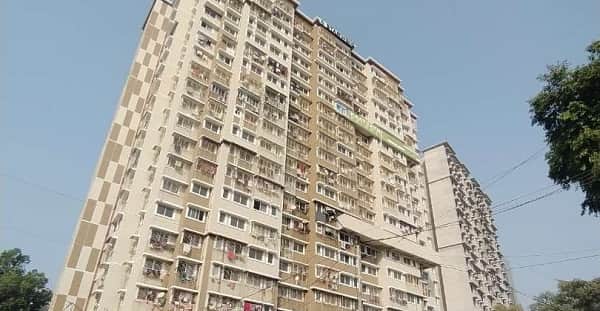
Wagle Industrial Estate, located in Thane West, is one of the oldest and most historically significant industrial clusters in Maharashtra. Established in 1962, it was the very first industrial area developed by the Maharashtra Industrial Development Corporation (MIDC), making it the foundational model for industrial development in the state. The estate has grown into a major center for engineering, manufacturing, electronics, IT offices, and commercial businesses in the Mumbai Metropolitan Region.
In recent years, Wagle Industrial Estate has gained fresh strategic importance due to the ongoing expansion of the Mumbai Metro, particularly Metro Line 4 (Wadala-Kasarvadavli) and Line 5 (Thane-Bhiwandi-Kalyan), along with the operationalisation of the Thane-Borivali Tunnel project. Combined with its traditional industrial base, the area has steadily transformed into a mixed-use commercial hub, attracting IT parks, corporate offices, co-working spaces, and new-age startups, even as manufacturing continues to thrive. As a result, Wagle is rapidly emerging as one of Thane’s most valuable commercial-industrial addresses.

Wagle Industrial Estate Quick Overview
| Category | Details |
| Location | Wagle Estate, Thane West, Thane District |
| State | Maharashtra |
| Industrial Estate | Wagle Industrial Estate (MIDC) |
| PIN Code | 400604 |
| Developed By | Maharashtra Industrial Development Corporation (MIDC) |
| Established | 1962 (MIDC’s first industrial estate) |
| Major Industries | Engineering, Electronics, IT Offices, Garments, Steel, Pharma, Commercial Offices |
| Nearby Airport | Chhatrapati Shivaji Maharaj International Airport (CSMIA), Mumbai |
| Major Expressways | Eastern Express Highway, Ghodbunder Road, Thane-Belapur Road |
| Nearby Landmark | Mulund Check Naka, Teen Hath Naka, Passport Seva Kendra |
Industrial Landscape and Key Sectors
Wagle Industrial Estate is home to a diverse mix of industries and businesses, ranging from heavy engineering and electronics to modern IT offices and corporate headquarters. The estate hosts hundreds of units across its 2.48 sq km footprint, providing employment to a population of over 1.27 lakh in the surrounding sub-locality.
Engineering and mechanical manufacturing is one of the most prominent sectors. Companies producing cranes, hoists, springs, CNC machines, automation equipment, industrial valves, pollution control systems, and precision tools operate across the Road Nos 1 to 22 that crisscross the estate. Historic names like Raymond, Voltas, and Nocil established early operations here, shaping the estate’s engineering legacy.
Electronics, LED lighting, flow measurement devices, and industrial automation firms form another major pillar. Steel bars, fabrication, garments, and packaging units add further depth to the manufacturing mix.
Since the 2000s, the commercial profile has expanded sharply. IT offices, BPOs, corporate headquarters, co-working spaces, and service-sector companies now operate alongside traditional factories, making Wagle one of Thane’s most dynamic mixed-use business districts.
Infrastructure and Industrial Facilities
Wagle Industrial Estate is spread across roughly 310 acres originally allocated in 1960, and has since grown into a dense urban-industrial zone organised across multiple numbered roads (Road No 1 to Road No 22 and beyond). Factory plots, ready-built galas, warehouses, IT towers, and mixed-use commercial buildings coexist within the estate.
Industrial infrastructure includes well-laid internal roads, dedicated water supply from the Ulhas Valley system, power supply through MSEDCL, sewage disposal, storm water drainage, and telecommunication networks. The estate hosts key government landmarks including the Passport Seva Kendra for North Maharashtra districts, MTNL offices, Thane Municipal Transport (TMT) depot, and the MSEDCL Circle Office.
In recent years, MIDC’s mixed-use zoning allowance has transformed several blocks, giving rise to modern commercial towers, flatted industrial parks with multi-level units, and Grade-A IT buildings alongside older factory sheds.
Connectivity and Transportation
Connectivity is one of Wagle Industrial Estate’s strongest advantages. The estate sits strategically between Mumbai and Thane, with direct access to the Eastern Express Highway, Ghodbunder Road, and the Thane-Belapur Road, linking it to Mulund, Bhandup, Navi Mumbai, Airoli, Borivali, and the Mumbai-Nashik Highway.
For rail, Thane Railway Station on the Central Line is about 3-4 km away, while Mulund Railway Station is another convenient option. Both provide frequent services to CSMT, Dadar, Kurla, and Kalyan.
The metro story is genuinely transformative. Mumbai Metro Line 4 (Wadala to Kasarvadavli) runs along the Eastern Express Highway corridor with multiple stations serving Wagle Estate, significantly improving daily commutes. The upcoming Line 5 (Thane-Bhiwandi-Kalyan) will add further reach.
Chhatrapati Shivaji Maharaj International Airport is approximately 20 km south, reachable in 45 to 60 minutes depending on traffic.
Real Estate and Investment Trends
Industrial and commercial property demand in Wagle Industrial Estate has grown consistently over the past decade. Offices, IT tenants, and manufacturing firms all actively look for space here, drawn by the location advantage and the metro-led upgrades.
Commercial property rates average around ₹20,000 to ₹22,000 per sq ft, with premium Grade-A buildings commanding higher rates. Monthly rentals for office and residential units nearby typically range from ₹26,000 to ₹57,500 depending on size and configuration.
Flatted industrial complexes with smaller units of 400 to 1,200 sq ft have become particularly popular among SMEs, first-generation entrepreneurs, and service-sector firms. Logistics, warehousing, and co-working spaces are also expanding, particularly around Road No 22, which has emerged as the estate’s most sought-after commercial stretch.
Workforce and Economic Role
Wagle Industrial Estate provides direct employment to tens of thousands of workers and indirectly supports hundreds of thousands across its ancillary economy. Manufacturing plants, IT offices, commercial centres, and logistics units rely on a workforce that includes engineers, technicians, machine operators, software professionals, office staff, and service personnel.
The estate’s workforce largely lives in and around Thane, Mulund, Bhandup, Dombivli, Kalyan, and even Navi Mumbai, supported by the strong rail and metro connectivity. The industrial cluster sustains a vast ancillary economy of transport operators, canteens, equipment suppliers, repair services, and packaging firms.
Because of its scale, longevity, and strategic location, Wagle Industrial Estate is widely regarded as the economic backbone of Thane city, and a major contributor to the MMR’s industrial output.
Regulatory Oversight and Industrial Governance
Industrial operations in Wagle Industrial Estate are regulated by MIDC and monitored by agencies including the Maharashtra Pollution Control Board (MPCB), the Directorate of Industrial Safety and Health, the Labour Department, and the Thane Municipal Corporation.
Industries operating in the estate must comply with regulations related to emissions, effluent treatment, fire safety, solid waste management, and workplace safety. Given the area’s transition from pure industrial to mixed-use, zoning and building compliance have become more rigorously enforced.
The Thane Small Scale Industries Association and other local bodies work closely with MIDC and government departments to represent industry interests, navigate compliance, and push for infrastructure improvements across the estate.
Future Growth Potential
Wagle Industrial Estate is expected to see significant growth in the coming years, driven by the full operationalisation of Mumbai Metro Line 4, the upcoming Thane-Borivali Tunnel, the proposed Line 5 metro corridor, and the broader transformation of Thane into one of India’s fastest-growing urban centres.
Commercial and IT office space is likely to expand sharply as companies continue to move to Thane from central Mumbai in search of better rates and modern infrastructure. Flatted industrial complexes, co-working hubs, and mixed-use towers are expected to accelerate.
The region’s industrial ecosystem will continue to attract engineering, electronics, and IT firms looking for a well-connected, well-established, and institutionally supported business location within the MMR.
FAQs
Q1. What is the PIN code of Wagle Industrial Estate?
The estate falls under PIN code 400604, with Wagle I.E. as the local post office.
Q2. Who developed Wagle Industrial Estate?
It was developed by the Maharashtra Industrial Development Corporation (MIDC) in 1962, making it MIDC’s first industrial estate in Maharashtra.
Q3. How far is Wagle Industrial Estate from Mumbai airport?
Chhatrapati Shivaji Maharaj International Airport is approximately 20 km south, typically 45 to 60 minutes by road depending on traffic.
Q4. What kind of industries operate in Wagle Industrial Estate?
A broad mix of engineering, electronics, industrial automation, steel and fabrication, garments, pharma, IT offices, BPOs, and commercial businesses.
Q5. What is the nearest railway station?
Thane Railway Station on the Central Line is the closest, about 3-4 km away. Mulund Railway Station is another option.
Q6. Is the area connected by Mumbai Metro?
Yes. Mumbai Metro Line 4 (Wadala-Kasarvadavli) runs along the Eastern Express Highway with stations serving Wagle Estate, and Line 5 (Thane-Bhiwandi-Kalyan) is underway.
Q7. What is the total area of Wagle Industrial Estate?
The estate covers approximately 2.48 square kilometres, originally allocated as 310 acres in 1960.
Q8. Is Wagle Industrial Estate still primarily industrial?
No. While it retains a strong manufacturing base, MIDC’s mixed-use zoning has allowed a major shift toward IT offices, commercial towers, co-working hubs, and service-sector businesses, particularly along Road No 22.