A window does more than bring in daylight. It frames the view, connects the room to its surroundings, and shapes the space’s feel. The window sill plays a quiet but important role, providing a neat finish and a practical ledge for plants or everyday essentials. Its design, material, and installation can affect both the window’s appearance and how well the sill holds up over time.
Give the Window a Finished Frame
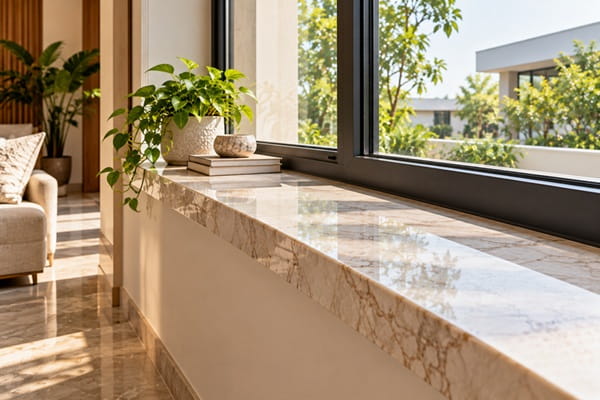
A window sill creates a visual base for the opening. It can match the wall for a quiet, seamless look, or contrast with the frame and flooring to define the window. The right approach depends on the room’s style and the window’s role.
In a minimalist interior, a slim sill in a tone close to the wall keeps lines clean. In a room with wood furniture or warm flooring, a complementary natural-looking finish helps tie everything together. A deeper sill can hold a small plant, a book, or a favourite object, as long as it doesn’t block the window or create a safety risk.
Choose a Surface That Suits the Room
The sill should relate to the surfaces around it: the window frame, the wall, the floor and nearby furniture. An exact match is not necessary; a related tone or texture often looks more considered.
A window sill slab also has to suit the conditions it will face. An interior sill collects dust, plant water, and condensation, while an exterior sill must shed rain and withstand strong sun. Engineered surfaces in finishes inspired by marble, stone and wood can suit both roles, provided the chosen product is rated for its location. For sills in direct sun, check that the surface is UV-stable.
Whichever surface you choose, the detailing still needs to reflect the location, from indoor sealing to outdoor drainage.
Window Sill Design Ideas for Different Rooms
Each room asks something slightly different of its windows. Use these ideas as a starting point, then adapt them to your layout and style:
- Living room: Choose a simple finish that complements the frame and main flooring. A deeper ledge can display a few chosen objects, as long as it stays uncluttered.
- Bedroom: A quiet, low-contrast sill supports a restful palette. Keep objects clear of the window’s opening and any emergency exit route.
- Kitchen: Pick a surface that is easy to clean and coordinates with the worktop or splashback. Watch for splashes if the window sits near the sink.
- Bathroom: Condensation and splashes make moisture resistance and well-sealed joints essential.
- Study: A broad sill can connect you to the outdoors, but it should not replace a proper desk or block useful daylight.
- Exterior window: Plan the slope, drip groove, joints and weather exposure so water runs away from the wall instead of pooling.
Mix and match these ideas room by room, and confirm the right surface and installation for each location before work starts.
Think About Depth, Thickness and Edges
Small dimensions make a visible difference to a window sill. Before deciding, weigh up these three details:
- Depth: A shallow sill keeps a compact room neat, while a deeper one adds a usable ledge. Check curtains, blinds, air-conditioning units, furniture and how the window opens.
- Thickness: A slim profile suits contemporary interiors, while a more substantial sill makes a window feel grounded. Follow the product’s approved dimensions and the support available beneath.
- Edges: Straight edges look crisp, while softened edges feel less formal. Always finish corners safely, and add a drip groove under exterior sills so water drops clear of the wall.
Discuss all three with your fabricator, who can confirm what suits your chosen surface and opening.
Coordinate the Sill with Daylight and Colour
Natural light changes how materials look through the day. A bright white sill bounces light into the room, while a darker finish frames the view and adds contrast. Textured finishes show shadows more clearly than smooth ones, so place samples against the actual wall and frame, and view them in both morning and afternoon light.
If the window overlooks greenery, warm neutrals and wood-inspired finishes complement the view. In an urban setting, a restrained grey or pale finish works well with metal frames and clean lines. The sill should create a gentle transition between room and window, never compete with the view.
Do Not Ignore Moisture and Maintenance
Interior sills deal with condensation, plant pots and cleaning products. Exterior sills face rain, sun and temperature swings. Choose a surface designed for those conditions, and ask how to clean it. No decorative finish can fix poor waterproofing, missing drainage, or badly sealed joints.
A non-porous surface makes life easier. Manufacturers like Neotra Advanced Surfaces, for example, offer stain-resistant, liquid-repellent, and antibacterial surfaces that help make everyday spills and surface marks easier to clean. Follow the recommended care instructions, typically use a soft cloth and mild soap, and avoid harsh chemicals or abrasive pads.
Get the Installation Right
Accurate measurements are essential because the sill meets the window frame, the wall and sometimes the flooring or cabinetry. Confirm final dimensions only once you know the adjacent finishes. Before installation, ask the installer:
- Support: How will the installer support the sill along its length?
- Edges and joints: How will the installer finish the edges and seal the joints?
- Weatherproofing: For exterior sills, how will the slope and drip groove integrate with the wall’s drainage?
- Clearance: For interior sills, will the window, blinds and curtains still move freely?
Keep product information and installation records too. They are invaluable if you replace the window or renovate the wall later.
Conclusion
The right window sill design makes a room feel finished while giving the window a practical, well-defined base. Choose a surface that relates to the frame and the room’s palette, then consider depth, thickness, moisture, and maintenance. Above all, plan the installation rather than treating the sill as a decorative afterthought. Done well, it brings window, wall and room together in a way that feels natural and complete.