For decades in India, menstrual hygiene remained a subject surrounded by silence, discomfort, and social stigma. In many rural and low-income areas, women relied on unsafe alternatives because sanitary products were either unavailable, unaffordable, or simply never openly discussed. But over the last several years, that reality has begun changing rapidly.
Today, awareness around menstrual health is growing across schools, colleges, healthcare campaigns, and social media. Government initiatives, women’s education, rising healthcare awareness, and expanding retail access have transformed sanitary napkins from a niche urban product into a fast-growing everyday necessity.
This shift has quietly created one of India’s most important and commercially promising hygiene industries. Sanitary napkin manufacturing is no longer just a social-impact business — it is now a large-scale FMCG category with rising demand across both urban and rural markets.
So, is sanitary napkin manufacturing business profitable in India? Yes — highly profitable for businesses that combine product quality, affordability, strong distribution, and customer trust.
A Market Driven by Awareness and Necessity
India has one of the world’s largest female populations, yet sanitary napkin penetration still remains lower than many developed countries. This means the industry still has enormous growth potential ahead.
Several factors are driving market expansion:
- Rising menstrual hygiene awareness
- Government health campaigns
- Increasing school and college education
- Growth of pharmacies and retail chains
- Expansion of e-commerce
- Rising income levels
- Increasing women workforce participation
Unlike trend-based consumer categories, sanitary napkins are essential repeat-purchase products with consistent monthly demand.
Types of Sanitary Napkin Businesses
1. Regular Sanitary Pads
The largest mass-market category.
2. Ultra-Thin Premium Pads
Higher comfort and premium pricing segment.
3. Organic and Biodegradable Pads
Eco-friendly category growing rapidly in urban areas.
4. Maternity Pads
Used after childbirth and in hospitals.
5. Private Label Manufacturing
Producing sanitary products for other retail brands and distributors.
Investment Required: Moderate to High Depending on Scale
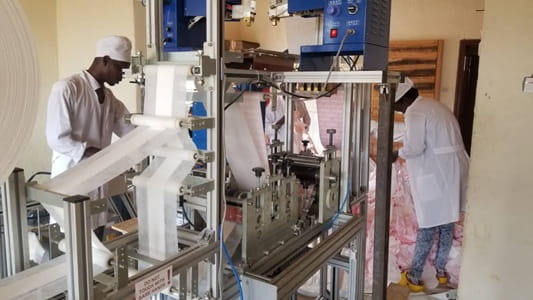
Sanitary napkin manufacturing requires specialized machinery and hygiene-focused production systems.
A small semi-automatic unit may require ₹10–30 lakh including:
- Semi-automatic machines
- Raw materials
- Packaging setup
- Workspace
- Quality control equipment
A fully automatic medium-to-large manufacturing plant may require ₹50 lakh to several crores depending on production capacity and automation.
Investment usually includes:
- Production machinery
- Sterilization systems
- Packaging machines
- Raw material inventory
- Warehouse space
- Labour and hygiene infrastructure
Raw Materials Needed
Important raw materials include:
- Absorbent pulp
- Non-woven fabric
- SAP gel sheets
- Adhesives
- Leak-proof back sheets
- Packaging materials
Product softness, absorption quality, and leakage protection heavily influence customer trust and repeat purchases.
Revenue and Profit Potential
Sanitary napkin manufacturing can become highly profitable because demand is recurring and consumption frequency is stable.
Revenue comes from:
- Retail sales
- Pharmacy supply
- School and NGO contracts
- Government procurement
- Supermarket distribution
- E-commerce platforms
For example:
- Budget sanitary pads work on high-volume sales.
- Premium and organic products command significantly higher margins.
- Institutional and government orders create stable large-scale demand.
A medium-scale manufacturing unit with good distribution can generate substantial monthly revenue. Net profit margins generally range between 15–35% depending on branding, automation efficiency, and market positioning.
Businesses selling directly under their own brand often achieve stronger long-term profitability.
What Makes This Business Work
1. Product Quality and Comfort
Women are extremely selective about hygiene products. Comfort, absorption, softness, and skin safety are critical.
2. Affordable Pricing
India remains a price-sensitive market, especially in rural and semi-urban areas.
3. Distribution Reach
Availability in pharmacies, supermarkets, schools, and local shops drives consistent sales.
4. Awareness-Based Marketing
Educational campaigns often work better than aggressive advertising alone.
5. Brand Trust
Once customers trust a hygiene brand, repeat purchasing becomes very strong.
Challenges to Prepare For
1. High Competition
Large FMCG companies already dominate major market segments.
2. Marketing Costs
Consumer hygiene brands require awareness-building and customer education.
3. Raw Material Dependency
Price fluctuations in imported absorbent materials can affect margins.
4. Product Quality Risk
Leakage or skin irritation complaints can damage reputation quickly.
5. Rural Penetration Challenges
Distribution and awareness remain weaker in some rural regions.
Businesses that focus on quality and affordability usually build stronger long-term customer loyalty.
How to Increase Profitability
1. Focus on Rural and Tier-2 Markets
Many smaller towns still have growing untapped demand.
2. Offer Affordable Small Packs
Low-cost entry packs help attract first-time users.
3. Expand Into Organic Products
Eco-friendly and biodegradable napkins are growing rapidly in premium markets.
4. Build Institutional Partnerships
Schools, NGOs, hospitals, and government programmes create large-volume opportunities.
5. Use E-Commerce and Social Media
Online platforms help smaller brands compete against larger players.
Government Support and Social Impact
The Indian government has increasingly focused on menstrual hygiene awareness through school programmes and healthcare initiatives.
Many state-level schemes support affordable sanitary product distribution, creating opportunities for local manufacturers and women-led enterprises.
Because the industry combines business with public health impact, it often receives stronger social acceptance and institutional support.
Sanitary Napkin Business vs Other FMCG Businesses
Compared to many consumer products, sanitary napkins benefit from predictable repeat demand and long-term customer loyalty.
However, hygiene standards, quality control, and branding expectations are also significantly higher.
Trust is everything in this category.
The Future of Sanitary Napkin Manufacturing in India
The future looks extremely strong. Menstrual hygiene awareness is rising every year, while urbanisation and women’s workforce participation continue increasing.
At the same time, eco-friendly hygiene products are creating entirely new premium market opportunities.
As rural awareness and affordability improve further, India’s sanitary napkin market is expected to expand dramatically over the next decade.
The Verdict: A High-Demand Hygiene Business With Long-Term Growth Potential
Sanitary napkin manufacturing is one of the most important and scalable hygiene businesses in India today. It combines strong repeat demand, social impact, growing awareness, and expanding distribution opportunities.
Success in this business depends heavily on quality, trust, comfort, and pricing strategy rather than simply producing large quantities.
In a country where menstrual health awareness is finally becoming a mainstream conversation, businesses that provide safe, reliable, and accessible hygiene products are likely to remain both commercially valuable and socially significant for many years ahead.
Frequently Asked Questions (FAQs)
Q1. How much investment is needed to start a sanitary napkin manufacturing business in India?
A: A small semi-automatic setup may require ₹10–30 lakh, while larger automatic plants may require ₹50 lakh or more.
Q2. Is sanitary napkin manufacturing profitable in India?
A: Yes. Rising awareness and repeat monthly demand make it one of the strongest hygiene-focused manufacturing businesses.
Q3. What raw materials are used in sanitary napkins?
A: Absorbent pulp, non-woven fabric, SAP gel sheets, adhesives, and leak-proof materials are commonly used.
Q4. Are organic sanitary pads profitable?
A: Yes. Eco-friendly and biodegradable sanitary products are becoming increasingly popular in urban premium markets.
Q5. Can small brands compete in this industry?
A: Absolutely. Many regional and niche brands grow successfully through affordable pricing, quality products, and awareness-driven marketing.
Q6. Is demand for sanitary napkins increasing in India?
A: Yes. Menstrual hygiene awareness, government programmes, education, and retail expansion are driving strong long-term market growth.