High-Frequency Trading has transformed global financial markets by enabling algorithmic trading at microsecond speeds, and India’s HFT landscape in 2026 is a unique blend of homegrown quantitative champions alongside global powerhouses that have recognised India’s equity markets as among the world’s most attractive HFT environments. The global high-frequency trading market was valued at USD 10.36 billion in 2024 and is expected to reach USD 16.03 billion by 2030, growing at a CAGR of 7.7 percent. India’s NSE is one of the world’s most active derivatives exchanges by volume, making it particularly attractive for HFT firms. The most extraordinary development of 2026 in India’s HFT space is the emergence of Graviton Research Capital as India’s first HFT unicorn, valued above USD 1 billion after less than 12 years of operations and having gone head to head with global rivals like Jane Street, Citadel Securities, and IMC Trading, often coming out on top. Jane Street, Citadel Securities, Optiver, and Virtu Financial are the most commonly cited global HFT leaders operating or influencing India’s markets. Let us have a look at the top 10 HFT companies in India for the year 2026.
1. Graviton Research Capital LLP
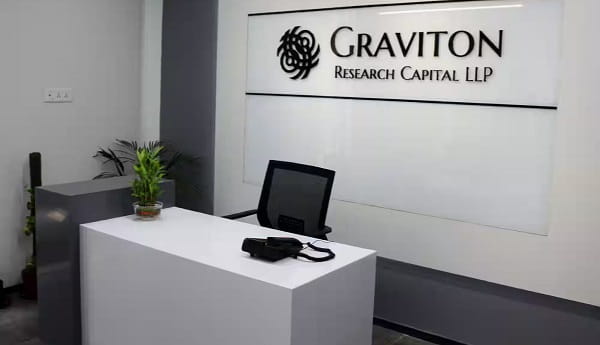
Graviton Research Capital, founded by childhood friends Ankit Gupta and Nishil Gupta with a million dollars and started in India to put the country on the global high-frequency trading map, has turned into India’s first HFT unicorn, valued above USD 1 billion in less than 12 years. A Bloomberg report published on April 29, 2026 described how the firm went head to head with global rivals including Jane Street Group, Citadel Securities, and IMC Trading on India’s NSE equity and derivatives markets, often coming out on top. Graviton employs quantitative research and technology-driven trading strategies to capture microsecond market making and statistical arbitrage opportunities in India’s highly liquid derivatives markets.
Graviton Research Capital serves India’s equity and derivatives markets as a quantitative market maker and proprietary trader, and its emergence as India’s first indigenous HFT unicorn while competing successfully against the world’s best-capitalised algorithmic trading firms is the most consequential development in India’s quantitative finance industry in recent years.
2. Jane Street Group India Operations
Jane Street Group, founded around the year 2000 and headquartered in New York as one of the world’s most prestigious quantitative trading firms, has significantly expanded its India operations to participate in NSE’s highly liquid derivatives markets. Jane Street generated USD 10.1 billion in trading revenues in Q2 2025 globally and is recognised as the world’s leading ETF and fixed-income market maker with cutting-edge OCaml-based infrastructure. Jane Street is one of the most commonly cited targets for aspiring quant researchers globally and its India presence underscores NSE’s importance as a world-class derivatives exchange.
Jane Street’s India operations serve NSE’s derivatives markets with its global market-making algorithms and is one of the most technically sophisticated algorithmic traders in any market it enters, with its India operations connected to the same quantitative research and technology infrastructure that processes billions of dollars in global daily trading volume.
3. Citadel Securities India Operations
Citadel Securities, part of Ken Griffin’s Citadel enterprise and the largest US equity market maker handling 25 percent of US equities with trade execution in just 10 microseconds, has established India operations that participate in India’s equity and derivatives markets. The firm is regularly cited alongside Jane Street, Optiver, and Hudson River Trading as one of the most commonly targeted employers by aspiring quant researchers and as one of the firms most likely competing in India’s sophisticated NSE derivatives ecosystem.
Citadel Securities brings its global market-making technology and quantitative research capability to India’s markets and is among the most technically capable and well-capitalised HFT participants in any exchange where it operates, with its 10-microsecond execution speed representing the global frontier of trading infrastructure technology.
4. Tower Research Capital India Operations
Tower Research Capital, one of the world’s largest and most established quantitative trading firms founded around the year 2000 and known for empowering independent teams for diverse strategies across global markets, is a major presence in India’s HFT ecosystem. The firm is listed among India’s HFT firms in quantitative finance education resources and has built a meaningful trading operation in India’s highly liquid equity and derivatives markets. Tower Research is known for its entrepreneurial model that gives quantitative researchers significant autonomy and profit-sharing in their trading strategies.
Tower Research Capital India Operations serves NSE’s equity and derivatives markets with its quantitative trading strategies and is one of the most impactful international HFT firms in India’s market by trading volume and market-making activity, employing quantitative researchers and engineers who develop and operate sophisticated algorithmic trading strategies.
5. Optiver India Operations
Optiver, founded in the year 1986 in Amsterdam as one of the oldest and most respected electronic market makers in global derivatives markets, employs over 2,000 people across ten offices in nine countries and generated approximately USD 3.8 billion in trading revenues in 2024. Optiver’s core business is options and derivatives market making — the same instruments that dominate NSE’s product mix — making India’s NSE one of the most natural expansion markets for its specialised derivatives market-making expertise. Optiver’s India operations are cited in quantitative finance resources as an active participant in India’s HFT and algorithmic trading ecosystem.
Optiver India Operations serves NSE’s derivatives markets with its specialist options and derivatives market-making expertise that has been refined over nearly four decades of global derivatives trading, and its presence in India provides liquidity and tighter bid-ask spreads to NSE’s options markets that make the exchange more attractive for institutional investors and market participants.
6. IMC Financial Markets India Operations
IMC Financial Markets, a Dutch market-making firm and one of the world’s leading quantitative trading companies cited alongside Jane Street and Citadel Securities as a firm that Graviton has competed against directly in India’s markets, is a significant HFT participant in India’s equity and derivatives trading ecosystem. IMC offers liquidity in equities, bonds, commodities, and cryptocurrencies across 90 plus venues globally and its India operations tap into NSE’s extraordinarily high derivatives trading volumes that make it one of the world’s most attractive HFT markets by transaction count.
IMC Financial Markets’ India Operations serves NSE’s markets with its quantitative market-making algorithms and is one of the global HFT firms that has found India’s high-volume derivatives trading environment a particularly attractive deployment for its trading infrastructure, competing with both global peers and India’s emerging domestic HFT champions.
7. Virtu Financial India Operations
Virtu Financial, founded in the year 2008 and listed on NASDAQ, is the world’s only publicly traded HFT firm and reported USD 2.88 billion in total revenue in 2024 while operating across 235 exchanges, markets, and dark pools in 36 countries. The firm was profitable on 1,237 of 1,238 trading days between 2009 and 2014 — one of the most remarkable financial performance streaks in trading history — and its India operations participate in NSE’s equity and derivatives markets. Virtu’s integrated approach combining liquidity provision, workflow, execution, and analytics makes it one of the most comprehensive algorithmic trading organisations globally.
Virtu Financial’s India Operations provides market-making liquidity in NSE’s equity and derivatives markets with the same systematic approach that has made it the world’s most consistently profitable HFT firm, and its publicly traded status makes it uniquely transparent about its business model compared to the secretive privately held HFT firms that dominate the industry.
8. Two Sigma Investments India Operations
Two Sigma Investments, a major quantitative investment firm and systematic trader founded in the year 2001 and known for utilising massive data and computational power for liquidity provision and intraday trading strategies, has significant India-related operations given its global reach. Two Sigma is cited among the key players in the global HFT market alongside Optiver, IMC, Virtu Financial, and Jane Street, and its data-science-first approach to quantitative trading has made it one of the most influential systematic trading firms globally with interests that extend to India’s growing and liquid capital markets.
Two Sigma’s India-relevant operations serve global systematic trading across multiple markets including India’s increasingly sophisticated equity and derivatives ecosystem, and its approach of applying massive data analytics and machine learning to trading strategy development represents the frontier of quantitative investment management in India’s capital markets.
9. Hudson River Trading India Operations
Hudson River Trading, which has grown from a niche HFT operation into one of the top three liquidity providers worldwide alongside Jane Street and Citadel Securities, facilitates approximately 15 percent of all US equity trades and handles 10 percent of total global stock-trading volume. HRT’s Prism unit alone generated over USD 2 billion in revenue in 2024 and the firm’s net revenue for Q3 2025 reached USD 3.7 billion, with its distinctive dual strategy balancing traditional HFT with mid-frequency approaches including holding positions for an average of five minutes rather than pure millisecond trading.
Hudson River Trading’s global operations include participation in India’s markets as part of its worldwide equity and derivatives market-making activity, and its scale as one of the world’s top three liquidity providers means its presence in any market it enters has a meaningful positive impact on bid-ask spreads and market quality for all participants.
10. Flow Traders India Operations
Flow Traders, founded in the year 2004 in Amsterdam and listed on Euronext Amsterdam in 2015, is one of only two publicly traded HFT firms alongside Virtu Financial and specialises exclusively in Exchange Traded Products including ETFs, Exchange Traded Commodities, and Exchange Traded Notes as one of the leading global ETP market makers by trading volume. The firm reported USD 530 million in trading revenues for 2024 and operates through three regional hubs in Amsterdam, New York, and Singapore. India’s growing ETF market and NSE’s expanding ETP product range create a natural market for Flow Traders’ specialised ETP market-making expertise.
Flow Traders India-relevant operations are focused on India’s growing ETF and ETP market where its global ETP market-making expertise creates natural trading opportunities, and India’s expanding index fund and ETF ecosystem represents a long-term structural opportunity for ETP specialists to provide liquidity and tight spreads to India’s growing passive investment community.
Frequently Asked Questions (FAQs)
Q: What is High-Frequency Trading and how does it work?
A: High-Frequency Trading is a form of algorithmic trading that uses sophisticated computer programs to execute a large number of orders at extremely high speeds, typically in milliseconds or microseconds. HFT firms earn profits primarily through market making — continuously quoting buy and sell prices and earning the bid-ask spread — and statistical arbitrage where price discrepancies between related instruments are captured. HFT firms process hundreds of thousands of trades per day across multiple exchanges, with individual profits per trade being very small but cumulative daily profits being substantial.
Q: Which is the largest HFT company in India in 2026?
A: Graviton Research Capital is India’s most prominent and largest domestic HFT company, having become India’s first HFT unicorn valued above USD 1 billion in less than 12 years. A Bloomberg report published on April 29, 2026 described how Graviton has competed head-to-head with global rivals including Jane Street Group, Citadel Securities, and IMC Trading in India’s markets, often coming out on top. Among global HFT firms, Jane Street and Citadel Securities are the largest by revenue and likely the most significant foreign HFT participants in India’s markets.
Q: Why is India’s NSE attractive for HFT firms?
A: India’s NSE is one of the world’s most active derivatives exchanges by transaction volume, providing exceptional trading opportunities for HFT market-making strategies. NSE’s equity derivatives segment generates hundreds of millions of contracts monthly, creating abundant liquidity provision opportunities for algorithmic traders. India’s growing economy, young population, and expanding investor base create structural volume growth. Colocation services at NSE allow HFT firms to place servers physically adjacent to the exchange matching engine, reducing execution latency to microsecond levels essential for competitive HFT.
Q: What technology do HFT firms use?
A: HFT firms use FPGA or Field Programmable Gate Arrays for hardware-level trading execution achieving latencies as low as 10 to 90 microseconds, co-location servers placed physically adjacent to exchange matching engines, proprietary network protocols and microwave networks for data transmission, OCaml or C++ programming languages optimised for low-latency execution, sophisticated quantitative models for pricing and risk management, and real-time risk systems capable of adjusting or halting positions within milliseconds during market volatility. Jane Street famously uses OCaml throughout its trading infrastructure.
Q: Is HFT beneficial or harmful to Indian financial markets?
A: HFT has both beneficial and potentially harmful aspects for markets. Benefits include tighter bid-ask spreads that reduce trading costs for all investors, improved market liquidity that makes it easier to buy and sell securities, and price efficiency through rapid arbitrage that aligns prices across instruments and markets. Potential concerns include the possibility of amplifying volatility during market stress events, the advantage that speed provides to well-capitalised HFT firms over smaller investors, and the complexity of HFT strategies that makes regulatory oversight more challenging. SEBI continues to monitor HFT activity and has implemented co-location access policies to balance the benefits and risks.