Every Indian kitchen runs on preparation. Before curries simmer, biryanis cook, or gravies thicken, one combination almost always enters the pan first — ginger and garlic. It is the foundation of countless Indian dishes, from roadside dhabas to five-star hotel kitchens. For generations, households crushed fresh ginger and garlic manually every day. But modern lifestyles have changed that habit dramatically.
Today, convenience sells. Busy working families, restaurants, cloud kitchens, caterers, and food businesses increasingly prefer ready-to-use ginger garlic paste because it saves time, reduces kitchen labour, and offers consistent flavour. What was once a homemade kitchen ingredient has quietly evolved into a fast-growing processed food industry.
This shift has created a strong opportunity for small and medium-scale food manufacturers across India. Ginger garlic paste manufacturing combines daily consumption demand, relatively simple production processes, and scalable branding potential.
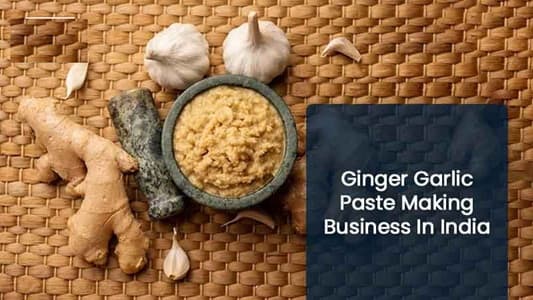
So, is ginger garlic paste manufacturing business profitable in India? Yes — highly profitable for businesses that maintain freshness, hygiene, proper preservation, and strong local distribution.
A Market Built on Daily Cooking Habits
Few food products in India enjoy the advantage of being used almost universally across households, restaurants, and catering businesses. Ginger garlic paste benefits from exactly that.
Several factors are driving market growth:
- Busy urban lifestyles
- Growth of restaurants and cloud kitchens
- Expansion of packaged food consumption
- Increasing demand for convenience products
- Growth of online grocery platforms
- Rising preference for ready-to-cook ingredients
Unlike trend-based food categories, ginger garlic paste is tied directly to everyday cooking, which creates stable and recurring demand.
Types of Ginger Garlic Paste Businesses
1. Retail Packaged Paste
Small jars and pouches sold through grocery stores and supermarkets.
2. Bulk Supply for Restaurants
Large-volume packaging for hotels, caterers, and commercial kitchens.
3. Organic and Preservative-Free Paste
Premium category growing rapidly in urban markets.
4. Private Label Manufacturing
Producing ginger garlic paste for supermarkets or food brands.
5. Frozen Paste Production
Longer shelf-life products targeting larger distribution networks.
Investment Required: Moderate and Scalable
One of the strengths of this business is that it can start relatively small and scale steadily.
A small manufacturing setup may require ₹2–8 lakh including:
- Grinding machines
- Mixing equipment
- Sealing and packaging machines
- Raw material stock
- Basic workspace
- Refrigeration and storage setup
A medium-scale semi-automatic production unit may require ₹10–30 lakh depending on production capacity and packaging automation.
Larger FMCG-style operations with advanced preservation and bottling systems require significantly higher investment.
Raw Materials Needed
The main raw materials include:
- Fresh ginger
- Garlic
- Salt and preservatives
- Edible oil
- Packaging jars or pouches
The freshness and quality of raw materials directly affect taste, aroma, shelf life, and customer trust.
Revenue and Profit Potential
The profitability of ginger garlic paste manufacturing comes from value addition and repeat consumption.
Raw ginger and garlic purchased in bulk are processed into packaged products that sell at significantly higher retail prices.
For example:
- Bulk ingredients processed into branded retail packs create strong markup opportunities.
- Restaurants and cloud kitchens provide regular repeat orders.
- Premium preservative-free products command higher pricing.
A medium-scale unit supplying retailers and food businesses can generate several lakhs in monthly revenue. Well-managed operations generally achieve net profit margins between 20–35% depending on branding, packaging, and distribution efficiency.
Businesses selling directly under their own brand often achieve much stronger long-term profitability.
What Makes This Business Work
1. Freshness and Taste Consistency
Customers expect strong aroma, smooth texture, and consistent flavour in every batch.
2. Hygiene Standards
Food safety and cleanliness are extremely important in processed food manufacturing.
3. Shelf Life Management
Proper preservation and packaging determine how far products can be distributed profitably.
4. Strong Distribution
Retail stores, supermarkets, restaurants, and online grocery channels drive sales growth.
5. Branding and Packaging
Clean, professional packaging improves trust and shelf appeal significantly.
Challenges to Prepare For
1. Shelf Life Issues
Poor preservation or packaging can cause spoilage quickly.
2. Raw Material Price Fluctuation
Ginger and garlic prices often rise seasonally.
3. Competition
Large FMCG brands and local manufacturers already operate in the market.
4. Refrigeration and Storage
Improper storage affects freshness and product quality.
5. Food Safety Compliance
FSSAI registration and hygiene compliance are essential.
Businesses that focus on freshness, consistency, and trustworthy quality usually build strong repeat customer bases.
How to Increase Profitability
1. Target Restaurants and Cloud Kitchens
Bulk supply contracts create stable recurring revenue.
2. Offer Multiple Packaging Sizes
Small pouches attract households, while larger packs serve commercial buyers.
3. Focus on Preservative-Free Products
Health-conscious urban consumers increasingly prefer cleaner-label food products.
4. Expand Product Range
Many businesses later add tomato puree, green chilli paste, onion paste, and ready-to-cook gravies.
5. Use Local Branding
Fresh local food brands often compete effectively against national FMCG companies.
Government Support and Food Industry Growth
India’s food processing sector is expanding rapidly, supported by:
- Growing organized retail
- Government food processing initiatives
- Expansion of online grocery delivery
- Increasing packaged food consumption
Small food manufacturers may also benefit from MSME registration and food-processing-related support schemes.
Ginger Garlic Paste vs Other Processed Food Businesses
Compared to snacks or luxury packaged foods, ginger garlic paste benefits from everyday cooking demand and repeat household usage.
The business also requires lower product innovation risk because consumption habits are already deeply established.
However, freshness management and distribution speed are much more important than in dry packaged food categories.
The Future of Ginger Garlic Paste Manufacturing in India
The future looks very strong. Urbanisation, busy lifestyles, and increasing food delivery culture are expected to push demand for ready-to-cook kitchen products even higher.
Cloud kitchens, restaurants, and quick-commerce grocery platforms are also expanding rapidly, creating larger commercial demand for prepared ingredients.
Premium organic and preservative-free food products are likely to become major growth areas in the coming years.
The Verdict: A Daily-Use Food Business With Strong Repeat Demand
The ginger garlic paste manufacturing business is one of the most practical food processing opportunities in India today. It combines stable daily demand, relatively moderate investment, and scalable distribution opportunities.
Success in this business depends heavily on freshness, hygiene, packaging quality, and customer trust rather than simply producing large quantities.
In a country where almost every curry begins with ginger and garlic, businesses that can deliver convenience without sacrificing taste will always find a market.
Frequently Asked Questions (FAQs)
Q1. How much investment is needed to start a ginger garlic paste manufacturing business in India?
A: A small setup may require ₹2–8 lakh, while medium-scale semi-automatic units may require ₹10–30 lakh or more.
Q2. Is ginger garlic paste manufacturing profitable in India?
A: Yes. Strong daily cooking demand and repeat purchases make it a highly profitable food processing business.
Q3. What licences are required for this business?
A: FSSAI registration, GST registration, and local trade licences are generally required.
Q4. Who are the major buyers of ginger garlic paste?
A: Households, restaurants, caterers, cloud kitchens, supermarkets, and grocery stores are major buyers.
Q5. What is the biggest challenge in this business?
A: Shelf-life management, hygiene maintenance, and raw material price fluctuations are major challenges.
Q6. Is demand for ready-to-cook products increasing in India?
A: Absolutely. Busy lifestyles and food delivery culture are driving strong growth in convenient cooking products.