India’s oil and gas sector is the lifeblood of the country’s energy security, fuelling a USD 3.7 trillion economy and supporting over 250 million tonnes of annual crude oil demand. India produces 30 million tonnes of crude oil and 35 billion cubic metres of natural gas domestically against annual demand of 250 million tonnes of crude and 65 BCM of gas, making the massive demand-supply gap a strategic priority for domestic production expansion. Oil and Natural Gas Corporation at Rs 3.5 lakh crore is India’s largest oil and gas company with 60 percent of domestic crude oil and 70 percent of domestic natural gas production. With Brent crude stabilising at USD 75 to 85 per barrel in 2026, India’s domestic producers generate healthy EBITDA per barrel of USD 25 to 35 above their breakeven costs of USD 35 to 45. The landmark ONGC-Reliance agreement to share deepwater resources signed in February 2026 is one of the most strategically significant developments in India’s upstream oil and gas sector. Let us have a look at the top 10 oil and gas companies in India for the year 2026.
1. Oil and Natural Gas Corporation Limited (ONGC)
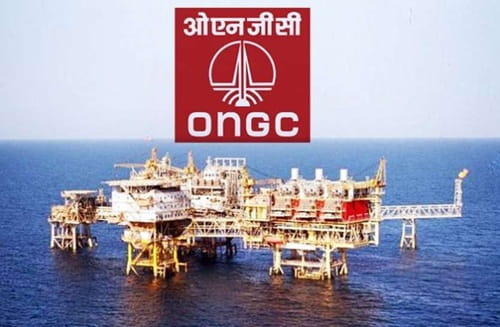
Oil and Natural Gas Corporation Limited, established in the year 1956 and headquartered in New Delhi, is India’s largest oil and gas company with a market capitalisation of Rs 3.5 lakh crore and producing 60 percent of India’s domestic crude oil and 70 percent of domestic natural gas output. In February 2026, ONGC announced an all-round Q3 surge with boosted consolidated and standalone earnings, declared its highest ever cumulative interim dividend of Rs 15,411 crore, and signed a landmark agreement with Reliance Industries to share deepwater resources. ONGC operates India’s most productive oil field — the Bombay High — offshore Mumbai and runs its subsidiary ONGC Videsh for international oil exploration and production.
ONGC serves India’s national energy security requirements as the primary domestic hydrocarbon producer and serves the Indian government as its most strategically important PSU, and its combination of domestic production, international E&P through ONGC Videsh, and downstream interests through HPCL makes it the most comprehensively positioned energy company in India.
2. Reliance Industries Limited (RIL)
Reliance Industries Limited, founded in the year 1966 by Dhirubhai Ambani and the largest private sector oil and gas company in India, operates the world’s largest single-location oil refining complex at Jamnagar, Gujarat with a combined capacity of 1.4 million barrels per day. The company’s oil-to-chemicals business generates revenues exceeding USD 114.1 billion making it India’s largest company by revenue. In February 2026, Reliance signed a landmark agreement with ONGC to share deepwater resources, representing a historic private-public collaboration in India’s upstream sector. Reliance is also signed an agreement with Abu Dhabi National Oil Company for a new petrochemical complex at Ruwais.
Reliance Industries serves the Indian and global petroleum products market through its Jamnagar refinery, international chemical buyers through its petrochemicals business, and its own retail fuel network through Reliance BP Mobility, making it the most commercially powerful private sector participant in India’s oil and gas value chain.
3. Indian Oil Corporation Limited (IOCL)
Indian Oil Corporation Limited, established in the year 1964 and headquartered in New Delhi, is India’s largest downstream company by refining capacity and the country’s biggest enterprise by revenue with a turnover that has historically competed with and surpassed Reliance Industries. The company operates 11 refineries with a combined capacity of 80.6 million tonnes per annum, the largest pipeline network in India spanning over 16,000 kilometres, and a retail fuel network of over 34,000 petrol pumps. IOC is a Maharatna PSU and is also India’s most important petroleum product marketing and distribution company reaching consumers across every corner of the country.
Indian Oil Corporation serves individual motorists, commercial transport operators, industrial fuel consumers, and aviation customers across India with its comprehensive range of petroleum products through the largest fuel retail and pipeline distribution network in the country, making it the most essential downstream energy infrastructure company in India.
4. Bharat Petroleum Corporation Limited (BPCL)
Bharat Petroleum Corporation Limited, established in the year 1952 as Burmah-Shell Refineries and headquartered in Mumbai, is one of India’s largest integrated oil companies with refineries in Mumbai and Kochi with a combined capacity of approximately 35.3 million tonnes per annum and a retail fuel network of over 20,000 petrol pumps. The company has a Maharatna status and is actively investing in expanding its petrochemicals, natural gas distribution, and renewable energy businesses as part of its energy transition strategy. BPCL is one of the three public sector oil marketing companies that procure ethanol under India’s Ethanol Blended Petrol program.
BPCL serves individual consumers, industrial buyers, aviation customers, and commercial operators across India with its petroleum products and is particularly known for its consumer-centric Petro Card loyalty program, MAK lubricants brand, and its SmartDrive series of high-performance fuels that have built strong brand preference among quality-conscious fuel buyers.
5. Hindustan Petroleum Corporation Limited (HPCL)
Hindustan Petroleum Corporation Limited, established in the year 1952 as Standard Vacuum Refining Company of India and now a subsidiary of ONGC, is one of India’s major integrated oil companies operating refineries at Mumbai and Visakhapatnam with a combined refining capacity of approximately 21.8 million tonnes per annum. The company is the leading producer and distributor of LPG in India, serving hundreds of millions of Indian households with cooking gas, and operates a nationwide network of petrol pumps, LPG distributors, and industrial fuel distribution infrastructure. HPCL’s HP Gas is one of India’s most recognised consumer brands.
HPCL serves Indian households primarily through its dominant LPG distribution business, motorists through its retail fuel network, and industrial customers through its petroleum products distribution, and is particularly important to India’s rural and lower-income consumer segments for whom affordable LPG cooking gas is a critical household energy need.
6. GAIL (India) Limited
GAIL India Limited, established in the year 1984 and headquartered in New Delhi, is India’s flagbearer in natural gas transmission and distribution and the country’s largest gas marketing company with a Maharatna status. The company operates a gas transmission pipeline network of approximately 16,000 kilometres across India and controls approximately 70 percent of India’s natural gas transmission capacity. GAIL also has a significant petrochemicals business producing polymers and a growing LNG trading and distribution operation that serves India’s transition toward a higher natural gas share in its energy mix.
GAIL serves India’s city gas distribution companies, industrial gas consumers, power plants, fertiliser manufacturers, and CNG vehicle operators with natural gas transmission, marketing, and distribution services, and is the most critical infrastructure company in India’s natural gas ecosystem whose pipeline network is the backbone of the country’s gas supply chain.
7. Oil India Limited
Oil India Limited, established in the year 1959 and headquartered in Duliajan, Assam, is India’s second public sector upstream oil and gas exploration and production company after ONGC, with producing fields in Assam, Arunachal Pradesh, and Rajasthan. The company is growing production from its Rajasthan and Assam basins and is among the best oil and gas stocks in India in 2026 given stable Brent crude prices and its low cost production structure. Oil India also has international operations through its stake in ONGC Videsh projects and in Numaligarh Refinery as a shareholder.
Oil India serves India’s national energy security through its domestic crude oil and natural gas production from northeastern India and Rajasthan, and is a strategically important upstream PSU that provides a second pillar of domestic oil production alongside ONGC in India’s effort to reduce its massive dependence on imported crude oil.
8. Petronet LNG Limited
Petronet LNG Limited, established in the year 1998 as India’s first LNG import and regasification company and headquartered in New Delhi, is the most important piece of infrastructure in India’s natural gas import supply chain, operating LNG terminals at Dahej in Gujarat and Kochi in Kerala with a combined regasification capacity of approximately 22.5 million tonnes per annum. The company is a joint venture between GAIL, ONGC, IOC, and BPCL with a government shareholding, and its Dahej terminal handles the majority of India’s LNG imports. Petronet is cited as one of India’s top oil and gas stocks for 2026 given India’s growing LNG import requirements.
Petronet LNG serves India’s natural gas supply chain by importing, storing, and regasifying liquefied natural gas for distribution to city gas, industrial, and power sector customers, and is a monopoly-like infrastructure asset in India’s gas import chain whose volumes will grow as India expands its natural gas consumption toward the 15 percent of primary energy mix target.
9. Nayara Energy Limited (Rosneft)
Nayara Energy, formerly known as Essar Oil and now 49.13 percent owned by Russia’s Rosneft with approximately USD 20 billion in total Russian investment, operates the Vadinar refinery in Gujarat — India’s second largest private sector oil refinery with a capacity of over 20 million tonnes per annum. The company also operates a nationwide fuel retail network of over 6,800 petrol pumps under the Nayara Energy brand. The Vadinar refinery has been processing significant volumes of Russian crude oil at preferential pricing since 2022, making it a strategically important asset in India’s energy cost management strategy.
Nayara Energy serves the Indian petroleum products market through its premium Vadinar refinery with superior Nelson Complexity Index and its growing retail fuel network, and is strategically critical to India’s energy security as the primary processor of discounted Russian crude that has been imported in large volumes since 2022.
10. Cairn India (Vedanta Oil and Gas)
Cairn India, now operating as the oil and gas division of Vedanta Limited which was established in the year 2006 as an independent company, is a major private sector oil producer in India with its primary producing assets in the Barmer basin of Rajasthan. The Mangala oil field at Barmer is one of India’s largest onshore oil discoveries and has contributed significantly to domestic crude oil production. Cairn’s cumulative contribution to India’s domestic crude oil production stands at 54 billion barrels to date and it also operates in international geographies including South Africa and Sri Lanka.
Cairn India serves India’s domestic crude oil supply requirements through its Rajasthan basin production and is the most important private sector upstream oil producer in India, with its Barmer fields contributing a meaningful proportion of India’s total domestic crude output and reducing the country’s dependence on imported oil.
Frequently Asked Questions (FAQs)
Q1. Which is the largest oil and gas company in India in 2026?
A: ONGC is India’s largest oil and gas company by market capitalisation at Rs 3.5 lakh crore and by domestic production contributing 60 percent of India’s crude oil and 70 percent of natural gas output. Reliance Industries is India’s largest private sector oil company and the country’s biggest company by revenue, with the world’s largest single-location refinery at Jamnagar. IOCL is the largest by refining capacity and retail fuel network.
Q2. What is the landmark ONGC-Reliance deepwater agreement of 2026?
A: In February 2026, ONGC and Reliance Industries signed a landmark agreement to share deepwater resources in the Krishna-Godavari basin off India’s eastern coast. This historic private-public collaboration brings together ONGC’s exploration rights and Reliance’s deepwater technology and operational expertise to jointly develop India’s potentially vast deepwater hydrocarbon resources. This agreement is one of the most strategically significant developments in India’s upstream oil and gas sector in recent years.
Q3. How dependent is India on oil imports in 2026?
A: India is heavily dependent on oil imports, producing only 30 million tonnes of crude oil domestically against annual demand of 250 million tonnes — a domestic supply coverage of just 12 percent. The remaining 88 percent is imported, making India the world’s third largest oil importer. This massive import dependence makes domestic production expansion a strategic priority and explains the government’s strong support for ONGC, Oil India, and Cairn India’s upstream exploration and production programs.
Q4. What is India’s natural gas consumption target and how is it being met?
A: India’s government has set a target to increase natural gas’s share in the primary energy mix from the current approximately 6 percent to 15 percent by 2030. This is being pursued through expansion of city gas distribution networks to all districts, increased LNG imports through terminals operated by Petronet LNG, domestic gas production expansion by ONGC and Oil India, and the development of gas-fired power generation as a transition fuel. GAIL’s extensive pipeline network is the critical infrastructure enabling this gas expansion.
Q5. How is India’s refining sector positioned globally in 2026?
A: India is the world’s fourth largest oil refiner with a total installed refining capacity of approximately 250 million tonnes per annum. India’s refining sector is one of the most complex globally with several refineries having high Nelson Complexity Indices. Reliance’s Jamnagar complex at 1.4 million barrels per day capacity is the world’s largest single-location refinery. India’s downstream companies IOCL, BPCL, and HPCL are among Asia’s largest oil marketing companies by retail network scale and volume of petroleum products handled.