India’s electric vehicle market is experiencing one of the most extraordinary growth phases of any automotive market in history. The India EV market was valued at USD 18.79 billion in 2025 and is forecast to reach USD 31.09 billion by end of 2026, with long-range projections showing growth to USD 191,037 million by 2034 at a CAGR of 54.94 percent. Electric car sales jumped 56 percent YoY in October 2025, reaching 17,783 units in a single month. Based on the Vahan Dashboard as of June 1, 2026, Tata Motors is the clear passenger EV leader with over 39 percent market share. In the two-wheeler segment, TVS Motors, Bajaj Auto, and Ather Energy are the top three brands in May 2026. The PM eDrive Scheme, FAME subsidies, and state-level EV policies are creating powerful demand tailwinds across all vehicle segments. Let us have a look at the top 10 electric vehicle companies in India for the year 2026.
1. Tata Motors Limited
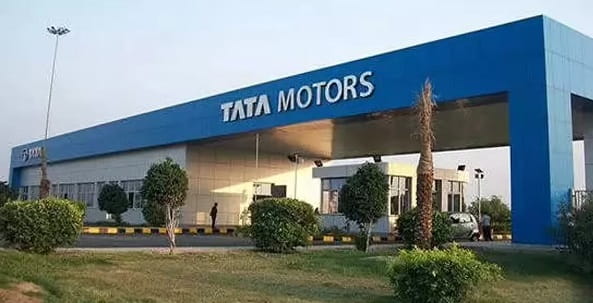
Tata Motors, established in the year 1945 as part of the Tata Group and headquartered in Mumbai, is India’s undisputed leader in the electric passenger vehicle segment with over 39 percent market share based on the Vahan Dashboard as of June 1, 2026. The company’s EV portfolio includes the Nexon EV, Punch EV, Tiago EV, Tigor EV, Curvv EV, and the premium Harrier.ev launched in June 2025. In February 2026, Tata Motors announced plans to double India’s charging infrastructure to 400,000 charge points by 2027. Its Agratas battery gigafactory initiative is targeting cost reduction through localised lithium-ion battery production.
Tata Motors serves individual car buyers seeking affordable to premium electric vehicles across the full passenger car spectrum, and its dominant position in India’s EV market has been built through the widest model range at every price point from Rs 9 lakh to Rs 25 lakh plus, backed by one of India’s largest and most reliable automotive service networks.
2. Ola Electric Mobility Limited
Ola Electric, founded in the year 2017 by Bhavish Aggarwal and listed on Indian stock exchanges in 2024, is India’s most prominent electric two-wheeler company and the leader in the electric scooter segment. The company is commissioning a large-scale battery manufacturing facility for cell production as part of its Future Factory — a highly automated Industry 4.0 production ecosystem in Tamil Nadu. Ola Electric’s Q4 FY26 revenue grew 35 percent QoQ and net losses narrowed by 51 percent QoQ to Rs 428 crore, reflecting improving operational leverage as production volumes scale.
Ola Electric serves urban commuters across India with its electric scooters under the S1 series at various price points, and is building vertical integration from cell manufacturing through scooter assembly to direct-to-consumer retail that eliminates dealer margins and creates a technology-hardware-software ecosystem analogous to Apple’s approach in consumer electronics.
3. Mahindra Electric Automobile Limited
Mahindra Electric Automobile Limited, the dedicated EV subsidiary of the Mahindra Group established in the year 1945, is one of India’s most significant players in the electric passenger vehicle segment and is the second most popular EV brand in the passenger car segment based on the Vahan Dashboard as of June 1, 2026, following closely behind Tata Motors. The company launched its INGLO electric platform in 2024 — a modular EV architecture designed for multiple body styles — and introduced new electric commercial vehicles targeting last-mile delivery in September 2025. Mahindra’s BE and XEV electric SUV series have been building excitement in the premium EV segment.
Mahindra Electric serves both individual consumers seeking premium electric SUVs and commercial operators seeking fleet electric vehicles for logistics and last-mile delivery applications, and its INGLO modular platform investment positions it to launch multiple EV body styles efficiently making it a credible long-term challenger to Tata Motors’ EV leadership.
4. TVS Motor Company Limited
TVS Motor Company, founded in the year 1978 and headquartered in Chennai, has emerged as the top electric two-wheeler brand in India in May 2026 based on Vahan Dashboard data, leading the segment alongside Bajaj Auto and Ather Energy. The company’s iQube electric scooter range has been one of India’s most successful EV launches, combining TVS’s decades of two-wheeler manufacturing expertise with competitive battery range, fast charging, and strong after-sales service coverage through its extensive dealership network.
TVS Motor serves urban and semi-urban two-wheeler buyers across India with its iQube electric scooter range, and its established dealership and service network covering hundreds of cities provides a significant advantage over pure-play EV startups in delivering reliable after-sales service to EV customers who are often buying their first electric vehicle.
5. Ather Energy Limited
Ather Energy, founded in the year 2013 by Tarun Mehta and Swapnil Jain as IIT Madras alumni and headquartered in Bengaluru, is India’s most premium and technology-forward electric scooter company with a cult-like following in tier-1 cities and a 14.3 percent market share in the electric two-wheeler segment. The company’s Q1 FY26 revenue grew 79 percent YoY to Rs 645 crore with losses narrowing 24 percent QoQ. In January 2025, Ather launched its upgraded 450 series including the 450S, 450X, and 450 Apex featuring enhanced AI, IoT connectivity, and smart mobility features. Ather signed an MoU with Infineon Technologies in May 2025 to jointly develop advanced semiconductor technologies for India’s EV sector.
Ather serves tech-savvy urban professionals who seek the highest quality, most technologically advanced electric scooter experience and is the EV brand that has done the most to establish that electric two-wheelers can be premium, aspirational products rather than just budget commuter alternatives.
6. Bajaj Auto Limited
Bajaj Auto, established in the year 1945 and headquartered in Pune, has become one of India’s most significant EV players through its Chetak electric scooter and is the second top brand in May 2026 for electric passenger three-wheelers based on Vahan Dashboard data. The company launched the Chetak as a premium electric scooter positioned as the revival of an iconic Indian brand, and is leveraging its extraordinary manufacturing scale, dealer network, and export relationships to build a competitive EV business across both scooters and three-wheelers.
Bajaj Auto serves electric scooter buyers through its Chetak range and electric three-wheeler operators through its fleet-focused products, and benefits enormously from its existing manufacturing infrastructure and pan-India dealership coverage that gives it cost and distribution advantages over pure-play EV startups who are building these capabilities from scratch.
7. Hyundai Motor India Limited
Hyundai Motor India, a subsidiary of South Korean Hyundai Motor Company established in India in the year 1996 and recently listed on Indian stock exchanges, has established a growing EV presence in India through its Ioniq 5 and Creta Electric models. The Creta Electric is one of the most anticipated mass-market electric SUVs in India and Hyundai’s launch of this model marks a significant shift toward bringing EV options to the mainstream Indian car buyer at competitive price points rather than positioning EVs exclusively as premium products.
Hyundai India serves aspirational and quality-seeking Indian car buyers who want technologically advanced electric vehicles combining Korean design, feature richness, and competitive pricing, and its Creta Electric positions the brand to capture a significant share of the growing mid-range electric passenger car market as EV adoption moves beyond the early adopter phase.
8. JSW MG Motor IQndia
MG Motor India, now operating as a joint venture between SAIC Motor and the JSW Group following JSW’s stake acquisition in 2024, has been one of India’s most significant premium EV players through its ZS EV model — one of the first accessible premium electric SUVs in the Indian market. The company has introduced a Battery-as-a-Service model that separates the battery cost from the vehicle cost, reducing the upfront purchase price significantly and addressing one of the key barriers to EV adoption in India. MG’s connected car technology and large touchscreen features have made it popular among technology-forward buyers.
JSW MG Motor serves technology-conscious and feature-seeking premium car buyers in India with its electric vehicles, and its Battery-as-a-Service innovation is one of the most consumer-friendly approaches to reducing EV adoption barriers in India by allowing buyers to subscribe to battery capacity rather than own it outright, directly lowering the upfront cost.
9. Hero MotoCorp Limited (Vida EV)
Hero MotoCorp, the world’s largest two-wheeler manufacturer by volume established in the year 1984 and headquartered in New Delhi, is building its EV presence through its Vida branded electric scooter range. The company’s extraordinary existing distribution network spanning thousands of dealerships across India, deep manufacturing expertise, and strong rural market presence provide a unique platform for scaling EV adoption beyond the urban tier-1 cities where most EV companies focus their efforts.
Hero MotoCorp serves India’s mass-market two-wheeler buyers including semi-urban and rural customers with its Vida electric scooters, and its extraordinary dealership coverage across small towns and rural areas positions it as potentially the most important enabler of mass-market EV adoption in Bharat rather than just India’s major metropolitan areas.
10. Greaves Electric Mobility
Greaves Electric Mobility, a subsidiary of Greaves Cotton Limited founded in the year 1859, has carved out a growing niche in India’s electric three-wheeler and entry-level electric two-wheeler market by focusing on the commercial passenger and cargo three-wheeler segments that are critical for India’s last-mile mobility ecosystem. The company is cited among the top EV companies to watch in India 2026 for its commercial vehicle EV focus and its role in decarbonising India’s high-frequency commercial transportation segments that are responsible for significant urban air pollution.
Greaves Electric Mobility serves fleet operators, e-rickshaw operators, last-mile delivery companies, and commercial cargo transport businesses with its electric three-wheelers and commercial two-wheelers, and is an important player in decarbonising India’s commercial transportation segment where cumulative environmental impact of electrification is disproportionately large relative to the vehicle numbers.
Frequently Asked Questions (FAQs)
Q: Which is the largest EV company in India in 2026?
A: Tata Motors is the clear leader in India’s electric passenger vehicle segment with over 39 percent market share based on the Vahan Dashboard as of June 1, 2026. In the electric two-wheeler segment, TVS Motor Company, Bajaj Auto, and Ather Energy are the top three brands in May 2026. Ola Electric is the highest-profile pure-play EV startup and was earlier the volume leader in scooters before TVS regained market leadership.
Q: What is the size of India’s EV market in 2026?
A: The India EV market was valued at USD 18.79 billion in 2025 and is forecast to reach USD 31.09 billion by end of 2026. Long-range projections from IMARC show the market reaching USD 191,037 million by 2034 at an extraordinary CAGR of 54.94 percent. Electric car sales jumped 56 percent YoY in October 2025 reaching 17,783 units in a single month, reflecting the rapidly accelerating pace of EV adoption.
Q: What government schemes are supporting EV adoption in India in 2026?
A: The PM eDrive Scheme provides subsidies for electric two-wheelers, three-wheelers, buses, and trucks. FAME II subsidies have supported EV purchases and charging infrastructure. Multiple state governments offer additional purchase subsidies and registration fee exemptions. The Faster Adoption of Manufacturing of Electric Vehicles policy is being updated for the next phase. BPCL’s partnership with Mahindra Electric to set up fast-charging at BPCL petrol stations is improving public charging infrastructure.
Q: What is the biggest challenge facing India’s EV industry in 2026?
A: The most significant challenges include the high upfront purchase price compared to petrol vehicles which remains a barrier despite subsidies, the limited public charging infrastructure outside major cities, range anxiety for longer trips, higher insurance costs for EVs due to expensive battery replacement, and the lack of standardised charging protocols across different EV brands. Battery technology improvements and falling cell costs are steadily addressing the price gap and range limitations.
Q: Which Indian EV company is building battery manufacturing capability?
A: Multiple companies are investing in domestic battery manufacturing. Ola Electric is commissioning a large-scale battery manufacturing facility with cell production capability at its Future Factory. Tata Motors through its Agratas battery gigafactory initiative is targeting localised lithium-ion battery pack production. Ather Energy signed an MoU with Infineon Technologies in May 2025 to jointly develop advanced semiconductor technologies for EVs. The government’s PLI scheme for advanced chemistry cells is incentivising multiple players to build cell manufacturing capability in India.