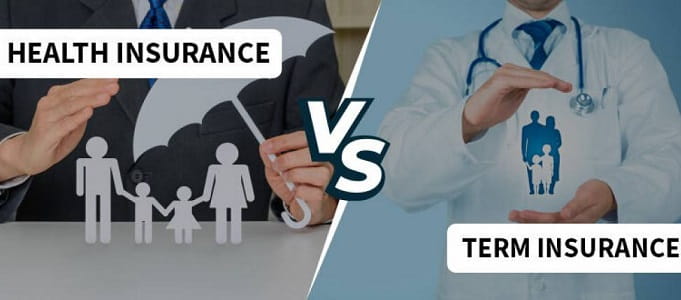
Most people buy insurance only after something scary happens. A medical emergency, a sudden death in the family, or a hospital bill that wipes out savings overnight. That is when terms like “health insurance” and “term insurance” suddenly become important.
But here’s the problem — many people compare the two as if they are competing products. They are not. A health insurance plan protects your money when you fall sick. A term insurance plan protects your family when you are no longer alive to support them.
One covers medical expenses. The other replaces lost income after death.
So which one is better? The honest answer depends on what kind of financial risk worries you more right now. But for most working adults, both serve completely different purposes and ideally should exist together.
The confusion usually starts because both policies require yearly premiums and both promise “financial protection.” Yet what they protect is entirely different.
This article breaks down the real difference between health insurance and term insurance in simple language so you can decide what matters more for your current stage of life.
What Is Health Insurance?
Health insurance is designed to cover medical and hospital-related expenses. If you are admitted to a hospital because of illness, surgery, accident, or certain treatments, the insurer pays either directly to the hospital or reimburses your expenses.
A modern health insurance plan may cover:
- Hospitalisation expenses
- ICU charges
- Doctor consultation fees
- Surgeries
- Pre- and post-hospitalisation costs
- Daycare procedures
- Critical illnesses
- Ambulance charges
- Medicines and diagnostic tests
- Cashless treatment at network hospitals
Some premium plans also cover maternity expenses, mental health treatment, and annual health check-ups.
The biggest advantage of health insurance is that it prevents medical bills from destroying your savings. Healthcare costs in India are rising rapidly. A single surgery in a private hospital can easily cost several lakhs today.
Without insurance, families often end up using emergency savings, loans, or even selling assets to manage treatment expenses.
What Is Term Insurance?
Term insurance is the simplest and purest form of life insurance.
You pay a fixed premium for a certain number of years. If the insured person dies during the policy term, the insurer gives a lump-sum amount to the nominee or family.
That payout can be used for:
- Household expenses
- Children’s education
- Loan repayment
- Rent and daily living costs
- Financial security for dependants
Unlike health insurance, term insurance does not cover hospital bills or treatment costs.
Also, if the insured person survives the policy term, there is usually no maturity benefit in a pure term plan.
That is why term insurance premiums are surprisingly affordable compared to other life insurance products. A healthy young adult can often get a large cover amount at a relatively low yearly premium.
The entire purpose of term insurance is income replacement. It protects your family from financial collapse if you are no longer there to earn.
Key Differences at a Glance
| Feature | Health Insurance | Term Insurance |
| Purpose | Covers medical expenses | Provides financial support after death |
| Benefit Trigger | Illness or hospitalisation | Death of insured person |
| Who Receives Benefit | Hospital or policyholder | Nominee/family |
| Type of Cover | Medical protection | Life protection |
| Payout Style | Reimbursement/cashless | Lump-sum payout |
| Useful For | Everyone | Mainly earning members |
| Premium | Depends on age and medical history | Usually cheaper for high coverage |
| Maturity Benefit | Usually no | Usually no in pure term plans |
| Covers Hospital Bills | Yes | No |
| Covers Family Income Loss | No | Yes |
Which One Should You Buy First?
This depends mainly on your life situation.
Choose Health Insurance First If:
- You do not already have medical coverage
- You have ageing parents
- You are worried about hospital expenses
- You work in a job without stable employee benefits
- You have existing health issues in the family
Medical emergencies are extremely common. Even young people can suddenly face dengue, accidents, surgeries, or infections requiring hospitalisation.
A health insurance plan protects you immediately from these financial shocks.
Choose Term Insurance First If:
- Your family depends on your income
- You have children
- You have home loans or debts
- You are the sole earning member
- Your spouse or parents rely financially on you
If your death would create financial hardship for others, term insurance becomes essential.
The younger you buy it, the cheaper the premium usually stays for the full policy term.
Can One Replace the Other?
No. They solve completely different problems.
Health insurance cannot replace lost family income after death.
Term insurance cannot pay your hospital bills while you are alive.
This is why financial planners usually treat them as two separate pillars of protection.
One protects your health expenses.
The other protects your family’s future income.
Trying to choose only one forever is often the wrong comparison.
What About Employer Insurance?
Many salaried employees believe their company-provided insurance is enough. That can be risky.
Corporate health insurance usually has limitations:
- Lower coverage amount
- No long-term guarantee
- Policy ends when you leave the job
- Parents may not be fully covered
- Certain illnesses may have restrictions
Similarly, employer life insurance is often small compared to what a family actually needs.
A personal policy gives long-term stability that does not depend on your employer.
Which Is More Important for Young People?
Young adults often ignore both because they feel healthy and financially safe.
But buying early has major advantages:
Health Insurance Early Benefits
- Lower premiums
- Easier approval
- Waiting periods finish earlier
- Better long-term coverage continuity
Term Insurance Early Benefits
- Very low premium locking
- Higher chances of approval
- Large cover at affordable cost
Insurance becomes expensive with age and medical complications.
Buying young is usually smarter than waiting for “the right time.”
Common Mistakes People Make
1. Buying Too Little Coverage
A ₹2–3 lakh health cover may not be enough in major cities today. Medical inflation is rising quickly.
Similarly, a small term insurance cover may not support a family for long.
2. Mixing Investment With Insurance
Many people buy expensive policies that combine insurance and investment together. Pure health insurance and pure term insurance are often more efficient and transparent.
3. Hiding Medical History
Giving false information during policy purchase can lead to claim rejection later. Always disclose health conditions honestly.
4. Delaying Purchase
People often wait until marriage, parenthood, or illness before buying insurance. That delay usually increases premiums significantly.
The Bottom Line
Health insurance and term insurance are not rivals. Comparing them directly is a bit like comparing a seatbelt with a fire extinguisher. Both protect you, but against different dangers.
Health insurance keeps a medical crisis from becoming a financial disaster.
Term insurance keeps your family financially stable if something happens to you.
If your budget allows only one right now, choose based on your biggest current risk. A young single person may prioritise health insurance first. A married person with children may urgently need term insurance.
But over the long run, having both creates the strongest safety net.
The real mistake is not choosing the wrong one.
It is having no protection at all.
Frequently Asked Questions
Q. Is health insurance better than term insurance?
Neither is universally better. Health insurance protects against medical expenses, while term insurance protects your family financially after your death.
Q. Can I buy both together?
Yes, and many financial experts recommend having both for complete protection.
Q. Is term insurance useful if I am single?
Yes, especially if your parents depend on your income or if you have loans. Otherwise, health insurance may feel more immediately useful.
Q. Does health insurance cover death?
No. It mainly covers treatment and hospital-related expenses.
Q. Does term insurance cover critical illness?
Only if you add a critical illness rider or buy a separate policy.
Q. Which is cheaper?
Term insurance usually offers very large coverage at lower premiums. Health insurance premiums can rise with age and medical conditions.