When you need short-term money, using an existing Fixed Deposit as security can be much cheaper than borrowing through an unsecured credit facility. A credit-card-linked overdraft, however, may offer faster access without requiring an FD.
The better option depends mainly on whether you already have a Fixed Deposit, how much you need, how long you will use the money and the interest rate offered by the bank.
First Understand the Two Facilities
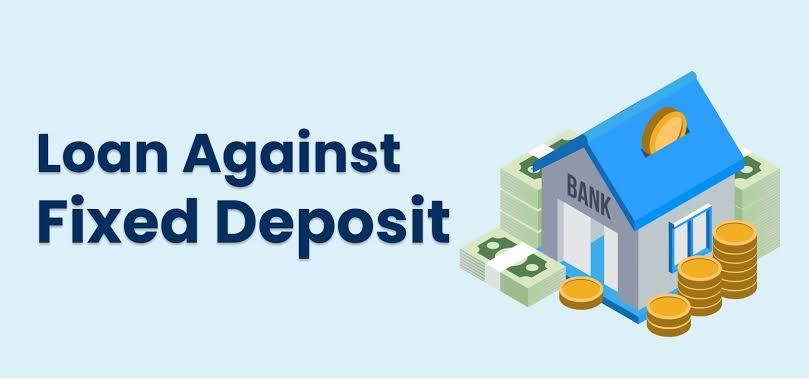
A Loan Against Fixed Deposit is a secured borrowing facility where your existing FD is pledged to the bank. Instead of prematurely breaking the FD, you borrow against it while the deposit generally continues earning interest.
Many banks offer this facility either as:
- a demand loan; or
- an overdraft against the Fixed Deposit.
For example, SBI currently provides both demand-loan and overdraft facilities against eligible time deposits and allows borrowing of up to 90% of the underlying deposit value in specified cases.
A credit card overdraft facility, on the other hand, needs a little clarification. It is not one standard product with identical terms across all Indian banks.
RBI permits card issuers to issue credit cards linked to overdraft accounts. Such a card can essentially provide access to an approved overdraft limit, with interest, repayment and other conditions governed by the underlying overdraft facility.
This should not be confused with simply withdrawing cash from an ordinary credit card at an ATM, which can have completely different charges.
1. Loan Against FD Is Secured; Credit Card Overdraft May Be Unsecured
This is the biggest difference.
With a loan or overdraft against an FD, the bank already holds security in the form of your Fixed Deposit.
Suppose you have an FD of ₹5 lakh. The bank may allow you to borrow a percentage of that amount while placing a lien on the deposit.
Because the bank has strong security, its lending risk is comparatively low.
A credit-card-linked overdraft or pre-approved overdraft offered on the basis of your credit profile may not have such collateral. Eligibility can therefore depend more heavily on:
- income;
- existing relationship with the bank;
- repayment history;
- credit score;
- existing credit-card limit;
- internal bank assessment.
That difference in risk often affects the interest rate.
2. Loan Against FD Usually Has a Lower Interest Rate
For many borrowers, this is the strongest reason to choose an FD-backed facility.
Banks commonly price an overdraft against an FD as a small percentage above the interest rate being earned on that deposit.
For example, SBI currently states an interest rate of 1% above the applicable time-deposit rate for its loan against time deposit facility.
HDFC Bank’s published terms for certain overdrafts against FDs provide for a rate of 2% per annum above the FD rate, with interest charged for the period and amount actually utilised.
The exact spread varies between lenders and products.
A credit-card overdraft does not have one universal interest rate. The rate is determined by the particular overdraft facility sanctioned by the bank.
Before using it, check the annual interest rate or APR rather than assuming it will cost the same as an FD-backed overdraft.
3. Do Not Compare Only the Advertised Interest Rate
Suppose your ₹5 lakh FD earns 7% per year and the bank offers an overdraft against it at 8%.
At first glance, you may think borrowing costs only 1%.
That is not exactly how the cash flows should be viewed, because you continue earning the FD interest while separately paying interest on the amount borrowed.
Still, the relatively small spread between the FD rate and loan rate can make this facility considerably cheaper than many unsecured borrowing options.
Before choosing either facility, compare:
- borrowing interest rate;
- processing fee;
- annual or renewal charges;
- late-payment charges;
- foreclosure charges, if any;
- other account-maintenance charges.
Compare the total cost rather than one percentage.
4. FD Loan Lets You Keep the Deposit Intact
Without a loan facility, someone needing emergency cash may simply break the Fixed Deposit.
That can create two problems:
- future FD interest is lost; and
- premature-withdrawal conditions or penalties may apply.
Borrowing against the FD gives you access to liquidity without necessarily closing the investment.
ICICI Bank, for example, explains that an overdraft against an eligible FD allows the deposit to continue while funds are borrowed against it.
This can make sense when the need for money is temporary and you expect to repay the borrowing relatively quickly.
5. Your FD Determines How Much You Can Borrow
The major limitation of an FD-backed loan is obvious: you first need an eligible Fixed Deposit.
The borrowing limit is normally only a percentage of the FD value.
Banks often permit limits of around 75% to 90%, depending on the deposit and the manner in which the facility is taken.
For example, SBI states that loans through branches can be available up to 90% of the underlying security value, while its online limits vary according to the type of time deposit.
Therefore, a ₹2 lakh FD cannot normally support a ₹5 lakh loan.
A credit-card overdraft does not depend on an FD balance. The bank decides the sanctioned limit according to the particular product and the borrower’s eligibility.
6. Interest on an FD Overdraft Is Generally Charged Only on the Amount Used
This is where an overdraft against FD can be more useful than taking a conventional lump-sum loan.
Suppose your approved overdraft limit is ₹4 lakh but you use only ₹80,000.
Interest is normally calculated on the amount actually utilised rather than the entire sanctioned limit.
HDFC Bank’s published FD-overdraft terms state that interest is charged only on the amount utilised.
ICICI Bank similarly describes its overdraft against FD as charging interest on the utilised portion.
A genuine overdraft linked to a credit card can work on a similar utilisation principle, but the exact repayment and interest rules depend on the underlying overdraft agreement.
7. Credit Card Overdraft Can Be More Convenient When You Have No FD
The obvious advantage of a credit-card-linked overdraft is that you may not have to pledge a deposit.
For an eligible existing customer, the bank may already have sufficient income and repayment data to make a credit decision.
This can make the facility useful when:
- you do not have an FD;
- your savings should not be locked as collateral;
- you need short-term liquidity;
- the bank has offered a competitive pre-approved limit.
But convenience should not be confused with low cost.
Always check the sanctioned overdraft interest rate and charges before using the limit.
8. Do Not Confuse Overdraft With Credit Card Cash Withdrawal
This distinction is extremely important.
Taking cash from an ordinary credit card is not automatically the same as using an overdraft account.
A normal credit card may have:
- a cash-advance fee;
- separate cash-withdrawal limit;
- interest charged according to the card terms;
- no normal interest-free period on cash transactions.
A credit card linked to an overdraft works differently because RBI permits a card to act as a means of accessing funds from the underlying OD account.
RBI states that where such a card accesses an overdraft, matters such as interest, repayment schedule, penalties and cash-withdrawal limits should correspond to the terms of that overdraft facility.
Therefore, check what product your bank has actually offered.
9. Repayment Flexibility Can Be Better With an Overdraft
A conventional loan may require fixed EMIs.
An overdraft works differently.
You receive a sanctioned limit and use funds according to need. Depositing money back into the OD account reduces the utilised amount and can consequently reduce future interest.
This makes overdrafts particularly useful for temporary cash-flow gaps.
For example, you may need ₹1 lakh today but expect ₹70,000 to arrive after 15 days.
An overdraft lets you repay that ₹70,000 as soon as it arrives instead of carrying the full borrowing for a long period.
Both an FD-backed OD and a properly structured credit-card-linked OD can provide this flexibility.
10. What Happens to the FD While the Loan Is Outstanding?
When the bank grants credit against your FD, it generally creates a lien or security interest over the deposit.
This means you cannot normally treat that FD as completely free money while the loan remains outstanding.
HDFC Bank’s published terms, for example, state that customers should not seek premature withdrawal of the pledged deposit until the overdraft has been repaid, and the bank retains rights over the FD if the borrower defaults.
Similar conditions can apply with other banks.
Therefore, if you expect to need the entire FD amount shortly, pledging it against borrowing may not be suitable.
11. What Happens If You Default on a Loan Against FD?
Because the FD is security, the bank has a direct source from which it can recover dues according to the agreed terms.
The lender may adjust or prematurely encash the pledged deposit if the secured borrowing is not repaid.
The risk is therefore very clear:
failure to repay can result in losing part or all of the FD needed to settle the outstanding borrowing.
This is different from saying that an FD-backed loan is risk-free. It is cheaper partly because your own deposit is protecting the lender.
12. Credit Score Requirements May Differ
An FD-backed facility can be easier to obtain because the borrowing is supported by the deposit.
Banks may therefore be less dependent on the borrower’s unsecured creditworthiness than they would be for an unsecured facility, although each bank follows its own eligibility and sanction policy.
A credit-card or unsecured overdraft usually relies more heavily on the customer’s credit profile and banking relationship.
Credit behaviour also matters after sanction.
CIBIL states that repayment history, credit utilisation, age of credit and credit enquiries are among the factors affecting the CIBIL Score. High utilisation can indicate greater dependence on borrowed money.
Whichever facility you choose, missed payments or unmanaged debt can damage your credit profile.
13. Processing and Other Charges Can Change the Comparison
Do not assume that an FD-backed loan is automatically free of charges.
Some banks may offer:
- zero processing fees;
- no prepayment penalty;
- simple online activation.
Others can have specific processing or account charges depending on the product.
For example, SBI currently advertises zero processing fees and no prepayment penalty on its loan against time deposit product.
Credit-card overdraft facilities can have their own processing, renewal, account or repayment charges.
Always read the sanction letter or Key Facts Statement before accepting either facility.
14. Which Is Better for a Very Short-Term Emergency?
If you already have an eligible FD and need money for only a few weeks or months, an overdraft against the FD will often be the more economical choice, particularly when the bank charges only a modest spread above the FD rate.
You can:
- avoid breaking the FD;
- borrow only what you need;
- pay interest on the utilised amount;
- repay as soon as funds become available.
However, confirm that there is no unusual processing charge that removes the cost advantage.
15. When Can a Credit Card Overdraft Make More Sense?
A credit-card-linked overdraft can make sense when:
- you have no suitable FD;
- you do not want to pledge your deposit;
- the bank has already offered an OD limit;
- the interest rate is reasonable;
- you need revolving access to funds;
- repayment is expected within a manageable period.
It becomes less attractive if the interest rate and fees are substantially higher than an available secured alternative.
16. Which Is Better for a Large Amount?
If you hold a sufficiently large FD, the FD-backed facility may provide substantial borrowing capacity.
However, the bank will generally lend only up to its permitted percentage of the deposit.
If your FD is ₹5 lakh and the permitted limit is 90%, the maximum facility would normally be around ₹4.5 lakh, subject to the bank’s terms.
A credit-card overdraft limit is determined independently by the bank and could be lower or higher depending on your eligibility.
Therefore, compare the actual sanctioned limits rather than assuming one facility always provides more money.
17. Which Facility Is Safer From a Debt-Control Perspective?
An FD-backed loan has a natural ceiling because borrowing is limited by the deposit pledged.
That can reduce the temptation to take debt far beyond the value of assets you already own.
A credit-card or unsecured overdraft requires more discipline because the facility may feel like readily available spending money.
Use an overdraft for genuine liquidity needs, not to routinely spend beyond your income.
Repeatedly remaining close to the full sanctioned limit can also indicate financial stress and increase borrowing costs.
Loan Against FD or Credit Card Overdraft: Which Should You Choose?
Choose a Loan or Overdraft Against Fixed Deposit when:
- you already have a suitable FD;
- the need for money is temporary;
- you do not want to break the deposit;
- the FD-backed rate is significantly lower;
- you are comfortable pledging the FD as security.
Consider a Credit Card Overdraft Facility when:
- you do not have an FD;
- you have received a genuine bank-approved overdraft offer;
- the interest rate and charges are competitive;
- you need revolving access to funds;
- you can repay the utilised amount without allowing the debt to continue indefinitely.
Final Words
For someone who already has an eligible Fixed Deposit, borrowing against the FD is usually the first option worth comparing because it is secured and commonly carries a relatively low interest rate.
A credit-card-linked overdraft can offer greater convenience when no FD is available, but check the interest rate, processing charges and repayment terms carefully. Most importantly, confirm whether the bank is offering a true overdraft facility or merely a standard credit-card cash withdrawal or card loan, because the cost can be very different.