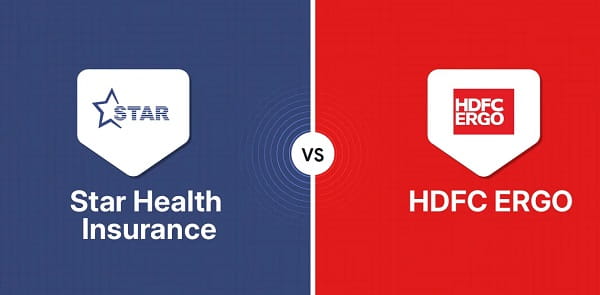
Choosing a health insurance provider often comes down to two names that dominate the standalone and general insurance space respectively — Star Health and HDFC ERGO. Both are reputable, both are IRDAI-regulated, and both offer a wide range of plans. But they are built differently, priced differently, and serve slightly different customer profiles. Here is everything you need to know to make the right call.
About the Companies
Star Health and Allied Insurance is India’s largest standalone health insurer, founded in 2006. It focuses exclusively on health insurance, which means its entire infrastructure — hospital network, claims processing, product design — is built around one thing. That specialisation shows.
HDFC ERGO General Insurance is a joint venture between HDFC Bank and ERGO International, operating as a full-service general insurer covering health, motor, home, travel, and commercial lines. Health is one of several verticals, not the only one.
Plans & Product Range
Star Health offers a deep catalogue of health-specific products: Star Comprehensive, Star Family Health Optima, Star Senior Citizens Red Carpet, Star Women Care, Star Cardiac Care, and more. Many plans are designed for specific segments — seniors, women, cardiac patients, diabetics — with tailored features that a generalist insurer rarely matches.
HDFC ERGO offers Optima Secure, Optima Restore, My:health Suraksha, and My:health Women Suraksha, among others. Optima Secure in particular has received strong market recognition for its 2x base cover feature and comprehensive inclusions. The range is smaller but the flagship products are well-engineered.
Key Comparison at a Glance
| Feature | Star Health | HDFC ERGO |
| Type of insurer | Standalone health insurer | General insurer |
| Hospital network | 14,000+ | 13,000+ |
| Claim settlement ratio (2023–24) | ~82–85% | ~98–99% |
| Pre-existing disease waiting period | 1–4 years (plan dependent) | 2–3 years |
| No-claim bonus | Up to 100% | Up to 100% (Optima Secure: 50% per year) |
| Restoration benefit | Available in select plans | Available; unlimited in Optima Restore |
| Co-payment | Yes in some plans (especially senior) | Minimal in most plans |
| Room rent capping | Present in some plans | Largely removed in premium plans |
| Premiums | Competitive, especially for families | Slightly higher for flagship plans |
| Digital/app experience | Improving | Strong |
Hospital Network
Both insurers offer extensive cashless networks exceeding 13,000 hospitals. Star Health’s network is particularly strong in South India, which reflects its Chennai origins. HDFC ERGO has solid pan-India coverage with strong presence in metro and Tier-1 cities.
Before buying, always verify that your preferred hospital — particularly your family doctor’s affiliated hospital — is on the insurer’s cashless network. Networks change, and this one check can save enormous hassle during a claim.
Claim Settlement: The Most Important Number
This is where the comparison sharpens significantly. HDFC ERGO consistently posts claim settlement ratios of 98–99%, among the highest in the industry. Star Health’s ratio has historically hovered in the 82–85% range — not poor, but noticeably lower.
A higher settlement ratio means fewer claims are rejected or disputed. For health insurance — a product you buy hoping never to fight for during a crisis — this number matters more than almost any other metric.
Premiums
Star Health is generally more affordable, especially for family floater plans and middle-income segments. A family of three (30-year-old couple, one child) can expect to pay ₹15,000–₹20,000 annually for a ₹5 lakh floater with Star.
HDFC ERGO’s Optima Secure, with its stronger feature set, commands a premium — typically ₹20,000–₹28,000 for a similar family profile at ₹5 lakh cover. The price difference is real, but so is the difference in claim settlement track record and product features.
Standout Features
Star Health’s edge:
- Specialised plans for seniors, diabetics, cardiac patients — rare in the market
- In-house claims processing (no TPA) for faster resolution
- Strong brand recognition in South India and semi-urban markets
HDFC ERGO’s edge:
- Optima Secure’s 2x base cover from day one — effectively doubles your sum insured immediately
- Unlimited restoration in Optima Restore — sum insured restored unlimited times in a year
- Higher claim settlement ratio — fewer disputes, smoother experience
- Strong digital infrastructure and customer service ratings
Which Should You Choose?
Choose Star Health if you are looking for affordable family cover, need a specialised plan (senior citizens, diabetes, cardiac), or are based in South India where their network and service infrastructure is strongest.
Choose HDFC ERGO if you want the strongest possible claim settlement track record, are willing to pay a slightly higher premium for better features, or are buying for a metro-based family where the Optima Secure or Optima Restore plans offer clear value.
For most urban families prioritising claims experience and comprehensive features over cost, HDFC ERGO Optima Secure is hard to argue against. For budget-conscious buyers or those with specific health conditions needing tailored cover, Star Health’s specialised range fills gaps that HDFC ERGO does not address.
The Bottom Line
Star Health and HDFC ERGO are both solid choices — but they suit different buyers. If claim settlement ratio is your north star (and for health insurance, it arguably should be), HDFC ERGO pulls ahead. If specialisation, affordability, or senior-specific cover is the priority, Star Health earns its reputation. Compare plans on Policybazaar or the respective insurer websites, check your hospital network, and read the sub-limits carefully before signing.
Frequently Asked Questions
Q: Is Star Health better than HDFC ERGO for senior citizens?
A: Star Health’s Senior Citizens Red Carpet plan is purpose-built for the 60+ segment, with minimal pre-policy medical tests and accepted pre-existing conditions after a waiting period. HDFC ERGO’s senior offerings are more limited. For seniors, Star Health has a clear edge.
Q: Which has a better cashless hospital experience?
A: HDFC ERGO generally receives higher customer satisfaction scores for cashless processing speed and dispute-free settlements. Star Health processes claims in-house without a TPA, which speeds things up but outcomes vary by hospital and city.
Q: Can I port my policy from Star Health to HDFC ERGO?
A: Yes. IRDAI’s portability rules allow you to switch insurers at renewal without losing your waiting period credits for pre-existing diseases. Initiate the porting request at least 45 days before your renewal date.
Q: Which insurer has better maternity cover?
A: Both offer maternity benefits with waiting periods. Star Health’s Star Comprehensive and Star Women Care plans include maternity cover with relatively shorter waiting periods. Check the specific waiting period and sub-limits before deciding.
Q: Are there any co-payment clauses to watch out for?
A: Star Health imposes co-payment clauses in several plans, particularly for senior citizens (up to 30% co-pay in some plans). HDFC ERGO’s flagship plans largely avoid co-payment requirements. Always read the policy document before purchase, not after.