There was a time in India when bottled water was considered a luxury product used mostly during travel or in expensive hotels. Today, that has completely changed. From railway stations and roadside shops to offices, weddings, hospitals, gyms, schools, and restaurants, packaged drinking water has become a part of everyday life.
The reason is simple: people no longer trust water quality easily. Rising pollution, groundwater contamination, urban expansion, and growing health awareness have pushed millions of consumers toward purified packaged water. At the same time, India’s scorching summers and year-round demand for safe drinking water have created one of the country’s fastest-growing FMCG sectors.
What looks like a simple bottle of water is actually part of a massive manufacturing and distribution industry operating across every city and town in India.
This has made many entrepreneurs explore whether starting a mineral water plant is a smart business opportunity.
So, is mineral water plant business profitable in India? Yes — highly profitable for businesses that maintain quality standards, strong local distribution, and efficient operational management.
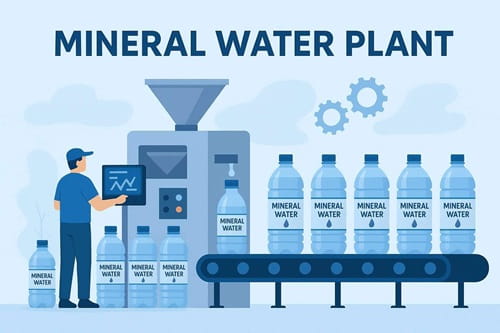
A Market Built on Daily Necessity
Unlike trend-based consumer products, drinking water is a daily essential. Demand remains steady throughout the year and rises sharply during summer seasons.
Several factors are driving market growth:
- Increasing health awareness
- Urban population growth
- Expansion of travel and tourism
- Rising restaurant and hotel industry
- Growth of offices and commercial spaces
- Lack of trust in local water quality
Packaged drinking water is now consumed across nearly every income group in India.
Types of Mineral Water Businesses
1. Packaged Drinking Water Plant
The most common category supplying bottles and jars.
2. Jar Water Supply Business
20-litre jar delivery services for homes and offices.
3. Mineral Water Bottling Plant
Higher-quality branded bottled water operations.
4. Private Label Water Manufacturing
Producing water bottles for other brands and businesses.
5. Industrial Water Purification Supply
Supplying purified water to institutions and commercial facilities.
Investment Required: Moderate to High Depending on Scale
A mineral water business requires machinery, purification systems, and regulatory approvals.
A small local packaged water setup may require ₹10–25 lakh including:
- RO purification systems
- Water treatment plant
- Bottle filling machines
- Packaging machines
- Storage tanks
- Basic testing equipment
A medium-to-large automated bottling plant may require ₹50 lakh–₹2 crore or more depending on production capacity and branding scale.
Investment also includes:
- Land or factory space
- Borewell or water source
- Electricity connection
- Delivery vehicles
- Labour and operational setup
Revenue and Profit Potential
The profitability of mineral water businesses depends heavily on production volume and distribution reach.
Revenue comes from:
- Small water bottle sales
- 20-litre jar subscriptions
- Restaurant and hotel supply
- Event and wedding orders
- Corporate office contracts
- Retail distribution
For example:
- A bottle produced at relatively low cost can generate good margins through bulk sales.
- Jar water supply businesses often generate stable recurring monthly income.
- Branded premium bottled water commands significantly higher pricing.
A medium-scale mineral water plant with stable distribution can generate substantial monthly revenue. Net profit margins generally range between 15–35% depending on operational efficiency, packaging costs, and local competition.
Jar supply models often provide particularly stable recurring cash flow.
What Makes This Business Work
1. Water Quality and Purity
Customers may compromise on many things, but not easily on drinking water quality. Consistent purification standards are critical.
2. Distribution Network
Fast delivery and strong retailer relationships determine sales volume.
3. Branding and Trust
Clean packaging and trustworthy branding heavily influence buying decisions.
4. Strategic Location
Plants near urban centres reduce transportation costs and improve delivery speed.
5. Summer Demand Management
Peak summer demand can dramatically increase profits for well-prepared businesses.
Challenges to Prepare For
1. Heavy Competition
Many local and national water brands already operate in the market.
2. Regulatory Compliance
Water businesses require BIS certification, FSSAI registration, and other approvals.
3. Packaging Costs
Bottle and plastic packaging costs significantly affect margins.
4. Transportation Expenses
Water is heavy and costly to transport over long distances.
5. Water Source Dependency
Poor or inconsistent water supply can disrupt operations.
Businesses that maintain strong quality standards and reliable distribution networks usually survive competition much better.
How to Increase Profitability
1. Focus on Jar Water Supply
Recurring office and home subscriptions create predictable monthly revenue.
2. Build Local Retail Networks
Strong relationships with shops and restaurants improve daily sales volume.
3. Invest in Branding
Professional-looking bottles and packaging build customer trust quickly.
4. Expand Into Institutional Contracts
Schools, hospitals, hotels, and offices provide stable long-term demand.
5. Maintain Quality Certifications
Certified quality helps attract larger commercial clients.
Government Regulations and Licences
Mineral water businesses in India require proper compliance and approvals, including:
- BIS certification
- FSSAI registration
- Pollution control permissions
- Trade licences
- GST registration
Quality testing and hygiene standards are especially important in this industry.
Mineral Water Business vs Other FMCG Businesses
Compared to many FMCG products, packaged water benefits from universal daily demand and frequent repeat purchases.
However, it is also a volume-driven business with strong dependence on logistics, distribution efficiency, and operational discipline.
Brand trust plays a massive role in long-term success.
The Future of Mineral Water Business in India
The future remains extremely strong. Urbanisation, tourism, office culture, and health awareness continue increasing bottled water demand across India.
At the same time, premium alkaline water, flavoured water, and eco-friendly packaging segments are creating new opportunities.
As concerns around drinking water quality continue growing, packaged drinking water consumption is expected to rise steadily for many years ahead.
The Verdict
The mineral water plant business is one of India’s most stable FMCG manufacturing opportunities because it is tied directly to daily human necessity. It combines recurring demand, scalable distribution, and long-term consumption growth.
Success in this business depends heavily on water quality, operational consistency, distribution strength, and customer trust rather than simply producing more bottles.
In a country where safe drinking water remains a growing concern for millions, businesses that can deliver clean and reliable packaged water will always have a market waiting.
Frequently Asked Questions (FAQs)
Q1. How much investment is needed to start a mineral water plant in India?
A: A small setup may require ₹10–25 lakh, while larger automated plants may require ₹50 lakh–₹2 crore or more.
Q2. Is mineral water business profitable in India?
A: Yes. Strong daily demand and repeat consumption make it highly profitable when distribution is managed efficiently.
Q3. What licences are required for a mineral water plant?
A: BIS certification, FSSAI registration, GST registration, and local trade licences are generally required.
Q4. Which segment is more profitable — bottles or jar supply?
A: Both are profitable, but 20-litre jar supply often creates more stable recurring monthly income.
Q5. What is the biggest challenge in this business?
A: Competition, transportation costs, and maintaining consistent water quality are major challenges.
Q6. Is demand for packaged drinking water increasing in India?
A: Absolutely. Rising health awareness, urbanisation, tourism, and concerns about water purity continue driving strong market growth.