For decades, Indian farming relied heavily on chemical fertilizers to increase crop production quickly. While these fertilizers improved yields in the short term, continuous overuse also damaged soil fertility, reduced natural microbial activity, and increased farming costs across many regions. Farmers slowly began realizing that healthy soil is just as important as healthy crops.
At the same time, consumers started paying more attention to organic food, chemical-free vegetables, and sustainable farming practices. Organic farming, kitchen gardening, terrace gardening, and natural agriculture have all grown rapidly across India over the last several years.
This shift has brought renewed attention to one of the oldest and most natural forms of soil enrichment: vermicompost.
Vermicompost is organic fertilizer produced through the decomposition of biodegradable waste using earthworms. What once looked like a simple rural activity has now become a fast-growing agricultural and environmental business opportunity. The business combines low investment, waste recycling, rising agricultural demand, and eco-friendly appeal into one scalable model.
So, is vermicompost business profitable in India? Yes — highly profitable for businesses that maintain good compost quality, proper raw material management, and strong farmer or gardening market connections.
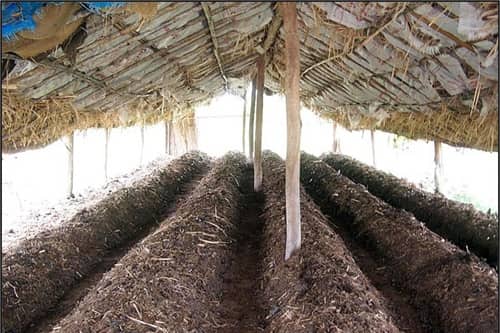
A Market Driven by Organic Farming and Soil Health
India’s organic agriculture and gardening sectors are expanding steadily every year. Farmers are increasingly searching for natural alternatives that improve soil fertility without damaging long-term productivity.
Several factors are driving vermicompost demand:
- Rising organic farming adoption
- Increasing soil health awareness
- Growth of terrace gardening
- Expansion of horticulture farming
- Government support for natural farming
- Growing demand for chemical-free food
Demand now comes not only from large farms but also from nurseries, landscaping companies, urban gardeners, and organic vegetable growers.
What is Vermicompost?
Vermicompost is nutrient-rich organic compost produced through the action of earthworms on biodegradable waste materials.
Common raw materials include:
- Cow dung
- Agricultural waste
- Vegetable waste
- Dry leaves
- Sugarcane waste
- Food waste
Earthworms convert this organic matter into highly fertile compost rich in nutrients and beneficial microbes.
Investment Required: Low and Beginner-Friendly
One of the biggest strengths of the vermicompost business is its low startup cost.
A small-scale vermicompost setup may require ₹50,000–₹3 lakh including:
- Compost beds or tanks
- Earthworms
- Raw organic waste
- Water supply
- Shade or shed structure
- Packaging materials
A medium-scale commercial unit with larger production capacity may require ₹5–15 lakh depending on land, mechanization, and packaging systems.
Compared to many manufacturing businesses, investment remains relatively affordable.
Revenue and Profit Potential
Vermicompost businesses can become highly profitable because raw materials are inexpensive while finished organic fertilizer sells at much higher value.
Revenue comes from:
- Farmer supply
- Nurseries and garden centres
- Organic farming groups
- Retail packaged compost sales
- Landscaping businesses
- Online gardening product platforms
For example:
- Bulk compost supply creates steady agricultural demand.
- Retail packaged vermicompost often generates significantly better margins.
- Urban gardening markets allow premium pricing.
A medium-scale vermicompost unit with strong local distribution can generate good monthly revenue. Net profit margins generally range between 20–40% depending on raw material sourcing, packaging quality, and transportation efficiency.
Businesses with access to cheap organic waste and nearby agricultural markets usually perform especially well.
What Makes This Business Work
1. Quality Compost Production
Farmers expect nutrient-rich compost that improves crop growth and soil texture visibly.
2. Affordable Raw Material Access
Easy access to cow dung and biodegradable waste strongly improves profitability.
3. Strong Distribution Network
Agricultural stores, nurseries, and local farmer groups are important sales channels.
4. Proper Moisture and Worm Management
Healthy earthworms and correct composting conditions directly affect production quality.
5. Packaging and Branding
Retail gardening customers increasingly prefer clean and professionally packed products.
Challenges to Prepare For
1. Weather Dependency
Extreme heat, heavy rain, or poor moisture control can affect worm activity and compost quality.
2. Transportation Costs
Organic compost is bulky and expensive to transport long distances.
3. Farmer Awareness
Some farmers still prefer chemical fertilizers because of faster visible effects.
4. Raw Material Availability
Consistent organic waste supply is important for stable production.
5. Pest and Odour Management
Poor compost management can create hygiene and smell issues.
Businesses that maintain proper composting systems and quality standards usually build stronger customer trust over time.
How to Increase Profitability
1. Target Urban Gardening Markets
Terrace gardening and home gardening customers often pay premium prices.
2. Build Nursery Partnerships
Garden centres and plant nurseries create recurring demand.
3. Sell Retail Packs
Smaller branded packaging improves profit margins significantly.
4. Expand Product Range
Many businesses later add organic fertilizers, potting mixes, and bio-fertilizers.
5. Use Online Platforms
Gardening products perform very well through e-commerce and social media marketing.
Government Support and Sustainability Trends
India’s government increasingly promotes sustainable and organic farming practices through:
- Organic farming schemes
- Natural farming initiatives
- Waste management programmes
- MSME support
- Agricultural subsidies in some regions
Vermicompost businesses also benefit from growing environmental awareness because they recycle biodegradable waste into useful agricultural products.
Vermicompost vs Chemical Fertilizer Business
Chemical fertilizers provide rapid nutrient supply, while vermicompost improves long-term soil structure and microbial health naturally.
The vermicompost market is especially strong among organic farmers, nurseries, and gardeners looking for sustainable solutions.
However, transportation and bulk handling are more challenging because organic compost has lower nutrient concentration per kilogram compared to chemical fertilizers.
The Future of Vermicompost Business in India
The future looks extremely promising. Organic farming, kitchen gardening, and sustainable agriculture are all expanding steadily across India.
At the same time, rising concerns around soil degradation and chemical overuse are increasing demand for natural soil enhancers.
Urban gardening culture, eco-friendly farming, and government support for organic agriculture are likely to create even stronger market opportunities in the coming years.
The Verdict: A Low-Investment Green Business With Strong Agricultural Demand
The vermicompost business is one of India’s most practical and beginner-friendly agricultural businesses. It combines low startup cost, environmental sustainability, growing organic farming demand, and flexible scalability.
Success in this business depends heavily on compost quality, raw material management, and building trust among farmers and gardening customers.
In a country where soil health is becoming increasingly important for the future of agriculture, businesses that can naturally improve fertility and recycle waste efficiently are likely to remain valuable for many years ahead.
Frequently Asked Questions (FAQs)
Q1. How much investment is needed to start a vermicompost business in India?
A: A small setup may require ₹50,000–₹3 lakh, while medium-scale commercial units may require ₹5–15 lakh or more.
Q2. Is vermicompost business profitable in India?
A: Yes. Rising organic farming and gardening demand make it a highly profitable low-investment agricultural business.
Q3. What raw materials are used in vermicompost production?
A: Cow dung, agricultural waste, vegetable waste, dry leaves, and biodegradable organic matter are commonly used.
Q4. Who are the major buyers of vermicompost?
A: Farmers, nurseries, gardeners, organic farming groups, and landscaping businesses are major buyers.
Q5. What is the biggest challenge in this business?
A: Maintaining compost quality, moisture balance, and managing transportation costs are major challenges.
Q6. Is demand for vermicompost increasing in India?
A: Absolutely. Organic farming growth, urban gardening trends, and soil health awareness continue driving strong demand.