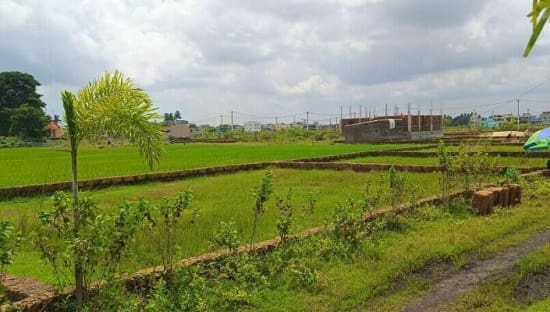
Changodar Industrial Estate is one of the most important and rapidly growing industrial clusters located on the south-western outskirts of Ahmedabad, Gujarat. Spread across a vast footprint along the Ahmedabad-Sarkhej-Bavla highway (NH-47), the estate has grown into a major centre for engineering, chemicals, pharmaceuticals, packaging, plastics, and manufacturing industries in western India — emerging as one of Gujarat’s most significant industrial addresses over the past two decades.
Changodar’s rise has been closely tied to Ahmedabad’s outward industrial expansion, particularly as older zones like Odhav, Naroda, and Vatva have become saturated. The area’s location along the Sarkhej-Bavla highway, easy access to the Ahmedabad-Vadodara Expressway, and proximity to the Sanand automotive belt (home to Tata Nano’s original plant and later MG Motor, Ford’s former plant, and Maruti Suzuki’s facility) have given Changodar substantial strategic weight. As a result, the estate is now one of Gujarat’s key manufacturing gateways servicing both domestic and export-oriented industries.
| Category | Details |
| Location | Changodar, Sanand Taluka, South-West Ahmedabad |
| State | Gujarat |
| Industrial Estate | Changodar Industrial Estate (GIDC) |
| PIN Code | 382213 |
| Developed By | Gujarat Industrial Development Corporation (GIDC) |
| Major Industries | Engineering, Chemicals, Pharmaceuticals, Plastics, Packaging, Automobile Ancillary |
| Distance from Ahmedabad City Centre | Approx. 18-22 km |
| Nearby Airport | Sardar Vallabhbhai Patel International Airport, Ahmedabad |
| Major Roads | Sarkhej-Bavla Highway (NH-47), Ahmedabad-Vadodara Expressway, SP Ring Road |
| Nearby Landmark | Sanand GIDC, Bavla, Sarkhej, Ahmedabad outer ring |
Overview of Changodar Industrial Estate
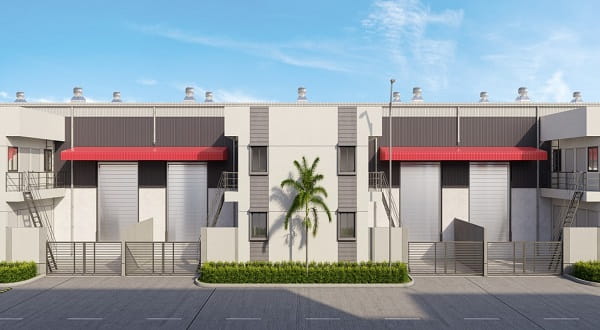
Changodar Industrial Estate is a large, well-planned industrial cluster developed by the Gujarat Industrial Development Corporation (GIDC), spread across several phases along the Sarkhej-Bavla highway. It consists of a mix of large industrial plots, built-up sheds, warehouses, factory complexes, and expanding industrial parks catering to businesses ranging from medium-scale operations to large manufacturing units.
The estate was developed as part of Gujarat’s broader industrial expansion strategy to decongest Ahmedabad’s inner-city industrial zones like Odhav, Naroda, and Vatva. With GIDC’s institutional framework and the broader policy push through Gujarat’s Industrial Policy, Changodar has attracted significant investment over the past two decades, with plot sizes often much more generous than older estates.
What makes Changodar distinctive is its combination of scale, location, and relative youth. Unlike Odhav or Vatva, which have decades of accumulated industrial heritage, Changodar is a younger industrial zone with modern layouts, wider roads, and newer building stock. It benefits from planned infrastructure and sits at the intersection of Ahmedabad’s outward industrial momentum and the Sanand automotive belt’s rapid expansion.
Location and Connectivity
Connectivity is one of Changodar Industrial Estate’s strongest strategic advantages. Its south-western Ahmedabad location places it at a key junction of Gujarat’s most important transport corridors.
Road access is exceptional. The estate sits directly along the Sarkhej-Bavla highway (NH-47), which connects Ahmedabad to Rajkot and the Saurashtra region. The Ahmedabad-Vadodara Expressway is easily accessible via SP Ring Road, providing direct freight links to Vadodara, Surat, and Mumbai. The Sardar Patel Ring Road encircles Ahmedabad and connects Changodar to the city’s other industrial zones, including Odhav, Naroda, and Vatva.
For rail, Ahmedabad Junction (Kalupur) is approximately 18-22 km away, providing extensive passenger and freight services across India. Sabarmati Junction offers another major option. The Western Dedicated Freight Corridor passing through Gujarat is expected to significantly boost industrial logistics in the coming years.
Sardar Vallabhbhai Patel International Airport is about 20-25 km away, typically reachable in 40-50 minutes by road — manageable for business travel and cargo. The airport’s cargo terminal supports export-oriented businesses in the estate.
Gujarat’s coastal ports — Mundra, Kandla, Pipavav — are within practical trucking distance, crucial for export manufacturers. Mundra and Pipavav are particularly important for container shipping, while Kandla handles bulk cargo. This port access is a genuine competitive advantage for Changodar’s export-oriented tenants.
Business and Commercial Importance
Changodar Industrial Estate plays a significant role in Gujarat’s manufacturing and export economy. It supports a wide spectrum of industries that form an important pillar of western India’s industrial output.
Engineering and precision manufacturing is a dominant sector. The estate hosts units producing industrial components, machinery, valves, pumps, fabrication goods, auto parts, and precision engineering products serving clients across India and internationally. The proximity to Sanand’s automotive cluster has brought in a strong base of automobile ancillary firms supplying to Tata Motors, Maruti Suzuki, MG Motor, and other OEMs.
Chemicals, pharmaceuticals, and specialty chemicals are another major pillar. Gujarat is India’s chemical manufacturing hub, and Changodar hosts API manufacturers, bulk drug producers, specialty chemical plants, agrochemicals, and pharmaceutical intermediates. Several large and mid-sized pharma firms have operations here.
Plastics, packaging, and polymer processing units operate extensively across the estate — producing plastic goods, packaging material, polymer products, and industrial plastic components. Food processing, textiles, ceramics, and electronics assembly units add further depth.
Trading companies, logistics operators, and warehousing firms have also grown significantly, particularly large-format warehousing for Ahmedabad’s expanding distribution and e-commerce operations. The estate’s access to highways makes it a logical choice for regional distribution hubs.
Nearby Infrastructure and Facilities
The Changodar belt is well-developed given its industrial focus and continues to see infrastructure investment.
Commercial infrastructure includes multiple banks (HDFC, ICICI, SBI, Axis, Bank of Baroda, Kotak), ATMs, cooperative banks that understand MSME needs, courier services, industrial supply shops, and business support outfits. The estate’s own service ecosystem has matured significantly over the past decade.
Healthcare options are accessible. While premium hospitals like Apollo and Sterling are in central Ahmedabad, smaller clinics and hospitals have opened along the Sarkhej-Bavla corridor. The Civil Hospital and major private hospitals in Ahmedabad are about 20-25 km away.
Hotels and guest houses have grown around Changodar and Sanand to serve the business travel demand driven by the automotive sector. Food options include Gujarati dhabas, thali joints, roadside restaurants, and quick-service outlets catering primarily to the industrial workforce.
Educational institutions including engineering colleges, ITIs, and technical training centres in Sarkhej, Sanand, and along the SP Ring Road provide a steady pipeline of skilled workers. Ahmedabad’s broader educational ecosystem — including IIM Ahmedabad, Nirma University, and Gujarat University — is within reasonable reach.
Residential developments in Sarkhej, Bavla, and along the Sarkhej-Bavla highway have grown considerably, housing the estate’s white-collar workforce. Makarba, Bopal, and South Bopal are popular upscale neighbourhoods for executives.
Advantages of the Location
GIDC’s institutional backing is the single biggest draw. As one of India’s most effective state industrial development bodies, GIDC offers developed plots, reliable power supply, water infrastructure, waste management systems, and a single-window clearance framework that genuinely speeds up setup times.
Port and export access is a major advantage. Gujarat’s coastal ports — Mundra, Kandla, Pipavav — are within practical trucking distance, supporting the estate’s strong export orientation. The Western Dedicated Freight Corridor further strengthens this.
Proximity to the Sanand automotive cluster is genuinely strategic. With major OEMs like Tata Motors, Maruti Suzuki, MG Motor, and Hero MotoCorp operating in the broader Sanand belt, auto component manufacturers and Tier-2/3 suppliers find Changodar a natural location.
Plot availability and generous sizes are a key advantage over older industrial estates. Changodar offers genuinely spacious industrial plots and built-up sheds that are harder to find in Odhav or Naroda, making it suitable for scaling manufacturing operations.
Affordability relative to central Ahmedabad industrial zones remains a genuine draw. Plot rates, shed rentals, and operational costs are meaningfully lower than Odhav or Naroda, making Changodar attractive for greenfield investments.
Gujarat’s business-friendly policy environment, stable power supply, and government responsiveness through GIDC add institutional support that manufacturers genuinely value.
Challenges or Limitations
Distance from central Ahmedabad is a concern for some businesses. While connectivity is strong, the 20-25 km distance from the city centre means longer commutes for employees living in central Ahmedabad, and higher transport costs for small businesses.
Public transport connectivity has been a limitation. Unlike inner-city industrial zones, Changodar has fewer direct public transport options, making most workers rely on company transport or private vehicles. The Ahmedabad Metro has not yet reached this belt.
Environmental compliance has tightened significantly. Industries dealing with chemicals, pharmaceuticals, dyeing, and electroplating face strict scrutiny from the Gujarat Pollution Control Board (GPCB), requiring continuous investment in effluent treatment and emission control systems.
Infrastructure in some newer sectors of the estate is still maturing, with occasional issues around road quality, drainage, and water supply during peak industrial activity periods.
Workforce availability, particularly skilled labour, can be competitive given the scale of industrial expansion in the Sanand-Changodar-Becharaji corridor, with OEMs and larger firms often drawing talent.
Conclusion
Changodar Industrial Estate has established itself as one of Gujarat’s most strategically important industrial zones, building its relevance on a combination of location, scale, institutional backing, and port-highway connectivity. Its diverse base of engineering firms, chemical processors, pharmaceutical manufacturers, auto ancillary units, and specialty industries reflects the practical, productive character of Gujarat’s industrial economy.
With the continued expansion of the Sanand automotive cluster, the Western Dedicated Freight Corridor coming online, steady infrastructure investment through GIDC, and Gujarat’s stable business environment, Changodar Industrial Estate is set to remain one of western India’s most dependable manufacturing addresses — the kind of estate that will continue to play a meaningful role in India’s industrial growth story for decades to come.
FAQs
Q1. What is the PIN code of Changodar Industrial Estate?
A: The estate primarily falls under PIN code 382213, covering the Changodar-Sanand belt.
Q2. Who developed Changodar Industrial Estate?
A: It was developed and is managed by the Gujarat Industrial Development Corporation (GIDC), one of India’s most active state industrial development bodies.
Q3. What kind of industries operate at Changodar?
A: A diverse mix of engineering and precision manufacturing, chemicals, pharmaceuticals, plastics, packaging, automobile ancillary units, food processing, and specialty manufacturing firms.
Q4. What is the nearest airport?
A: Sardar Vallabhbhai Patel International Airport, Ahmedabad, is approximately 20-25 km away, typically reachable in 40-50 minutes by road.
Q5. How far is Changodar from the Sanand automotive cluster?
A: Changodar is in the Sanand taluka and essentially forms part of the broader Sanand-Changodar industrial belt, making it highly accessible to OEMs like Tata Motors, Maruti Suzuki, and MG Motor.
Q6. What are the nearest ports for Changodar-based exporters?
A: Mundra Port is about 350 km away, Kandla Port is about 280 km, and Pipavav Port is about 320 km — all within practical trucking distance for export cargo.
Q7. Is Changodar a good choice for setting up a new manufacturing unit?
A: Yes, particularly for engineering, chemicals, pharma, plastics, auto ancillary, and export-oriented firms that value GIDC’s institutional support, generous plot sizes, and port-airport access.
Q8. What are the main challenges of operating here?
A: Distance from central Ahmedabad, limited public transport, tightening environmental compliance, and competitive skilled labour markets are the most commonly cited concerns.