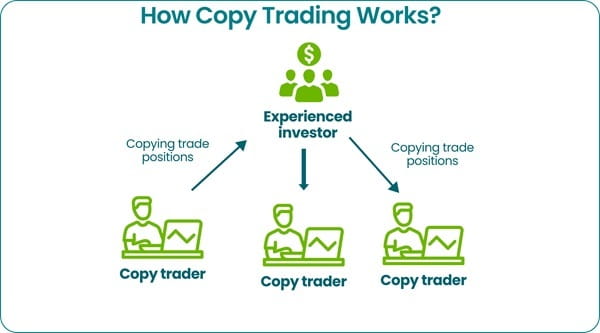
Copy trading allows a person to automatically replicate the trades of another trader. It has become popular among forex beginners because it appears to offer a way to participate in financial markets without developing a complete trading strategy from scratch. Instead of deciding independently when to buy or sell, the user selects a trader to follow and the platform attempts to reproduce that trader’s positions in the user’s account.
However, copy trading is not a guaranteed-profit system. The person being copied can make losing trades, and differences in account size, leverage, fees and execution can produce different results. Beginners therefore need to understand exactly how the system works before committing money.
What Is Copy Trading?
In traditional trading, an individual makes their own decisions about when to enter or exit a position.
With copy trading, the user selects a “lead trader” or “strategy provider.” When that trader opens, modifies or closes a position, the platform automatically performs a corresponding transaction in the follower’s account, subject to the platform’s settings and available products.
For example, imagine a lead trader buys EUR/USD. A follower who has allocated ₹10,000 to that trader’s strategy may automatically receive a corresponding EUR/USD position based on the platform’s allocation method.
If the lead trader later closes the position, the follower’s corresponding position may also be closed.
The exact mechanism differs between platforms.
How Copy Trading Works Step by Step
1. Create an Account
The beginner first opens an account with a platform that offers copy-trading services.
Depending on the jurisdiction and provider, the user may need to complete identity verification, provide financial information and satisfy applicable regulatory requirements.
2. Browse Available Traders
The platform usually displays profiles of traders or strategies that can be copied.
These profiles may include:
- Historical returns
- Number of followers
- Trading history
- Maximum drawdown
- Risk score
- Average trade duration
- Assets traded
A beginner should remember that historical performance does not guarantee future results.
3. Select a Strategy
The user chooses a trader based on their objectives and risk tolerance.
For example, one trader might make frequent short-term trades, while another may hold positions for several days.
The follower then decides how much capital to allocate to the strategy.
4. Trades Are Automatically Replicated
Once copying is activated, the platform attempts to mirror the lead trader’s activity.
If the lead trader opens a position, the follower’s account receives a corresponding position according to the selected allocation settings.
The same applies when the lead trader changes or closes the position.
An Example of Copy Trading
Suppose a lead trader has ₹1,00,000 and allocates 10% of their account to a particular forex trade.
A follower has ₹20,000 allocated to copy that trader.
If the platform uses proportional allocation, approximately 10% of the follower’s allocated capital might be exposed to the copied position, or ₹2,000, subject to the platform’s methodology, minimum trade sizes and risk controls.
If the lead trader earns a 5% return on the relevant position, the follower’s result may be similar in percentage terms, but not necessarily identical.
Spreads, commissions, financing charges, execution delays and different account sizes can produce different outcomes.
Copy Trading Does Not Remove Risk
One of the biggest misconceptions is that copy trading eliminates the need for financial knowledge.
It does not.
The follower is still exposed to market risk.
If the lead trader loses money, the follower can lose money too.
A trader with a history of strong returns can experience a period of significant losses. Markets change, strategies stop working and unexpected economic events can cause rapid price movements.
Therefore, copy trading should be viewed as a method of executing someone else’s strategy, not as a guarantee of successful trading.
The Importance of Drawdown
When evaluating a trader to copy, beginners often focus on the highest return.
A more useful measure can be maximum drawdown.
Drawdown describes the decline in an account or strategy from a previous peak to a subsequent low.
For example, if a strategy grows from ₹1,00,000 to ₹1,50,000 and later falls to ₹1,20,000, it has experienced a substantial decline from its peak.
A trader with high historical returns may also have experienced very large drawdowns.
Beginners should therefore ask not only, “How much did this trader make?” but also, “How much did they lose along the way?”
Leverage Can Make Copy Trading Riskier
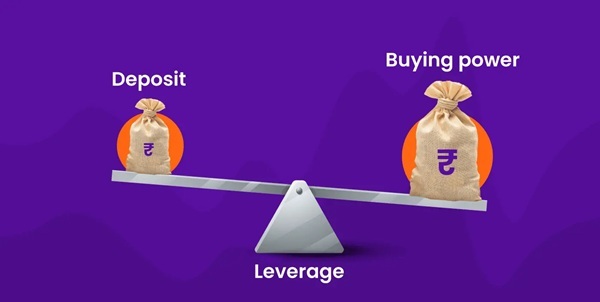
Forex strategies frequently involve leverage.
If the lead trader uses significant leverage, the copied positions may also create substantial exposure in the follower’s account, depending on how the platform replicates trades.
A small currency movement can therefore produce a disproportionately large gain or loss.
Followers should understand the leverage associated with the copied strategy and whether they can adjust the amount of risk independently.
Fees and Other Costs
Copy trading can involve several types of costs.
Depending on the platform, these may include:
- Trading spreads
- Commissions
- Overnight financing charges
- Performance fees
- Subscription fees
- Management fees
Some platforms charge a percentage of profits earned by followers, while others use different pricing structures.
A strategy that appears profitable before fees may generate a considerably lower net return after all costs.
Beginners should therefore calculate the total cost of copying a strategy rather than focusing only on headline performance.
Why Beginners Find Copy Trading Attractive
Copy trading has several features that explain its popularity.
Simplicity
Users do not necessarily need to analyse every currency pair themselves.
Learning Opportunity
Following an experienced trader can help beginners observe how positions are opened, managed and closed.
Time Saving
Automated replication can reduce the need to monitor markets continuously.
Diversification
Some platforms allow users to allocate capital across multiple traders or strategies.
However, diversification does not guarantee profits. Several strategies may lose money simultaneously during major market events.
Common Mistakes Beginners Make
One mistake is choosing a trader solely because they have achieved the highest recent return.
Another is allocating too much money to a single strategy.
Beginners may also fail to understand how the platform handles stop-loss orders, leverage, position sizing and sudden changes in the lead trader’s account.
Copying a trader without understanding the strategy can also create psychological problems. A follower may stop copying after a temporary loss, only to see the strategy recover later.
How to Choose a Trader Carefully
Before copying someone, beginners should examine:
- Long-term performance rather than only recent returns
- Maximum drawdown
- Number and frequency of trades
- Average holding period
- Leverage usage
- Risk score, if available
- Trading instruments
- Account history
- Fees and costs
A consistent strategy with controlled risk may be more informative than a trader showing an extraordinary return over a short period.
Copy Trading and Indian Traders
Indian residents should also consider the regulatory framework before using a copy-trading service for forex.
The RBI has warned residents against conducting forex transactions through unauthorised electronic trading platforms. The fact that a foreign website or app offers copy trading does not automatically mean that the service is permitted for an Indian resident.
The RBI advises residents to undertake permitted forex transactions through authorised persons and authorised electronic trading platforms or recognised exchanges, as applicable.
Therefore, an Indian beginner should verify the platform, the legal entity providing the service and the exact financial product being copied before depositing money.
Is Copy Trading Suitable for Beginners?
Copy trading can be useful as a learning and investment tool for some people, but it should not be viewed as a shortcut to guaranteed profits.
A beginner should start by understanding the mechanics of the platform, testing its features where appropriate and allocating only an amount they can afford to lose.
It is also important to remember that the lead trader’s risk tolerance may be completely different from the follower’s.
A trader may be comfortable experiencing a 30% drawdown, while the follower may not be.
Conclusion
Copy trading works by automatically replicating the positions of a selected trader in a follower’s account. The platform handles the technical process of copying trades, while the follower chooses the trader and determines how much capital to allocate.
The system can save time and provide an opportunity to observe another trader’s strategy, but it does not remove market risk. Losses, leverage, spreads, commissions, financing costs and execution differences can all affect results.
For beginners, the most important step is to evaluate the risk and consistency of a strategy rather than simply chasing its highest return. Traders should understand drawdowns, leverage and fees before copying anyone.
For Indian residents, regulatory verification is especially important because forex transactions are subject to India’s foreign-exchange rules.
Ultimately, copy trading is a tool—not a guarantee of success. Used cautiously, with realistic expectations and proper risk management, it can help beginners understand how active trading strategies operate. But blindly copying another trader can expose a beginner to risks they may not fully understand.