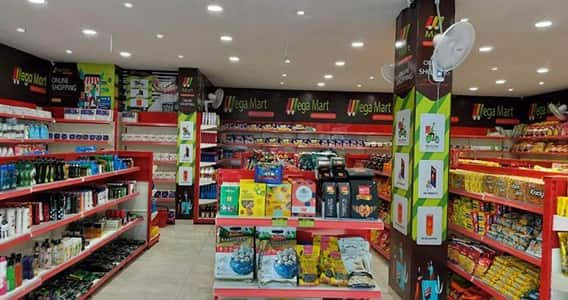
Unlike crude oil or gold, commodities like sugar do not make many headlines. Sugar sits in your cup of tea, biscuits, and the delicacies served during festivals, yet you hardly ever ponder its origins and the costs incurred by the companies manufacturing your consumer goods.
However, there is a fascinating phenomenon happening right now – sugar prices are telling two completely different stories based on which side of the supply chain is considered.
Producers versus consumers
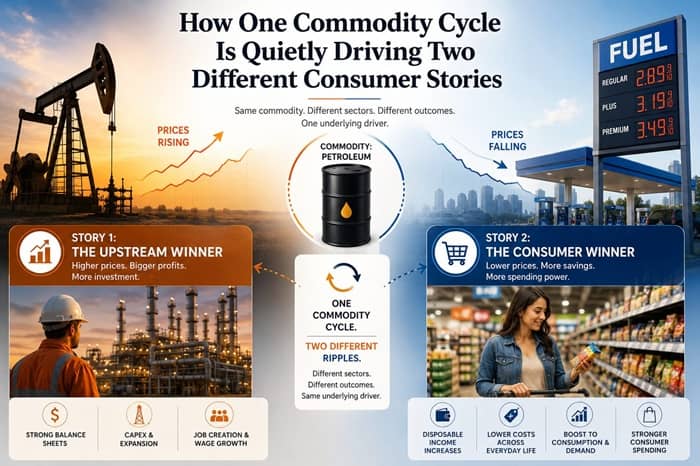
When sugar prices change, there are two sides of the market that experience opposite impacts.
One side includes sugar mills and producers, while the other comprises FMCG companies that use sugar as one of the most important raw materials when manufacturing chocolates, confectionery, soft drinks and even packaged snacks.
The producer side
Higher sugar prices benefit sugar mills as they increase revenue per tonne. The stock performance of sugar producers correlates directly with the price of the product, and the dynamics were noticeable over the last few years.
Inconsistent monsoon rains, changes in the acreage under sugarcane plantations and shifting policies on ethanol blending contributed to swings in sugar production levels and, consequently, affected the price of sugar stocks.
In addition to external factors that determine how well sugar stocks perform on the stock exchange, there is one more layer that is unique in regard to this type of commodity. The government of India monitors the level of domestic sugar production and its availability due to the political importance of the product.
Export quotas, minimum selling prices and ethanol diversion quotas adjust depending on the anticipated yield of cane. Thus, when monitoring sugar stocks, you need to pay attention not only to weather and yield, but to the policy-making meetings in Delhi as well.
The consumer side
On the other hand, there are FMCG companies. Biscuit makers, confectioneries, beverage manufacturers and dairy businesses comprise this side of the sugar cycle. Higher sugar prices translate into increasing costs of raw materials.
Unlike sugar mills, FMCG companies can either raise the prices of their products or absorb extra costs and lower their margins. However, in order to avoid slowing down their volume growth in a price-sensitive market, FMCG producers do a bit of both and choose to do both, and this tension is visible in their quarterly commentary on gross margin.
Why is this important for investors?
If you monitor only one side of the story, you miss out on other important details. While the season of high cane production levels and low sugar prices might appear unremarkable for the sugar sector itself, it may prove to be a tailwind for FMCG stocks.
Conversely, a season with low sugar production that benefits sugar producers may turn out to be detrimental for an FMCG company.
This is the interesting thing about commodity cycles – they almost never remain within the bounds of the industry they affect. An input like sugar connects a farmer from Uttar Pradesh, the balance sheet of a sugar mill and the price policy of an FMCG producer.
Observing sugar stocks together with the stocks of FMCG producers allows investors to obtain a full perspective on where to expect the numbers next quarter.
The takeaway
Sugar’s story is a reminder that commodity cycles rarely stay contained within a single sector. A single input price can move two ends of the market in opposite directions at the same time, rewarding one set of businesses while squeezing another. For investors, the practical lesson is to widen the lens: tracking sugar prices in isolation tells you how mills are likely to perform, but pairing that view with FMCG commentary on input costs and pricing power gives a more complete read on where earnings surprises might come from next quarter.
That interconnectedness is worth remembering the next time a commodity feels too niche to matter. Sugar rarely makes headlines the way crude oil or gold does, but its ripple effects reach from a cane field in Uttar Pradesh all the way to the price tag on a packet of biscuits, and to the stock prices of the companies behind both.