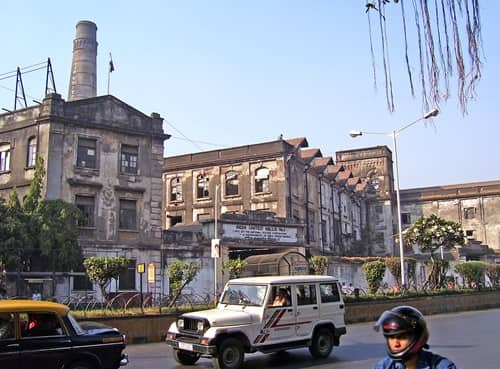
Marol Co-op Industrial Estate is one of the most recognisable and historically significant industrial clusters in Mumbai, located in the heart of Marol in Andheri East. Spread across a sizeable footprint along Marol Cooperative Industrial Estate Road (also known as Marol CHS Road and Lok Bharti Road), the estate has served as a cornerstone of Mumbai’s industrial and commercial economy for decades — housing an extraordinarily diverse mix of manufacturing units, engineering workshops, chocolate and food product makers, trading firms, logistics operators, and service-sector tenants in one of the western suburbs’ most active commercial belts.
Marol’s position in Mumbai’s urban geography is genuinely strategic. Sitting between SEEPZ, MIDC Andheri, the airport, and Powai’s IT hubs, the neighbourhood has been the city’s unofficial industrial gateway for over half a century. Marol Co-op Industrial Estate has been central to that story, continuing to draw tenants who value unmatched airport proximity, multi-line metro access, and the working ecosystem that makes Marol one of Mumbai’s most important industrial addresses.

Marol Co-op Industrial Estate Quick Overview
| Category | Details |
| Location | Lok Bharti Road / Marol CHS Road, Marol, Andheri East, Mumbai |
| State | Maharashtra |
| Industrial Estate | Marol Co-op Industrial Estate |
| PIN Code | 400059 |
| Type | Mixed Industrial & Commercial Cooperative Estate |
| Major Industries | Manufacturing, Engineering, Chocolates & Food, Trading, Logistics, Offices |
| Distance from BKC | Approx. 6-8 km |
| Nearby Airport | CSMIA Mumbai, approx. 1-2 km |
| Major Roads | Andheri-Kurla Road, Marol Maroshi Road, Mathuradas Vasanji Road |
| Nearby Landmark | Marol Bhavan, Marol Naka Metro, CSMIA Terminal 2, Airport Road Metro |
Location and Connectivity
Connectivity is arguably Marol Co-op Industrial Estate’s single strongest advantage. Its central Marol location places it at one of Mumbai’s most significant transit crossroads.
Road access is exceptional. The estate connects directly to Andheri-Kurla Road (AK Road), Marol Maroshi Road, and Mathuradas Vasanji Road, with quick links to the Western Express Highway, the Eastern Express Highway via JVLR, and the broader Andheri East commercial corridor. Sir Mathuradas Vasanji Marg is one of the busiest arterial routes in the area.
The metro network is the estate’s standout strength. Marol Naka metro station on Mumbai Metro Line 1 (Versova-Ghatkopar) is just about 5 minutes’ walk from parts of the estate — a genuinely rare feature for a Mumbai industrial address. Line 1 also interchanges with the newer Line 3 (Aqua Line: Colaba-Bandra-SEEPZ) at Marol Naka, offering direct connectivity to BKC, Cuffe Parade, South Mumbai, and the airport corridor.
Airport Road metro station on Line 3 is also within a 12-20 minute walk depending on the specific unit, and Mumbai Metro Line 7 (Red Line) adds further coverage via Western Express Highway station. Few industrial estates in India offer access to three operational metro lines within this kind of radius.
For rail, Andheri Railway Station on the Western and Harbour Lines is about 3-4 km away, with direct services to Churchgate, Borivali, and CST via Harbour Line. Ghatkopar on Central and Harbour Lines is accessible via Metro Line 1.
CSMIA airport is essentially next door — approximately 1-2 km from parts of the estate, with Terminal 2 within 19 minutes’ walk and Airport Road metro even closer. This is among the shortest airport distances for any Mumbai commercial address, making Marol Co-op Industrial Estate exceptionally well-positioned for logistics, export, and international-facing businesses.
Business and Commercial Importance
Marol Co-op Industrial Estate plays a significant role in Mumbai’s commercial economy. Its diverse tenant base reflects the breadth of the city’s industrial and service sectors.
Chocolate and food manufacturing is a notable segment. Several chocolate makers and food product manufacturers operate out of the estate — the area is well-known within Mumbai’s food industry circles as a base for confectionery businesses, catering outfits, and food processing units. This cluster contributes to Marol’s broader reputation as one of Mumbai’s food industry hubs.
Engineering and precision manufacturing is a dominant sector. The estate hosts units producing industrial components, machinery parts, valves, pumps, fabrication goods, and precision engineering products serving clients across India and internationally. The proximity to Bengaluru’s OEM supply chains and Pune’s automotive belt creates substantial business opportunities.
Packaging, plastics, and polymer processing units operate extensively across the estate. Printing and publishing firms, hardware and electrical goods makers, and specialty manufacturing businesses add further depth.
Trading companies dealing in industrial goods, imports, electronics components, hardware, and specialty items form another significant segment. Logistics and warehousing operators have grown their footprint steadily, drawn by the airport proximity and the Andheri-Kurla corridor.
Over recent years, the profile has diversified significantly. IT service firms, digital agencies, BPO operations, CA offices, legal practices, consulting outfits, and corporate back-offices have moved into upper-floor units. The estate’s affordability compared to premium business parks at Mindspace, SEEPZ, or The Trade Centre makes it attractive to growth-stage firms.
Nearby Infrastructure and Facilities
The Marol belt is exceptionally well-developed, reflecting the area’s commercial density and long-standing urban integration.
The Marol-SEEPZ-MIDC Andheri ecosystem provides unmatched vendor, supplier, and service relationships. Banks (HDFC, ICICI, SBI, Axis, Kotak), ATMs, cooperative banks focused on MSME lending, courier services, and industrial supply shops are abundant along the AK corridor and Marol Maroshi Road.
Food options are genuinely outstanding. The Marol dining scene runs the full Mumbai spectrum — from Udupi restaurants and Maharashtrian thali joints to Andhra-style eateries, cloud kitchens, cafes, quick-service outlets, and the famously diverse street food culture that feeds the daily industrial workforce. Gamdevi and Marol Naka street food is particularly popular.
Healthcare is strong. Seven Hills Hospital, Kohinoor Hospital, Paras Hospital, and Hiranandani Hospital (Powai) are within short reach. The airport proximity also means premium healthcare at Nanavati Hospital and Kokilaben Dhirubhai Ambani Hospital is accessible.
Business hotels catering to the airport-adjacent corporate travel belt are plentiful and often premium — The Leela Mumbai, Hyatt Regency, The Westin Mumbai Garden City, Hilton Mumbai International Airport, Sahara Star, Courtyard by Marriott, Lemon Tree, and Ibis are all within a short drive. This is genuinely one of India’s densest concentrations of business hotels.
Retail destinations include Phoenix MarketCity (Kurla), R City Mall (Ghatkopar), Infiniti Mall (Andheri West), and Fun Republic. Educational institutions in the Andheri-Powai belt — including engineering colleges, management schools, and technical training centres — provide a steady talent pool.
Residential neighbourhoods in Marol, Chandivali, Powai, JB Nagar, and along the AK corridor house much of the estate’s workforce.
Advantages of the Location
Airport proximity is the single biggest advantage. At just 1-2 km from CSMIA, Marol Co-op Industrial Estate offers one of the shortest airport distances of any Mumbai commercial address. For logistics, export, and international-facing businesses, this is a genuinely rare operational edge — particularly for firms dealing with air cargo, frequent international travel, or time-sensitive operations.
Multi-line metro connectivity is transformative. Line 1 (Versova-Ghatkopar) at Marol Naka is within walking distance, Line 3 (Aqua Line) serves the area through Marol Naka and Airport Road stations, and Line 7 (Red Line) adds further coverage. This breadth of metro access is unmatched by most Mumbai industrial estates.
The Marol-SEEPZ-MIDC ecosystem is exceptionally deep. Being surrounded by SEEPZ (one of India’s oldest and most important SEZs), MIDC Andheri, The Trade Centre, Mindspace, and several boutique business parks creates an ecosystem density that’s extraordinarily hard to replicate. Vendors, suppliers, specialised services, and freelance talent are always within easy reach.
The cooperative estate structure offers stability and tenant representation that differs from purely private commercial complexes — useful for long-term operations.
Affordability relative to premium business parks in the surrounding area is a real draw. Compared to SEEPZ, Mindspace, or The Trade Centre, Marol Co-op Industrial Estate offers meaningfully more budget-friendly space while retaining the full set of location advantages.
The established business environment adds practical value. Decades of tenant continuity have created a working ecosystem of transport operators, printing shops, packaging suppliers, and machinery repair services that new tenants can plug into immediately.
Challenges or Limitations
Traffic congestion is a persistent concern. The Andheri-Kurla Road, Marol Maroshi Road, Mathuradas Vasanji Road, and the junctions around Marol Naka all experience heavy peak-hour congestion. The area’s sheer commercial density, combined with airport traffic, creates daily traffic pressure.
Parking is tight throughout. Like most older Mumbai industrial estates, Marol Co-op wasn’t designed for today’s vehicle volumes, and visitor parking is often a challenge. Kerb-side space is contested between tenants, visitors, and delivery trucks.
Infrastructure, while functional, isn’t ultra-modern. Several buildings show their age, and the finishes can feel dated compared to newer commercial developments nearby. For businesses targeting high-end corporate or international clients, the older premises character can occasionally be a limitation.
Monsoon waterlogging on the Andheri East belt is a recurring annual issue, affecting logistics operations during heavy rain. Certain stretches of Marol have historically been flood-prone.
Environmental compliance has tightened significantly under the Maharashtra Pollution Control Board (MPCB). Industries dealing with chemicals, food processing effluents, electroplating, and waste-generating processes face stricter scrutiny, requiring continuous investment in compliance.
Property rates, while lower than premium Grade-A developments, have risen steadily over the years. What was once genuinely affordable is now mid-market by Andheri East standards.
Conclusion
Marol Co-op Industrial Estate has quietly anchored Mumbai’s industrial story for decades, occupying one of the city’s most strategically positioned commercial addresses. Its extraordinarily diverse tenant base — chocolate makers, food processors, engineering firms, precision manufacturers, traders, logistics operators, and service businesses — reflects the layered, working character of Mumbai’s commercial economy at its most productive.
With three operational metro lines serving the area, CSMIA essentially next door, direct access to the Andheri-Kurla corridor and broader Mumbai commercial network, the cooperative estate structure providing tenant stability, and Marol’s enduring position as one of the city’s most important industrial junctions, Marol Co-op Industrial Estate is set to remain one of Mumbai’s most dependable and operationally advantaged commercial addresses — the kind of estate whose unmatched connectivity and ecosystem depth will continue to anchor a significant slice of the city’s manufacturing, food, and logistics economy for years to come.
FAQs
Q1. What is the PIN code of Marol Co-op Industrial Estate?
The estate falls under PIN code 400059, the primary pin code for the Marol-Marol Naka area of Andheri East.
Q2. Where exactly is Marol Co-op Industrial Estate located?
It is located along Lok Bharti Road / Marol CHS Road in Marol, Andheri East, Mumbai, close to Marol Naka, Marol Bhavan (Mathuradas Vasanji Road), and within 1-2 km of CSMIA.
Q3. What kind of businesses operate at Marol Co-op Industrial Estate?
A genuinely diverse mix — chocolate and confectionery makers, food processing and catering firms, engineering workshops, precision manufacturing, packaging units, trading companies, logistics operators, IT service firms, CA offices, and corporate back-offices.
Q4. What is the nearest metro station?
Marol Naka on Mumbai Metro Line 1 (Versova-Ghatkopar) — also an interchange with Line 3 (Aqua Line) — is about 5 minutes’ walk away. Airport Road on Line 3 is within 12-20 minutes’ walk. Western Express Highway on Line 7 is also accessible.
Q5. What is the nearest railway station?
Andheri Railway Station on the Western and Harbour Lines is about 3-4 km away.
Q6. How far is CSMIA airport?
Chhatrapati Shivaji Maharaj International Airport is approximately 1-2 km away, with Terminal 2 within walking distance of many estate units — one of the shortest airport distances for any Mumbai commercial address.
Q7. Is Marol Co-op Industrial Estate a good choice for food manufacturing or logistics businesses?
Yes, exceptionally so. The estate has a well-established food manufacturing cluster (including chocolate makers and confectionery firms), and the airport proximity combined with the Andheri-Kurla corridor makes it ideal for logistics, freight forwarding, and export-oriented operations.
Q8. What are the main challenges of operating here?
Peak-hour traffic around Marol Naka and Andheri-Kurla Road, limited parking, older building infrastructure, monsoon-season waterlogging, and tightening environmental compliance are the most commonly cited concerns.