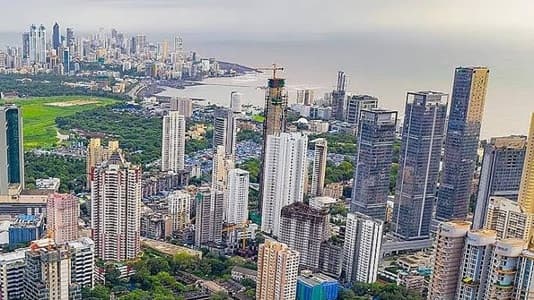
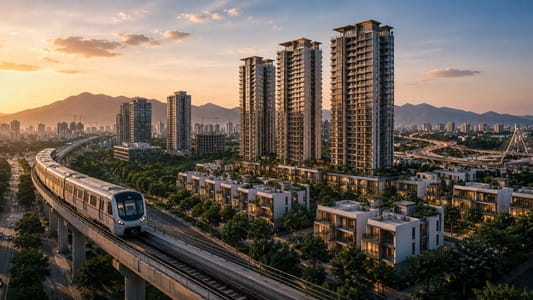
Hyderabad real estate in 2026 is one of India’s most closely watched property markets. A few years ago, the city was known as a more affordable tech alternative to Bengaluru. That image has changed quickly. Hyderabad is now a high-growth, high-demand market where premium apartments, large gated communities, IT-led rental demand, and luxury high-rises are reshaping the city’s skyline.
The market is still strong, but it is no longer cheap. In Q1 2026, Hyderabad recorded 9,541 home sales, while the weighted average residential price rose 9% year-on-year to ₹8,211 per sq ft. New launches also stood close to 9,975 units during the quarter, showing that developers are still confident about demand.
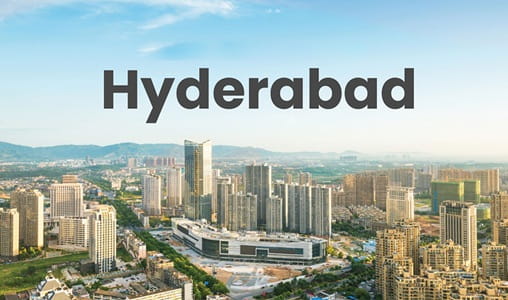
Overview of Hyderabad Real Estate in 2026
The main story of Hyderabad real estate is the dominance of the western corridor. Kokapet, Financial District, Gachibowli, HITEC City, Nanakramguda, Narsingi, Tellapur, Kondapur, Manikonda and Madhapur continue to attract the strongest buyer interest. These areas are close to IT parks, corporate offices, international schools, hospitals, malls, and premium gated communities.
JLL’s Q1 2026 update noted that Hyderabad’s new residential launches rose 13.8% quarter-on-quarter and 5.8% year-on-year to 10,665 units, while capital values and rentals also moved upward. Cushman & Wakefield also reported that West Hyderabad led new launches with a 65% share in Q1 2026, especially around the Financial District and Nanakramguda.
The city can be divided into three broad real estate zones. The first is the ultra-premium tech core: Kokapet, Financial District, Gachibowli, HITEC City and Nanakramguda. These areas command high prices because they sit close to Hyderabad’s strongest office market. The second is the balanced premium belt: Kondapur, Narsingi, Tellapur, Manikonda and Miyapur-side locations. These are popular among upper-middle-class IT professionals. The third is the value-driven belt: Bachupally, Patancheru, Uppal, Kompally, Kukatpally extensions and parts of East Hyderabad, where entry prices are relatively more manageable.
Why Hyderabad Real Estate Is Growing
The biggest reason is employment. Hyderabad has a strong base in IT, ITES, pharma, life sciences, data centres, financial services, startups, and Global Capability Centres. In Q1 2026, Hyderabad accounted for 16.8% of India’s gross office leasing and 22.6% of net office absorption, making it one of the country’s strongest office markets. GCCs also formed 45.5% of India’s office leasing activity in the same quarter.
Large corporate leasing is keeping the housing market active. Accenture recently leased more than 1 million sq ft of office space in Hyderabad for over 10 years, with a minimum rental commitment of about ₹900 crore. Such large deals show why housing demand near Kondapur, Gachibowli, Nanakramguda and Financial District remains strong.
Infrastructure is another major driver. Hyderabad’s 158-km, 8-lane Outer Ring Road has helped spread development across multiple corridors instead of forcing everything into one central zone. The proposed Regional Ring Road is also expected to create a second layer of long-term growth around the city, especially for land and township development beyond the existing ORR belt.
Benefits of Buying Property in Hyderabad in 2026
1. Strong Job-Backed Demand
Hyderabad’s housing demand is not only speculative. Many buyers are salaried professionals, IT employees, doctors, pharma professionals, entrepreneurs, and families relocating for work. This gives the market a real end-user base.
2. Excellent Rental Demand in IT Corridors
HITEC City, Gachibowli, Financial District, Kondapur, Nanakramguda, Madhapur and Kokapet have strong rental demand from corporate professionals. Good flats in gated communities near offices usually find tenants faster than properties in weaker micro-markets.
3. ORR Connectivity Advantage
The Outer Ring Road is one of Hyderabad’s biggest strengths. It connects different parts of the city smoothly and makes airport access easier from several locations. For buyers, this means that living slightly away from the office core can still be practical if ORR connectivity is strong.
4. Large Gated Communities
Hyderabad is known for spacious gated communities, large clubhouses, high-rise towers, landscaped open areas, and modern amenities. Compared with older metros, the city still offers more organised township-style living in many new projects.
5. Pharma, Life Sciences and Data Centre Growth
Hyderabad is not dependent only on IT. Pharma, biotech, life sciences, healthcare, and digital infrastructure are also strengthening the economy. This wider employment base supports long-term housing demand.
6. Long-Term Growth Around Emerging Corridors
North Hyderabad, East Hyderabad, Patancheru, Bachupally, Uppal, Kompally, Shamirpet and RRR-linked areas may offer long-term potential. These areas are not as mature as West Hyderabad, but they can attract buyers who want lower entry prices and longer holding periods.
Drawbacks and Ground Realities
1. Affordability Is Becoming a Serious Issue
Hyderabad is no longer a low-cost metro. In West Hyderabad, many new projects are large-format homes where even a standard 3 BHK can cross ₹1.5 crore to ₹2.5 crore. First-time buyers with average salaries may find the prime market difficult.
2. West Hyderabad Is Becoming Too Expensive
Kokapet, Financial District, Gachibowli and Nanakramguda have seen sharp price growth. These areas are attractive, but some buyers may now be entering at peak pricing. Investors should check whether rental income and resale demand justify the price.
3. Water Pressure in High-Rise Corridors
Water supply is a major issue in several fast-growing areas. In April 2026, HMWSSB said around 11,000 tankers were being booked daily, with heavy demand from localities such as Madhapur, Gachibowli, Kukatpally, Jubilee Hills and SR Nagar due to falling groundwater levels.
The problem is sharper in some western high-rise and gated-community belts. Reports from Gachibowli, Kondapur, Nanakramguda, Nallagandla and Tellapur showed societies spending lakhs of rupees on private tankers during summer, increasing monthly maintenance costs.
4. High-Rise Density Risk
Hyderabad’s skyline is rising fast. Many projects now have 40-storey and 50-storey towers. While this looks impressive, full occupancy can put pressure on internal roads, water supply, sewage systems, school access, parking and local traffic.
5. East-West Development Imbalance
West Hyderabad has most of the high-paying jobs, premium schools, top hospitals and luxury malls. East and North Hyderabad offer better pricing, but daily commuting to the Financial District can be tiring. Buyers should not choose a cheaper area without checking actual travel time.
6. Resale Can Be Slow for Old or Standalone Properties
Branded gated communities sell better because buyers want amenities, security, parking, clubhouses and professional maintenance. Older standalone buildings or poorly maintained flats may take longer to sell and may need price discounts.
Best Areas to Watch in 2026
For premium buyers, Kokapet, Financial District, Gachibowli, HITEC City, Nanakramguda and Narsingi remain the strongest choices. For upper-mid buyers, Kondapur, Tellapur, Manikonda, Miyapur and Bachupally are practical. For value seekers and long-term investors, Patancheru, Uppal, Kompally, Shamirpet, Adibatla and selected RRR-linked locations are worth tracking, but only after checking road access, water availability and real development progress.
Final View
Hyderabad real estate in 2026 is powerful, but buyers must be careful. The city offers job-backed demand, strong office growth, ORR connectivity, premium gated communities, rental potential and long-term infrastructure-led expansion. At the same time, it brings high prices, water stress, high-rise density, west-side overdependence and resale challenges.
For end-users, Hyderabad is still one of India’s best metro markets if the location reduces commute and the project has proper water, approvals and maintenance. For investors, the safest strategy is to avoid blind hype and choose areas with real employment demand, strong connectivity, reliable developers and a clear long-term holding plan.