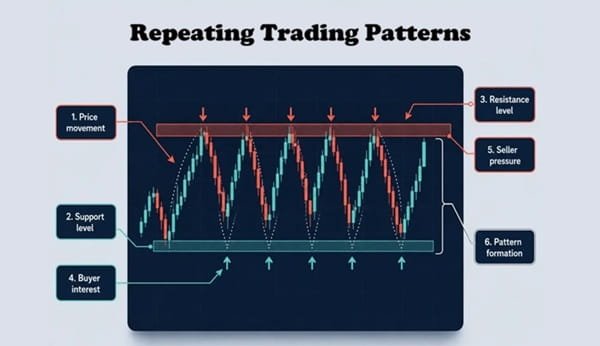
The terms day trading and intraday trading are often used interchangeably in India. Both generally refer to buying and selling financial instruments within the same trading day rather than holding a position overnight. However, the terms can differ in how they are used internationally, and beginners should understand the practical meaning before placing trades.
In India, intraday trading commonly describes trades opened and closed during the same market session. Day trading is a broader term used internationally for a similar approach, although its exact meaning may depend on the market, broker, or trading rules being discussed.

Understanding the similarities, differences in terminology, costs, and risks can help new investors choose an approach that fits their knowledge and financial goals.
What Is Day Trading?
Day trading is a trading style in which a person buys and sells financial instruments within the same trading day, seeking to benefit from short-term price changes. Traders may trade stocks, indices, currencies, commodities, or other eligible instruments, depending on the market and their account permissions.
A day trader typically closes positions before the end of the relevant trading session to avoid carrying overnight exposure. Some traders make several transactions in a day, while others may take only one or two positions.
Day traders often study price charts, trading volumes, market news, and technical indicators. They may use market orders, limit orders, or stop-loss orders to manage entries and exits.
However, day trading is not simply a matter of buying a stock in the morning and selling it at a higher price. Prices can move unexpectedly, and frequent transactions may increase costs. Traders also face the risk of making decisions based on short-term noise rather than meaningful information.
What Is Intraday Trading in India?
Intraday trading in India generally means opening and closing a position within the same trading session. For example, a trader may buy shares of a listed company at 10:00 a.m. and sell them at 1:00 p.m. on the same trading day.
Indian brokers commonly offer an intraday product category through their trading platforms. These products may have specific margin requirements, restrictions, and square-off procedures.
If a trader opens an intraday position but fails to close it before the broker’s stated cut-off time, the broker may automatically square it off under its policy. The timing and charges can vary between brokers and products, so traders should read the applicable terms.
Intraday trading can involve buying first and selling later, or selling first and buying back later where short selling is permitted under the relevant rules. These trades are different from ordinary delivery-based investing, in which a buyer generally intends to hold shares beyond the trading session.
The Main Difference Between Day Trading and Intraday Trading
In everyday Indian stock market discussions, there is usually no fundamental difference between day trading and intraday trading. Both terms generally describe trading positions that are opened and closed on the same day.
The main distinction is often one of terminology rather than trading mechanics.
Day trading is widely used as an international term for short-term trading within a single market day. Intraday trading is especially common in India and is also used by brokers to describe a particular order or product category.
For example, an Indian trader who buys a stock in the morning and sells it in the afternoon may describe the activity as either day trading or intraday trading. The underlying transaction can be the same.
However, terminology can vary across financial markets. Some international markets have specific account rules for frequent day traders, while Indian brokers use their own product labels and must follow applicable Indian regulations. Therefore, traders should always check the exact meaning of a term in the context of the market and broker they use.
Trading Costs and Margin Requirements
Both day trading and intraday trading can involve brokerage charges, exchange transaction charges, applicable taxes, and other trading expenses. The exact costs depend on the broker, instrument, and type of transaction.
Some brokers offer different pricing for intraday and delivery-based trades. Traders should compare the complete fee schedule rather than focusing only on advertised brokerage rates. Frequent buying and selling can make costs significant, particularly when the profit on each trade is small.
Margin requirements also matter. Brokers may allow eligible intraday traders to take positions subject to the applicable margin and risk rules. However, margin is not free money, and it does not protect traders from losses. A position may lose value faster than a trader expects, and the broker may require additional funds or close the position under its policy.
Traders should check the margin required for their chosen instrument before placing an order. They should also understand whether the position must be closed by a specified time and what charges may apply if the broker squares it off.
Risks Every Trader Should Understand
Both approaches carry similar risks because they generally involve short-term price movements.
Market volatility can cause prices to move sharply in either direction. A trader may enter a position expecting a rise but face a sudden fall caused by company news, economic announcements, or broader market sentiment.
Frequent trading can also lead to overtrading, where a trader places unnecessary orders to recover previous losses or capture every small price movement. This behaviour may increase transaction costs and undermine disciplined decision-making.
Other risks include poor liquidity, unexpected price gaps, emotional decisions, and overreliance on technical indicators. Stop-loss orders can help manage risk, but they do not guarantee execution at the intended price in every market condition.
Beginners should avoid borrowing money to speculate, keep essential savings separate from trading capital, and never assume that a profitable trade can be repeated consistently.
Which Approach Should Beginners Choose?
Since day trading and intraday trading generally describe the same activity in India, beginners should focus less on the label and more on understanding the trading process.
Before starting, learn how orders work, how to calculate potential losses, and how trading costs affect returns. Practise using a simulated account if available, while recognising that simulated results do not fully reflect real-market execution or emotional pressure.
It is also worth considering whether short-term trading matches your financial goals. Investors seeking long-term wealth creation may prefer a diversified investment strategy rather than frequent trading. Intraday trading requires time, discipline, and the ability to accept losses without making impulsive decisions.
Conclusion
Day trading and intraday trading are generally interchangeable terms in India. Both usually refer to opening and closing positions within the same trading session. The main differences arise from how brokers use product labels and how terminology is applied across different markets.
Before trading, understand your broker’s order types, margin requirements, square-off rules, and fees. Most importantly, recognise that short-term trading carries financial risk and does not guarantee profits.
Frequently Asked Questions
Q. Is day trading the same as intraday trading in India?
Generally, yes. Both terms usually refer to opening and closing a trading position within the same market session. The exact terminology may vary by broker or market.
Q. Can I hold an intraday position overnight?
Intraday positions are generally intended to be closed on the same trading day. If a position remains open, the broker may square it off according to its policy. Check the relevant product terms.
Q. Is intraday trading riskier than delivery trading?
Intraday trading can involve rapid decisions, frequent transactions, and margin exposure. Delivery-based investing has different risks, including the possibility of losses over a longer holding period. Neither approach is risk-free.
Q. Do day traders need a Demat account in India?
For trading listed shares, a Demat account is commonly used to hold securities, alongside a trading account. The requirements can differ for other instruments and products, so check your broker’s rules.
Q. Can beginners make regular income through intraday trading?
Intraday trading does not guarantee regular income. Results depend on market conditions, strategy, costs, and risk management, and traders can lose money.
Q. What should I check before starting intraday trading?
Understand order types, fees, margin requirements, square-off policies, and potential losses. Use only money you can afford to risk, and avoid trading based on unverified tips or promises of guaranteed returns.