No, in most ordinary private business situations, it is not automatically illegal to not accept cash in India.
Cash is legal tender in India, but that does not always mean every shop, restaurant, mall counter, private service provider, or online business must accept cash in every situation. The real answer depends on the type of business, the timing of payment, the terms shown to the customer, and whether any special law or government rule applies.
India is moving fast toward digital payments. UPI, debit cards, credit cards, wallets, and net banking are now common even for small payments. Still, cash remains valid money. RBI Act, Section 26 says banknotes are legal tender in India for payment or on account for the amount written on them. Coins are also legal tender, but coins have limits; for example, coins of one rupee and above are legal tender only up to a certain amount in a single transaction.
So the confusion is natural. If cash is legal tender, how can a business refuse it? The simple explanation is this: legal tender means valid money, but it does not always force a private seller to complete a sale in cash if the payment rule was clearly stated before the transaction.
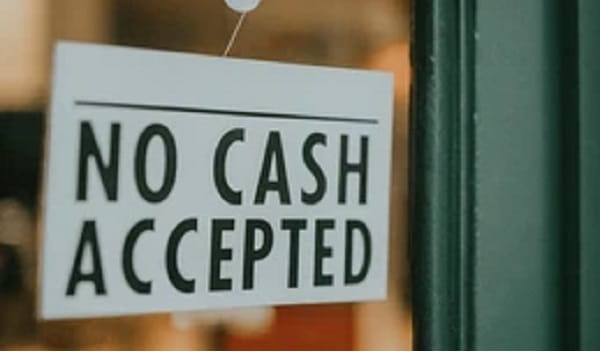
When Refusing Cash Is Usually Not Illegal
A private business can generally decide its payment policy before selling goods or services. For example, a café may say “UPI and card only,” an online delivery platform may accept only prepaid digital payment, or a parking service may use a digital-only system.
If the customer is told clearly before the purchase, the business is not usually doing something illegal just by refusing cash. The customer can decide whether to continue with the purchase or not.
This is similar to a shop saying it does not accept credit cards, only UPI, or only cash. A business normally has freedom to choose its payment system, unless a specific law says otherwise.
When Refusing Cash Can Create a Problem
Refusing cash can create a problem when the customer has already taken the goods or service and payment becomes due. For example, if someone eats at a restaurant and then tries to pay in valid cash, the restaurant may find it harder to refuse the payment if it did not clearly inform the customer earlier.
The same issue can happen in hotels, hospitals, parking lots, repair services, or local service work. If the payment condition was not clearly explained before the service, refusal of valid cash may lead to a dispute or consumer complaint.
That is why businesses should display payment rules clearly at the entrance, billing counter, menu, booking page, or invoice. Clear notice protects both sides.
Cash Is Still Legal Tender
Indian currency notes are valid money unless withdrawn or demonetised by law. The RBI Act gives banknotes legal tender status. This means valid Indian notes can be used for payments in India.
However, legal tender does not mean a private business must always accept cash for every new transaction. It mainly becomes more important where a debt or payment obligation already exists.
For example, if a customer already owes money, offering valid legal tender can matter legally. But if the transaction has not yet happened, the seller may choose the payment method as part of business terms.
Government Offices and Public Services May Have Separate Rules
Government offices, public transport, toll counters, hospitals, courts, utility counters, and public sector services may have their own rules. Some may accept cash. Some may push digital payment. Some may accept only specific modes for certain services.
So, whether refusal of cash is legal in such places depends on the rule governing that service. A private shop and a government counter are not always treated the same.
Businesses Must Still Follow Tax Rules
Not accepting cash does not remove tax duties. A digital-only business must still report income properly. UPI, card, wallet, and bank payments are traceable, and they must be recorded in books.
Similarly, a business that accepts cash must also report cash income. In India, tax law controls high-value cash transactions. Under Section 269ST of the Income Tax Act, a person generally cannot receive ₹2 lakh or more in cash from a person in a day, in a single transaction, or for one event or occasion.
This rule is important because some people think cash can be used freely for any amount. That is not true. Cash is legal, but high-value cash transactions can attract tax penalties.
Large Businesses Must Provide Digital Payment Options
Interestingly, Indian law has a rule in the opposite direction also. Under Section 269SU of the Income Tax Act, businesses with turnover above ₹50 crore in the previous year must provide prescribed electronic payment facilities.
This rule does not say that all businesses must refuse cash. It says large businesses must provide digital payment options. Small businesses usually do not fall under this rule.
Is “No Cash Accepted” Bad for Customers?
Legally, it may not always be illegal, but practically it can be inconvenient. Many people in India still depend on cash, especially senior citizens, rural customers, daily wage workers, small buyers, and people without smartphones or bank apps.
A business that refuses cash may lose such customers. It may also create complaints if the rule is not displayed clearly.
For customer-friendly service, many businesses accept both cash and digital payment. That avoids disputes and increases sales.
Finally
Not accepting cash in India is not automatically illegal for a private business if the payment rule is clearly told before the transaction. But cash is still legal tender, so refusal can become questionable if payment is already due, the customer was not informed earlier, or a specific law or public-service rule requires cash acceptance.
The safest approach for businesses is simple: clearly display payment terms, follow tax rules, and avoid confusing customers at the billing stage.
FAQs
Q: Is it illegal for a shop to refuse cash in India?
A: Not always. A private shop can usually set its payment terms before the sale. But the rule should be clearly shown to customers in advance.
Q: Is cash still legal tender in India?
A: Yes. Valid Indian banknotes are legal tender under the RBI Act.
Q: Can a restaurant refuse cash after I have eaten?
A: It can create a dispute if the restaurant did not clearly inform you earlier. Payment terms should be made clear before service is given.
Q: Can an online business refuse cash?
A: Yes, many online businesses accept only prepaid digital payment or online modes. This is generally allowed if the condition is clear before purchase.
Q: Can a government office refuse cash?
A: It depends on the rules of that department or service. Government and public-service payments may have separate rules.
Q: Can a business accept only UPI and card?
A: In many private business situations, yes. But the business should inform customers clearly before the transaction.
Q: Can a customer force a shopkeeper to accept cash?
A: Usually, not for a fresh purchase where the shop has already declared digital-only payment terms. But the situation may be different if a debt or payment obligation already exists.
Q: Is refusing ₹2,000 notes illegal?
A: ₹2,000 notes continue to be legal tender, though they are no longer commonly in circulation. RBI has stated that ₹2,000 notes remain legal tender.
Q: Is it better for businesses to accept both cash and digital payment?
A: Yes. From a customer-service point of view, accepting both is better because it avoids disputes and helps more customers buy easily.