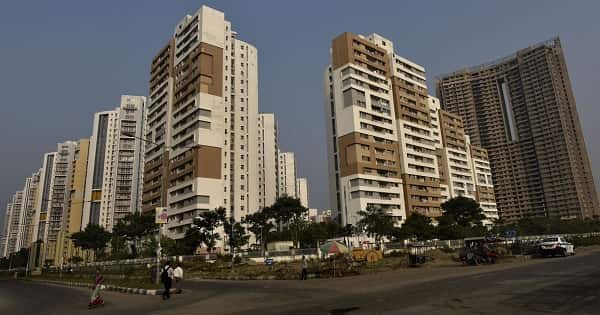
Chennai real estate in 2026 looks more stable than flashy. It is not as aggressive as Mumbai, not as speculative as some NCR belts, and not as overheated as Bengaluru in many pockets. The city has a steady property market supported by IT jobs, manufacturing, automobile industries, port-linked trade, healthcare, education, and improving metro connectivity. For homebuyers, Chennai offers a good mix of end-use comfort and long-term value. For investors, it offers selected growth corridors rather than quick overnight returns.
Chennai recorded 4,763 home sales in Q1 2026, showing 9% year-on-year growth. New launches also rose by 12%, while residential prices increased by around 6% during the quarter. This shows that the market is active, but still relatively balanced compared with some other expensive metro cities.

Overview of Chennai Real Estate in 2026
The Chennai property market is mainly driven by end-users. Many buyers purchase homes for self-use, family settlement, children’s education, workplace convenience, and long-term security. This makes Chennai less speculative than markets where investors dominate heavily.
The city’s growth is spread across different zones. South Chennai remains the strongest residential and IT-driven corridor, especially around OMR, ECR, Sholinganallur, Thoraipakkam, Perungudi, Siruseri, Medavakkam, Pallikaranai, and Velachery. West Chennai is also growing due to Porur, Poonamallee, Ambattur, Avadi, and Sriperumbudur. These areas benefit from industrial activity, better road links, and improving metro access.
Central and premium Chennai areas like Adyar, Alwarpet, Mylapore, Nungambakkam, T. Nagar, Besant Nagar, and Anna Nagar remain costly because of location, social infrastructure, and limited supply. These areas are preferred by business families, senior professionals, doctors, NRIs, and people who want a well-established neighbourhood.
According to Cushman & Wakefield’s Chennai MarketBeat, Chennai recorded around 3,700 residential unit launches in Q1 2026. Suburban South II led new launches with 38% share, followed by Suburban West at 18% and Suburban North at 17%. Premium housing formed a large part of new supply, while affordable housing remained limited.
Why Chennai Real Estate Is Growing
The biggest reason behind Chennai’s real estate demand is employment. The city has a strong IT and ITES base, especially along OMR and GST Road. It is also a major automobile, electronics, manufacturing, healthcare, education, and logistics hub. This gives Chennai a wide employment base, which supports both housing demand and rental demand.
Chennai is also gaining from infrastructure upgrades. Chennai Metro Phase II is one of the biggest factors shaping the city’s future property market. The official Chennai Metro project update says Phase II is planned as a 118.9 km network with 128 stations across three corridors: Madhavaram to SIPCOT, Lighthouse to Poonamallee Bypass, and Madhavaram to Sholinganallur.
This matters because many areas that currently depend heavily on road travel may become more attractive once metro access improves. Locations like Porur, Poonamallee, Madhavaram, Sholinganallur, Perumbakkam, Medavakkam, Thiruvanmiyur, and parts of OMR can benefit from better connectivity.
Another important factor is commercial demand. Global Capability Centres became a major force in Chennai’s office market, accounting for 51% of gross office leasing in 2025. Strong office absorption and rising rentals indicate continued corporate demand, which indirectly supports residential demand near business corridors.
Benefits of Buying Property in Chennai in 2026
1. Stable and Practical Market
Chennai is not usually a wild property market. Prices may rise, but the growth is often steadier compared with speculative markets. This is good for families who want safety, not just fast appreciation.
2. Strong End-User Demand
Many Chennai buyers are genuine homebuyers. They want homes for living, not only for resale. This supports long-term market stability because demand comes from real need.
3. Better Affordability Than Some Metros
Chennai is expensive in premium locations, but it still offers better affordability than Mumbai and many parts of Bengaluru. Buyers can still find decent options in suburban and peripheral areas, especially if they are ready to look beyond prime city zones.
4. Metro-Led Growth
Chennai Metro Phase II can change the value of several locations. Areas with poor travel convenience today may become more attractive after metro connectivity improves. For long-term buyers, this is one of the biggest advantages.
5. Strong Rental Demand in IT Corridors
OMR, Sholinganallur, Siruseri, Perungudi, Thoraipakkam, Velachery, Pallikaranai, and Medavakkam have rental demand from IT employees, students, and working professionals. Homes near tech parks, metro stations, schools, hospitals, and main roads usually perform better.
6. Good Social Infrastructure
Chennai has strong schools, colleges, hospitals, temples, markets, beaches, restaurants, and cultural centres. Areas like Anna Nagar, Adyar, T. Nagar, Velachery, Tambaram, Porur, and OMR already have strong daily-life convenience.
7. Growth Beyond the Core City
Chennai’s growth is expanding toward suburbs and industrial belts. Places like Poonamallee, Avadi, Ambattur, Sriperumbudur, Oragadam, Tambaram, Guduvanchery, and Kelambakkam are becoming important because of jobs, roads, and relatively better entry prices.
Drawbacks of Chennai Real Estate in 2026
1. Premium Homes Are Becoming Costlier
One drawback is the rising focus on premium housing. When developers launch more high-end projects, affordable options become limited. This can make it harder for middle-class buyers to find homes in good locations.
2. Waterlogging and Flood Risk
Chennai buyers must be careful about flood-prone areas. The city has faced serious waterlogging problems in the past. Before buying, people should check elevation, drainage, lake proximity, stormwater systems, and past flood history of the locality.
3. Heat and Climate Concerns
Chennai’s weather is hot and humid for most of the year. This increases electricity use, especially for air conditioning. Buyers should check ventilation, building design, sunlight direction, and power backup before finalising a flat.
4. Traffic Problems
Metro expansion is promising, but road traffic is still a concern in many areas. OMR, Velachery, Porur, Tambaram, Guindy, T. Nagar, and parts of Anna Salai can be congested during peak hours. A property may look close on the map but still take longer in real travel.
5. Project Delay Risk
Like other Indian cities, Chennai also has under-construction project risks. Buyers should check RERA registration, builder history, possession timeline, approvals, and land title. Ready-to-move homes are safer for people who do not want uncertainty.
6. Uneven Growth Across Locations
Not every area will give strong returns. Some peripheral locations may take longer to develop. If roads, schools, hospitals, shops, and public transport are still weak, the buyer may have to wait for many years to get proper value.
Best Areas to Watch in 2026
For premium buyers, Adyar, Alwarpet, Nungambakkam, Mylapore, Besant Nagar, Anna Nagar, and T. Nagar remain strong. These areas are costly but offer lifestyle comfort and strong resale demand.
For IT professionals and rental investors, OMR, Sholinganallur, Perungudi, Thoraipakkam, Siruseri, Velachery, Medavakkam, and Pallikaranai are important. These areas benefit from job hubs and tenant demand.
For mid-budget buyers, Porur, Poonamallee, Tambaram, Guduvanchery, Avadi, Ambattur, and Kelambakkam are worth watching. These locations may offer better space and future growth potential.
Final View
Chennai real estate in 2026 is a balanced market. It offers stability, employment-led demand, good social infrastructure, and strong future connectivity through metro expansion. It is a good city for end-users who want practical living and for investors who can hold property patiently.
But buyers should not ignore the drawbacks. Flood risk, traffic, project delays, high premium pricing, and uneven infrastructure can affect returns. The smartest approach is to choose legally clear projects in locations with real demand, good road access, upcoming metro advantage, and strong daily-life facilities. In simple words, Chennai is not a market for blind investment. It is a market for careful, patient, and location-wise buying.