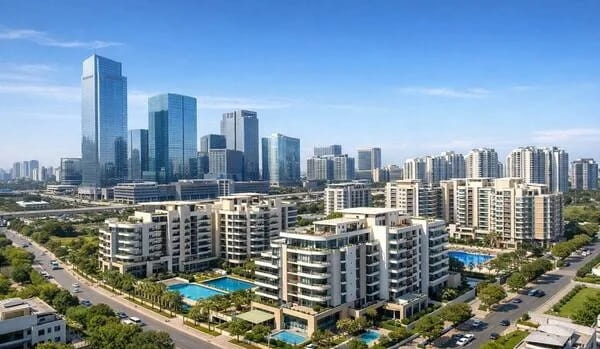
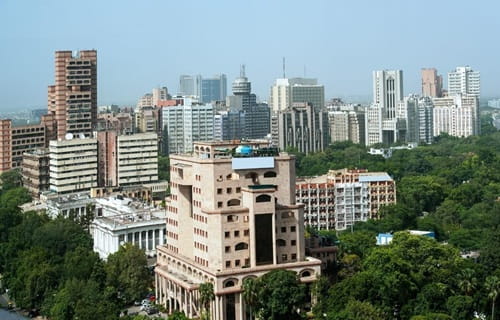
Bangalore real estate in 2026 is moving with unusual speed. The city is expensive, crowded, and full of daily civic problems, yet buyers are still entering the market because the job base is too strong to ignore. Unlike many speculative property markets, Bangalore’s demand is largely supported by salaried professionals, tech workers, startup employees, Global Capability Centre staff, and families who want to live close to work.
The city’s housing prices have risen sharply. PropTiger’s Q1 2026 data showed Bengaluru’s average housing price rising 24% year-on-year to ₹9,785 per sq ft, the highest annual growth among India’s top eight cities. JLL also noted that Bengaluru’s residential supply touched an all-time quarterly high of 27,000 units in Q1 2026, while home prices and rents rose quarter-on-quarter.
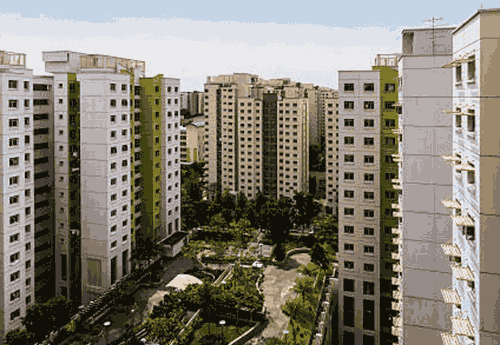
Overview of Bangalore Real Estate in 2026
The biggest force behind Bangalore’s property market is employment. The city remains India’s strongest technology and corporate office hub. In Q1 2026, India recorded 21.5 million sq ft of gross office leasing, and Bengaluru led with 24.8% share. More importantly, Global Capability Centres accounted for 70% of Bengaluru’s quarterly gross leasing activity, showing how strongly global companies continue to depend on the city.
This office growth directly supports housing demand. When companies expand in Whitefield, Outer Ring Road, Manyata Tech Park, Sarjapur Road, Electronic City, and North Bangalore, nearby residential areas automatically get stronger buyer and rental interest.
Bangalore’s market can be divided into three broad zones. East Bangalore, covering Whitefield, Outer Ring Road, Marathahalli, Varthur, Bellandur, and Mahadevapura, remains the strongest IT-driven housing market. North Bangalore, including Hebbal, Thanisandra, Yelahanka and Devanahalli, is becoming the airport-led growth zone. South and South-East Bangalore, including Sarjapur Road, Electronic City, Kanakapura Road and Bannerghatta Road, offer a mix of affordability, tech access, and future metro-linked value.
ANAROCK’s Q1 2026 Bengaluru report also shows that East Bangalore dominated residential demand, accounting for 47% of sales, while North Bangalore contributed 33%. Launches were also strongly concentrated in East and North Bengaluru, proving where developers and buyers are focusing most.
Benefits of Buying Property in Bangalore in 2026
1. Strong End-User Demand
Bangalore’s biggest advantage is that demand is real. People buy homes because they work in the city, want to reduce commute time, or plan long-term settlement. This gives the market a stronger base than cities where prices are driven mainly by investors.
2. Excellent Rental Demand
Bangalore is one of India’s strongest rental markets. Well-located 1 BHK, 2 BHK and 3 BHK flats near tech parks usually find tenants quickly. Whitefield, ORR, Bellandur, Sarjapur Road, HSR Layout, Indiranagar, Hebbal, Manyata Tech Park and Electronic City are especially strong rental zones.
The rental story is also supported by large corporate leasing. For example, Target Corporation leased over 8.3 lakh sq ft at Embassy Manyata Business Park for 10 years, with an estimated rental commitment of about ₹1,250 crore. Such large office deals keep professional housing demand alive around major work hubs.
3. Metro-Led Value Growth
Namma Metro expansion is one of the biggest long-term triggers. The Blue Line’s 19-km Phase 2A section will connect Central Silk Board to K.R. Puram along the Outer Ring Road, directly serving one of the city’s busiest IT corridors. BMRCL is targeting the Silk Board–K.R. Puram section by the end of 2026, while the airport extension will follow later.
This can change real estate demand in areas like HSR Layout, Bellandur, Marathahalli, Mahadevapura, KR Puram, Hebbal, Yelahanka and airport-side locations. In Bangalore, even a small reduction in travel stress can increase a property’s attractiveness.
4. Rapid Capital Appreciation
Bangalore has shown strong price growth in the last few years. East Bangalore, North Bangalore, Sarjapur Road, Hoskote, Yelahanka and airport-side areas have seen increased buyer interest because of job growth, infrastructure, and limited quality supply in prime areas.
5. Better Long-Term Wealth Protection
A good property in a strong Bangalore micro-market can act as a long-term wealth asset. The city’s economy is not dependent on only one industry anymore. IT, startups, GCCs, electronics, fintech, biotech, aerospace, education, and healthcare all support housing demand.
6. Rise of Integrated Townships
Modern Bangalore projects are no longer just apartment towers. Developers are building larger gated communities with clubhouses, co-working lounges, sports zones, walking tracks, rainwater harvesting, sewage treatment plants, and smart security. For hybrid-working professionals, these township-style projects are becoming more attractive.
Drawbacks of Bangalore Real Estate in 2026
1. Prices Have Become Too High
Affordability is the biggest problem. In prime IT corridors, a good 2.5 BHK or 3 BHK can easily cross ₹1.5 crore to ₹2.5 crore. Salary growth has not increased at the same speed as property prices. This forces many first-time buyers to either take heavy loans or move toward peripheral locations.
2. Smaller Homes at Higher Prices
Many buyers feel that new apartments are becoming smaller while prices keep rising. Developers try to keep the total ticket size manageable by reducing carpet area or optimising layouts. So, a buyer may pay premium pricing but still get a more compact home than older projects offered.
3. Water Crisis and Tanker Dependency
Water is one of Bangalore’s biggest ground realities. In 2026, BWSSB’s Sanchari Cauvery tanker service saw demand rise 20–25% as borewells dried up and groundwater pressure increased. Between January and early April 2026, BWSSB fulfilled 15,731 tanker orders, showing how serious the dependence on tanker supply has become.
This is especially important for buyers in fast-growing high-rise corridors. Before buying, people should check water source, borewell condition, Cauvery connection, tanker dependency, rainwater harvesting, and STP quality.
4. Traffic and Road Stress
Bangalore’s traffic is still one of its biggest weaknesses. Outer Ring Road, Sarjapur Road, Whitefield, Bellandur, Silk Board, Marathahalli and Hebbal can be painful during peak hours. Metro expansion may help, but road congestion will not disappear overnight.
5. Uneven Civic Infrastructure
Inside premium gated societies, life may look polished. Outside, the connecting roads may have potholes, poor drainage, dust, weak footpaths, and traffic chaos. This gap between private infrastructure and public infrastructure is a major drawback.
6. Resale Can Be Selective
Not every Bangalore property is easy to resell. Branded gated projects in good locations usually perform better. Older standalone apartments, interior locations, or buildings without amenities may need heavy discounts to find buyers.
Best Areas to Watch in 2026
For IT professionals and rental investors, Whitefield, ORR, Bellandur, Marathahalli, Mahadevapura, Sarjapur Road and HSR-connected pockets remain important.
For future growth, Hebbal, Thanisandra, Yelahanka, Devanahalli and airport-side locations are worth tracking. These areas benefit from airport access, tech parks, business parks, and metro-led expectations.
For relatively affordable entry, Electronic City, Hoskote, Kanakapura Road, Budigere Cross and parts of South Bangalore may suit buyers who can accept longer travel or wait for infrastructure improvement.
Final View
Bangalore real estate in 2026 is strong, but not easy. It offers job-backed demand, high rental potential, metro-led growth, strong corporate leasing, and long-term appreciation. At the same time, it brings high prices, shrinking apartment sizes, traffic stress, water shortage, and uneven civic infrastructure.
For end-users, the best choice is a home that reduces daily commute and has reliable water, good maintenance, and legal clarity. For investors, the safest approach is to choose employment-linked micro-markets, strong developers, and properties with real rental demand. Bangalore can still reward patient buyers, but only if they buy with discipline instead of chasing hype.