Forex, short for foreign exchange, is the market where currencies are bought and sold against one another. It is often promoted online as a way to make quick money, but actual forex trading involves much more than simply predicting whether a currency will rise or fall. New traders need to understand currency pairs, market movements, leverage, trading costs, risk management and the rules that apply in their country.
Forex trading essentially means taking a position on how one currency will move relative to another. For example, in the EUR/USD pair, a trader is speculating on the value of the euro relative to the US dollar. If the trader expects the euro to strengthen against the dollar, they may buy the pair. If they expect it to weaken, they may sell it.

Understanding Currency Pairs
The first thing a new trader encounters is the currency pair. A forex quote always contains two currencies.
For example, if EUR/USD is quoted at 1.1000, it means one euro is worth 1.10 US dollars. The first currency is called the base currency, while the second is the quote currency.
Commonly traded pairs include EUR/USD, GBP/USD, USD/JPY and USD/CHF. Pairs involving major currencies generally have greater liquidity and can have relatively tighter spreads than less frequently traded pairs.
The price of a currency pair changes because of factors such as interest rates, inflation, economic growth, employment data, central-bank decisions, geopolitical developments and investor sentiment.
What a Forex Trade Actually Looks Like
Suppose a trader believes the euro will strengthen against the US dollar. They buy EUR/USD at 1.1000. If the price later rises to 1.1050, the position has moved in the trader’s favour. If the trader closes the position, the difference between the entry and exit prices contributes to the trading result.
The opposite happens if the price falls.
Importantly, retail forex trading usually does not involve taking physical possession of euros, dollars or another foreign currency. In many retail arrangements, the trader is taking a financial position based on currency-price movements. The exact structure depends on the product and jurisdiction.
Leverage and Margin
One of the most important concepts for new traders is leverage.
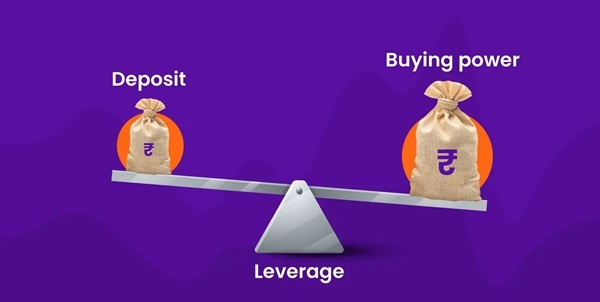
Leverage allows a trader to control a position that is larger than the amount of money deposited in the account. For example, a broker may require only a fraction of a position’s total value as margin.
Leverage can make relatively small market movements produce larger gains, but it also magnifies losses. A trade that moves against a highly leveraged position can consume available margin quickly. Regulators warn that traders can lose substantial amounts of money when using leveraged forex products.
This is why beginners should not view leverage as “free money.” It is a mechanism that increases exposure to the market.
How Traders Analyse the Market
Forex traders generally use one or both of two broad approaches: technical analysis and fundamental analysis.
Technical Analysis
Technical traders study price charts and attempt to identify patterns, trends and levels where buying or selling pressure may change.
Common tools include moving averages, support and resistance, trendlines, candlestick patterns and momentum indicators.
Technical analysis does not guarantee that a forecast will be correct. It is a framework for assessing probabilities rather than a method for predicting every market movement.
Fundamental Analysis
Fundamental traders examine economic and financial information that can influence currency values.
Important factors include central-bank interest rates, inflation, GDP growth, employment figures, trade data and government policy.
For example, a change in expectations about US Federal Reserve interest rates can influence the value of the US dollar. Similarly, decisions by the European Central Bank can affect expectations surrounding the euro.
Trading Costs Matter
A common beginner mistake is to focus only on whether a trade makes money while ignoring the costs of trading.
The spread is the difference between the bid and ask price. Depending on the product and broker, traders may also encounter commissions, financing or overnight charges and other fees.
Frequent trading can make these costs significant. A strategy that appears profitable before expenses may perform very differently after spreads, commissions and financing costs are included.
Therefore, traders should understand the complete fee structure before opening an account.
Risk Management Is Part of Trading
Successful forex trading is not simply about finding good entry points. Risk management is equally important.
A trader may use a stop-loss order to limit the loss on a particular position. Position sizing is another important concept. Instead of risking a large percentage of their account on one trade, a disciplined trader can limit the amount exposed to an individual position.
Risk management should also account for unexpected volatility. Economic announcements, geopolitical events and central-bank decisions can cause rapid price movements.
The CFTC advises traders to determine how much risk capital they can afford to lose and not use money required for living expenses or important financial goals.
Forex Trading in India
For Indian residents, another important consideration is regulation.
Forex transactions by residents are governed by India’s foreign-exchange framework, including the Foreign Exchange Management Act (FEMA). The Reserve Bank of India has cautioned residents against unauthorised electronic trading platforms offering forex trading. It states that residents should undertake permitted forex transactions only with authorised persons and through authorised electronic trading platforms or recognised stock exchanges, subject to applicable conditions.
Therefore, an Indian beginner should not assume that every international forex website or mobile application advertised online is legally available for use in India.
Before depositing money, traders should verify whether the platform and product are permitted and appropriately regulated for them. Sending money to an unauthorised offshore platform can create both financial and regulatory risks.
Why Beginners Often Lose Money
Forex trading can look simple because opening and closing a position may require only a few clicks. The difficult part is managing uncertainty consistently.
Beginners may trade too frequently, use excessive leverage, follow social-media signals blindly or increase their position after a loss in an attempt to recover money quickly.
Regulatory data also illustrates the difficulty of retail forex trading. The CFTC says that approximately two out of three retail forex traders lose money each quarter in the United States.
This does not mean every trader will lose money, but it demonstrates why forex should not be treated as an easy or guaranteed source of income.
Common Forex Scams
New traders should also understand the difference between legitimate trading risks and outright fraud.
Warning signs include guaranteed profits, claims of extremely high returns with little risk, pressure to deposit more money, unexplained withdrawal restrictions and unregistered trading platforms.
Social media can make these schemes particularly convincing because fraudulent operators may display luxury lifestyles, winning trades or testimonials. Regulators specifically warn investors to be cautious about unsolicited forex offers and unregistered dealers.
A legitimate trading strategy cannot guarantee profits, and no software or artificial-intelligence system can reliably predict every future currency movement.
A Sensible Starting Approach for New Traders
Someone interested in learning forex should begin with education rather than a large deposit.
A sensible learning process includes understanding currency pairs, practicing chart reading, learning how orders work, studying leverage and margin, calculating potential losses and developing a written trading plan.
Beginners can also study historical market data or use a demo environment where available before risking real capital. However, simulated success does not guarantee success with real money because psychological pressure and actual trading costs can change behaviour.
Most importantly, traders should use only money they can afford to lose and avoid borrowing money to speculate.
Conclusion
What forex trading actually involves is speculating on currency-price movements while managing market, leverage, cost and regulatory risks. It requires an understanding of currency pairs, economic factors, charts, trading orders and disciplined risk management.
For new traders, the biggest mistake is viewing forex as a shortcut to wealth. The market can provide opportunities, but it can also produce rapid losses, particularly when leverage is used carelessly.
Anyone considering forex trading should first understand the product, verify the platform’s regulatory status, learn how much a trade could realistically lose and develop a risk-management plan. For Indian residents, checking RBI requirements and permitted trading channels is particularly important before committing funds.
Forex trading is therefore better approached as a high-risk financial activity requiring education, discipline and careful decision-making, rather than as a guaranteed income opportunity.