CFD trading, or Contracts for Difference trading, is a way of speculating on the price movement of an asset without directly owning the underlying asset. CFDs are commonly offered on currencies, stock indices, commodities, individual shares and cryptocurrencies, depending on the jurisdiction and provider. They are particularly associated with forex because they allow traders to take leveraged positions on currency-price movements.
For beginners, however, it is important to understand that CFDs are complex, leveraged financial products. Their popularity does not mean they are suitable for everyone. Traders can lose money quickly when prices move against their positions, especially when high leverage is involved.
What Is a CFD?
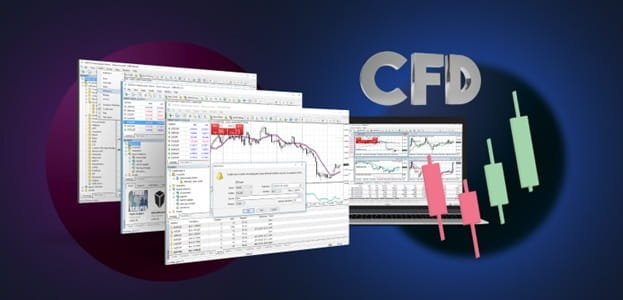
A Contract for Difference is an agreement between a trader and a provider to exchange the difference in an asset’s price between the time a position is opened and when it is closed.
Suppose a trader opens a CFD position on EUR/USD when the quoted price is 1.1000. If the trader closes the position after the price rises to 1.1050, the price difference contributes to a profit, before applicable costs.
If the price instead falls, the trader experiences a loss.
The trader does not normally take physical delivery of euros or US dollars. Instead, the CFD provides exposure to the movement in the underlying market.
How CFDs Are Used in Forex
Forex CFDs allow traders to speculate on currency pairs.
A trader can potentially take either a long or short position. Going long means expecting the price to rise, while going short means expecting it to fall.
For example, if a trader believes GBP/USD will increase, they could open a long position. If they expect GBP/USD to decline, they could open a short position.
This flexibility is one reason CFDs have become popular among short-term traders.
However, CFD trading is not identical to buying and selling currencies for commercial or investment purposes. It is a leveraged derivative product whose value is linked to the underlying market.
Why CFDs Are Popular in Forex
1. Access to Leverage
One of the biggest attractions of forex CFDs is leverage.
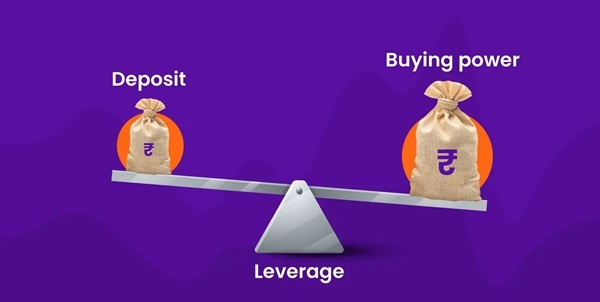
Leverage allows traders to control a position larger than the amount of capital deposited as margin. This means a relatively small price movement can produce a larger percentage gain or loss on the trader’s capital.
For example, if a trader deposits ₹10,000 and controls a substantially larger position through leverage, a small movement in the underlying currency can have a noticeable effect on the account.
Leverage can make trading capital more efficient, but it also magnifies losses. Regulators have repeatedly warned retail investors about the risks of leveraged CFDs.
2. Ability to Trade Rising and Falling Markets
Traditional investing often focuses on buying an asset with the expectation that its value will rise.
CFDs allow traders to take short positions, providing the opportunity to speculate on falling prices as well.
For example, if a trader expects USD/JPY to decline, they may open a short CFD position. If the market falls as expected, the position may generate a profit before costs.
This makes CFDs attractive to traders who actively seek opportunities in both upward and downward markets.
3. Wide Range of Markets
Forex CFDs are often offered alongside other CFD markets.
Depending on the provider and jurisdiction, traders may be able to access:
- Currency pairs
- Stock indices
- Commodities
- Individual shares
- Precious metals
- Energy markets
- Cryptocurrencies
This allows traders to manage multiple types of market exposure through one trading platform.
However, access to many markets can also encourage overtrading. Beginners should understand an instrument before taking a position in it.
4. No Direct Ownership of the Asset
A CFD trader does not normally own the underlying currency, stock or commodity.
This can simplify speculation because the trader is primarily concerned with price movement.
For example, someone trading a stock CFD is speculating on the stock’s price rather than becoming a conventional shareholder with direct ownership rights.
In forex, the distinction is even clearer because the trader is taking exposure to the movement of a currency pair rather than physically exchanging and holding the underlying currencies.
5. Flexible Position Sizes
Many CFD providers allow traders to choose different position sizes.
This can make CFDs accessible to traders with different amounts of capital. However, smaller position sizes do not automatically eliminate risk.
The trader still needs to consider leverage, volatility, spread, financing costs and the total amount exposed to the market.
The Costs of CFD Trading
CFD trading is not free. The most common cost is the spread, which is the difference between the buying and selling price quoted by the provider.
Some providers may also charge commissions.
Another important cost is overnight financing. If a leveraged CFD position is kept open beyond a specified period, the provider may apply a financing or funding charge.
These costs can become significant for traders who hold positions for long periods or trade frequently.
Therefore, a strategy should be evaluated after considering all applicable costs rather than looking only at the underlying price movement.
The Biggest Risk: Leverage
The primary danger associated with CFDs is leverage.
A trader can control a position significantly larger than their initial deposit. Consequently, losses can accumulate quickly when the market moves in the wrong direction.
For example, a trader who uses excessive leverage may see a relatively small percentage movement in a currency pair translate into a substantial percentage loss on their account.
The UK Financial Conduct Authority (FCA) describes CFDs as complex, high-risk products and has introduced restrictions on their marketing and distribution to retail consumers in the UK.
Regulatory protections differ between countries, so traders must understand the rules that apply in their jurisdiction.
CFDs Are Not the Same Everywhere
CFD availability and regulation vary considerably between countries.
In some jurisdictions, CFDs are widely available to retail traders under specific rules. Other countries restrict or prohibit retail CFD trading.
This distinction is particularly important for Indian residents.
India has its own regulatory framework governing foreign-exchange transactions and derivatives. The RBI has warned Indian residents against using unauthorised electronic trading platforms for forex transactions.
Therefore, an Indian resident should not assume that because a foreign website offers forex CFDs, that product is automatically permitted for trading from India.
CFD Trading vs Traditional Investing
The differences can be summarised as follows:
| Feature | CFD Trading | Traditional Investing |
| Ownership | Usually no ownership | Often involves ownership |
| Main objective | Speculate on price movement | Investment/ownership |
| Leverage | Common | Depends on product |
| Short selling | Generally available | Depends on market/product |
| Financing costs | May apply to leveraged positions | Generally different |
| Risk | Can be very high | Varies by investment |
| Suitable for | Experienced short-term traders | Can suit long-term investors |
Why Beginners Should Be Careful
CFDs can appear simple because opening or closing a position may require only a few clicks. The underlying risks, however, are much more complicated.
Beginners can lose money by using excessive leverage, trading without a risk-management plan, ignoring financing costs, following unverified signals or treating short-term price movements as predictable.
Promises of guaranteed returns or “risk-free” forex strategies should be treated as major warning signs.
A sensible approach is to learn how the product works, understand the provider’s fees and regulatory status, and practise risk management before considering real-money trading.
Conclusion
CFD trading means speculating on an asset’s price movement without directly owning the underlying asset. CFDs have become popular in forex because they can provide leverage, short-selling flexibility, adjustable position sizes and access to currency markets through trading platforms.
However, the same features that make CFDs attractive also make them risky. Leverage can magnify losses, while spreads, commissions and overnight financing can reduce returns.
For new traders, CFDs should therefore be viewed as complex, high-risk derivatives rather than an easy way to make money from forex. Anyone considering them should understand the product, verify that it is legally available in their jurisdiction, check the provider’s regulatory status and use only money they can afford to lose.
The most important lesson is simple: the convenience and flexibility of CFD trading do not remove market risk; they can actually make risk more significant when leverage is used carelessly.