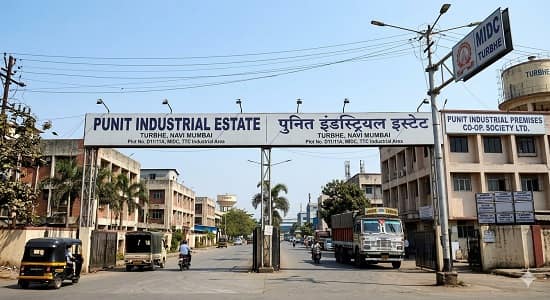
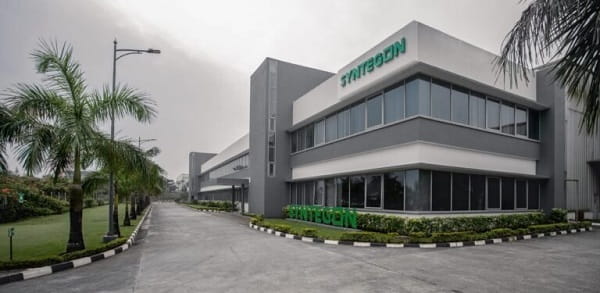
SIPCOT Industrial Estates are a network of well-established industrial complexes developed and managed by the State Industries Promotion Corporation of Tamil Nadu Limited — one of India’s most successful state industrial development corporations. Spread across 24 industrial complexes in 15 districts of Tamil Nadu, with over 35,043 acres of developed industrial land and six sector-specific Special Economic Zones (SEZs), SIPCOT has served as the institutional backbone of Tamil Nadu’s manufacturing economy for over five decades — hosting global automakers, IT majors, electronics giants, pharmaceutical firms, aerospace companies, textile manufacturers, and thousands of ancillary SMEs that have made Tamil Nadu one of India’s most industrially advanced states.
Tamil Nadu’s industrial transformation is closely tied to SIPCOT’s planned development strategy. Established in 1971, SIPCOT was tasked with creating the infrastructure — roads, power, water, drainage, and institutional support — that would attract large-scale industry to the state. What began with early estates at Ranipet and Hosur has expanded into a dense industrial corridor covering Sriperumbudur, Oragadam, Irungattukottai, Siruseri, Cuddalore, Gummidipoondi, Perundurai, Tuticorin, Gangaikondan, Pudukottai, and many others. Today, SIPCOT estates collectively host some of India’s most recognised manufacturing names — Hyundai, BMW, Renault-Nissan, Ford, Ashok Leyland, Apple contract manufacturers, and global IT majors — making Tamil Nadu the country’s second-largest state economy and the manufacturing hub it is today.
| Category | Details |
| Governing Body | State Industries Promotion Corporation of Tamil Nadu Ltd |
| State | Tamil Nadu |
| Established | 1971 |
| Total Estates | 24+ industrial complexes, 6 sector-specific SEZs |
| Total Area Developed | Approx. 35,043 acres |
| Key Locations | Hosur, Ranipet, Sriperumbudur, Oragadam, Irungattukottai, Siruseri, Cuddalore, Gummidipoondi, Perundurai, Tuticorin |
| Major Industries | Automotive, IT & ITES, Electronics, Pharmaceuticals, Textiles, Aerospace, Leather |
| Largest IT Park | SIPCOT IT Park, Siruseri (Asia’s largest) |
| Major Roads/Highways | NH-44, NH-48, NH-32, NH-38, NH-79 |
| Administering Authority | Government of Tamil Nadu |
Overview of SIPCOT Industrial Estates
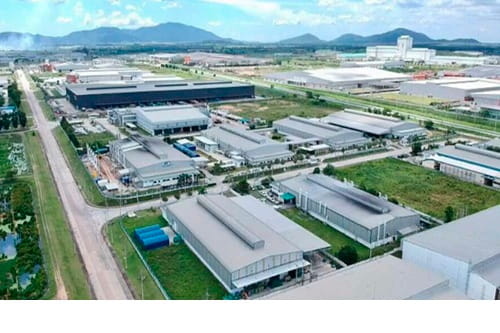
SIPCOT Industrial Estates follow a carefully planned format — large, contiguous industrial zones with dedicated infrastructure, sector-specific parks, and integrated support services. Individual plots and sheds range from compact SME-scale allotments of a few thousand square feet to substantial multi-hundred-acre parcels for anchor manufacturers. The estates provide basic infrastructure including internal roads, water supply, drainage, street lighting, power substations, effluent treatment, and telecom connectivity — reducing the time and cost for businesses to set up operations.
What makes SIPCOT estates distinctive is their institutional depth. SIPCOT acts as a one-stop nodal agency for land acquisition, allotment, approvals, and disbursement of the Structured Package of Incentives under the Tamil Nadu Industrial Policy 2021-2025 — covering stamp duty concessions, sector-specific incentives for sunrise industries like electric vehicles, batteries, biotechnology, and technical textiles, and streamlined clearances for large foreign enterprises.
The estates are categorised geographically by the Tamil Nadu Industrial Policy — Category A covering Chengalpattu, Chennai, Kancheepuram, and Tiruvallur; Category B covering Coimbatore, Erode, Krishnagiri, Ranipet, Salem, Vellore, and others; and Category C covering the remaining districts — with differentiated incentives encouraging distributed industrial growth across the state.
Location and Connectivity
Connectivity is central to SIPCOT’s site selection. Estates are deliberately positioned along major National Highways and rail corridors. Hosur sits on NH-44 (the former NH-7), close to Bengaluru. Sriperumbudur, Oragadam, and Irungattukottai line the NH-48 Chennai-Bengaluru corridor — India’s busiest automotive manufacturing belt. Ranipet lies on NH-48 near Vellore. Cuddalore and Gummidipoondi sit on the NH-32 East Coast corridor. Tuticorin is anchored by port access. Perundurai is on the NH-544 Coimbatore-Salem route.
Chennai International Airport serves most of the Chennai-cluster SIPCOT estates within 25-50 km. Chennai Port and Ennore Port handle logistics for the coastal belt. Bengaluru International Airport serves Hosur. Madurai, Coimbatore, and Tuticorin Airports serve their respective regional estates. Dedicated rail sidings at major estates support freight movement, and proximity to both state and national highways enables efficient goods distribution across India.
Business and Commercial Importance
SIPCOT Industrial Estates support an extraordinarily diverse commercial ecosystem. Automotive and auto-components form the flagship pillar — Sriperumbudur-Oragadam-Irungattukottai collectively form one of Asia’s densest automotive manufacturing clusters, with Hyundai, BMW, Renault-Nissan, Ford, Daimler, Ashok Leyland, and hundreds of Tier-1 and Tier-2 component suppliers operating across these estates.
Electronics manufacturing has grown explosively. Tamil Nadu accounts for approximately 20 percent of India’s electronics production, and several of Apple’s major contract manufacturers operate from SIPCOT estates, alongside Samsung, Foxconn-linked operations, and leading domestic electronics firms. IT and ITES form another dominant segment — SIPCOT IT Park at Siruseri (part of the Old Mahabalipuram Road IT Corridor) is Asia’s largest IT park, hosting global technology majors.
Pharmaceuticals and biotechnology form a significant pillar, leveraging Chennai’s research ecosystem. Textiles and garments anchor the Coimbatore-Tiruppur-Perundurai estates. Leather and leather goods cluster around Ranipet. Aerospace components, defence manufacturing, renewable energy equipment, and technical textiles are emerging sunrise sectors actively encouraged through targeted incentives.
Nearby Infrastructure and Facilities
SIPCOT estates are supported by substantial institutional infrastructure. Most major estates host TNEB power substations, police stations, fire stations, telephone exchanges, Central Excise offices, post offices, ESI hospitals, banks, schools, shopping complexes, and Tamil Nadu Pollution Control Board offices on-site or nearby. Common Effluent Treatment Plants serve pollution-intensive industries like leather and textiles.
The surrounding areas typically feature mature workforce housing, educational institutions, healthcare facilities, and retail infrastructure — particularly well-developed around Chennai-cluster estates. Hospitality infrastructure supporting visiting clients and expatriate workers is strong across major estates, with international-standard hotels in Chennai, Coimbatore, and Hosur.
Advantages of the Location
Institutional support from SIPCOT is the single biggest advantage — transparent land allotment, single-window clearances, and sustained government backing make setting up operations meaningfully easier than in most Indian states. Tamil Nadu’s status as India’s second-largest state economy, with 37,220 factory units, creates unmatched supplier, vendor, and workforce networks. Highway and port connectivity supports efficient exports and domestic distribution. The skilled workforce base, anchored by Tamil Nadu’s strong engineering and technical education system, is exceptional. The Tamil Nadu Industrial Policy 2021-2025 provides attractive incentives for sunrise sectors including EVs, batteries, biotech, pharmaceuticals, and renewable energy components.
Challenges or Limitations
Land acquisition in SIPCOT expansion zones has occasionally faced local opposition, slowing new park development. The average SIPCOT land allotment process takes 99 days, with a maximum of 172 days — faster than most Indian states but still a consideration. Power and water availability, while generally reliable, has faced seasonal stress in certain estates. Wage inflation in the core Chennai-cluster automotive belt has risen substantially. Traffic congestion on NH-48 and major estate approaches during peak hours is significant. Cyclone and coastal weather risk applies to estates in the East Coast belt.
Conclusion
SIPCOT Industrial Estates collectively represent one of India’s most successful state-led industrial development programs, having transformed Tamil Nadu into the country’s second-largest state economy and one of its premier manufacturing destinations. From the automotive clusters of Sriperumbudur-Oragadam to Asia’s largest IT park at Siruseri, from leather hubs in Ranipet to textile belts at Perundurai, SIPCOT’s planned, institutionally-backed estates continue to attract global investment and anchor Tamil Nadu’s industrial growth. With the 2021-2025 Industrial Policy driving incentives for sunrise sectors and 21+ new estates in the pipeline, SIPCOT remains central to Tamil Nadu’s — and indeed India’s — manufacturing future.
FAQs
Q1. What does SIPCOT stand for?
State Industries Promotion Corporation of Tamil Nadu Limited, established in 1971.
Q2. How many SIPCOT Industrial Estates are there?
SIPCOT currently manages 24 industrial complexes across 15 districts of Tamil Nadu, plus 6 sector-specific SEZs, covering over 35,043 acres.
Q3. Which are the most prominent SIPCOT estates?
Hosur, Sriperumbudur, Oragadam, Irungattukottai, Siruseri (IT), Ranipet, Cuddalore, Gummidipoondi, Perundurai, and Tuticorin.
Q4. What kind of businesses operate in SIPCOT estates?
Automotive, electronics, IT & ITES, pharmaceuticals, textiles, leather, aerospace, renewable energy, and thousands of ancillary SMEs.
Q5. What is Asia’s largest IT park?
SIPCOT IT Park at Siruseri, along the OMR IT Corridor near Chennai.
Q6. How do I apply for land in a SIPCOT estate?
Through SIPCOT’s online portal — the process averages 99 days, with sector-specific incentives available under the Tamil Nadu Industrial Policy.
Q7. Does SIPCOT offer incentives?
Yes — stamp duty concessions, subsidised land rates, sector-specific incentives for sunrise industries, and single-window clearances.
Q8. What are the main challenges?
Land acquisition delays, peak-hour traffic on major highways, wage inflation in core clusters, and seasonal weather risks on the coast.