Personal lending in India has increasingly shifted to digital platforms. Instead of visiting branches and submitting physical documents, borrowers can use a loan app to apply, upload documents, and track their application online. Processing times vary by lender and applicant profile. Understanding the process helps borrowers set realistic expectations and prepare the required documents.
The Mobile-First Lending Shift
Several developments have shaped mobile-first lending: widespread smartphone use, Aadhaar-based digital KYC, bank statement sharing through the Account Aggregator framework, and real-time credit bureau checks. Together, these allow lenders to verify identity, income, and credit history much faster than manual processes.
As a result, an application that once required multiple branch visits can now move from submission to disbursement much faster. For eligible applicants with strong profiles and complete documents, some lenders offer same-day or next-day disbursement, though timelines vary by lender and profile.
What the Mobile Application Process Looks Like
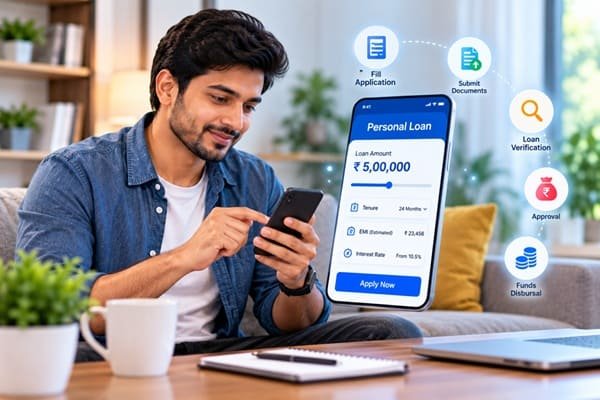
A typical mobile personal loan application involves these stages:
- Downloading the lender’s app from Google Play or the App Store
- Verifying your mobile number through an OTP
- Entering personal and employment details
- Completing digital KYC
- Uploading income documents or sharing bank statements digitally
- Reviewing the offer and the Key Facts Statement (KFS)
- Signing the loan agreement digitally
- Receiving the funds in your registered bank account
For applicants whose profiles fit the lender’s standard criteria, most of these steps happen within the app.
Why Speed Does Not Mean Lower Standards
Faster decisions sometimes raise concerns about weaker assessment. With regulated lenders, the core checks remain the same: credit score, income verification, and existing obligations. What changes is how lenders apply them. Automated systems run standard checks and flag items that need manual review, shortening the process without weakening the underlying assessment.
Where the Mobile Process Helps
Mobile lending offers advantages across the loan lifecycle:
- Preliminary eligibility checks before a formal application
- Disclosure of the APR and all charges in the KFS before you sign
- Digital document submission
- Application status tracking
- Digital agreement signing with copies saved for reference
- Ongoing loan management after disbursement
Digital loans also include a cooling-off period, during which you can exit the loan by repaying the principal and the proportionate APR without a prepayment penalty. Check the period stated in your KFS.
What Borrowers Should Still Prepare For
A fast process does not remove the need for preparation. In fact, it rewards applicants who arrive with complete documents, a healthy credit profile, and realistic expectations:
- Check your credit score to understand the likely rate range
- Review your debt-to-income ratio to estimate a realistic loan amount
- Keep documents ready as clear digital files
- Use an eligibility check, and confirm whether it involves a soft or hard inquiry
- Compare offers from two or three lenders before applying formally
Prepared applicants are better placed to get suitable terms and avoid delays than those who treat the app as a shortcut.
Choosing the Right Loan App
Before downloading an app or sharing documents, confirm that the lender is a bank or NBFC, or a lending partner of one. You can check the RBI’s public directory of digital lending apps deployed by regulated entities. Also verify the lender’s name in the app, on its official website, and in its customer support details.
Be cautious of apps that request access to your contacts, photo gallery, or call logs, which RBI directions do not permit lending apps to access.
Established lenders offer structured borrowing options and digital services. Apps such as Tata Capital Loan App & Wealth let eligible applicants explore personal loans of up to ₹35 lakh and access digital application and tracking facilities.
Managing the Loan After Disbursement
Your relationship with the lender continues after disbursement. Many lending apps let you view your outstanding balance, upcoming EMI dates, repayment schedule, and remaining tenure.
Depending on the lender, you may also be able to make part-prepayments, raise service requests, download statements, and contact support through the app. For a multi-year loan, this ongoing access makes repayment easier to track.
Conclusion
Mobile-first lending has made personal loans easier to apply for and manage, from eligibility checks to disbursement and repayment. If you need a quick loan, choose a regulated lender, review the Key Facts Statement (KFS) before signing, prepare your documents, and borrow only what you can comfortably repay.