Gold and silver are two of the most widely traded precious metals in the world. Investors use them to diversify portfolios, traders monitor their price movements for short-term opportunities, and industries rely on them for various commercial applications. Although gold and silver have different market characteristics, trading both metals involves several common principles.
Understanding these similarities can help beginners learn how precious metals markets work, evaluate price movements, and manage trading risks. However, gold and silver are not identical investments. Their prices respond differently to economic conditions, industrial demand, and changes in investor sentiment.
Both Metals Are Influenced by Global Economic Conditions
One of the most important similarities between gold and silver trading is their sensitivity to global economic developments.
Interest rates, inflation expectations, currency movements, geopolitical tensions, and economic uncertainty can influence the prices of both metals. For example, when investors become concerned about financial instability, some may increase their exposure to precious metals as part of a broader risk-management strategy.
Interest rates can also affect demand. Gold and silver do not pay interest like conventional savings products or bonds. When interest rates rise, interest-bearing assets may become more attractive relative to metals, although the actual price response depends on broader market conditions.
Similarly, changes in the US dollar can influence international gold and silver prices because both metals are commonly quoted in dollars. A stronger dollar may put downward pressure on their prices, while a weaker dollar can provide support, all else being equal.
These relationships are not automatic. Market expectations and other economic factors can sometimes outweigh the influence of any single variable.
Both Markets Respond to Supply and Demand
Gold and silver prices are determined by the interaction of buyers and sellers. When demand increases relative to available supply, prices may rise. When selling pressure increases or demand weakens, prices may decline.
However, the sources of demand differ between the two metals.
Gold demand comes from jewellery, investment products, central-bank purchases, and certain industrial applications. Silver has investment and jewellery demand but also plays an important role in industrial applications, including electronics, solar technology, and other manufacturing processes.
This means industrial activity can have a particularly important influence on silver. Changes in manufacturing demand may affect silver prices differently from gold prices, even when both metals respond to the same economic news.
Understanding these supply-and-demand differences is important when comparing trading opportunities.
Technical Analysis Can Be Used for Both Metals
Traders frequently use technical analysis to study gold and silver price charts. The same general tools can be applied to both markets.
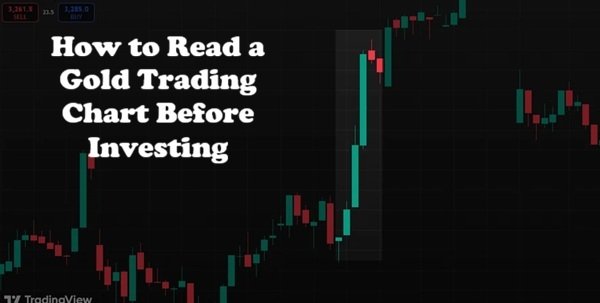
Candlestick charts show opening, closing, high, and low prices during a selected period. They help traders examine price behaviour and potential changes in momentum.
Support and resistance identify price areas where buying or selling pressure has previously influenced the market.
Moving averages smooth price fluctuations and help traders assess broader trends.
Relative Strength Index (RSI) measures recent price momentum and can help identify conditions commonly described as overbought or oversold.
These tools do not guarantee accurate predictions. A bullish signal in gold or silver can fail when market conditions change. Traders should combine technical analysis with broader economic information and a clear risk-management plan.
Both Metals Can Be Traded Through Different Financial Products
Gold and silver can be accessed through several investment and trading products, although availability varies by jurisdiction.
Investors may purchase physical bars or coins, while exchange-traded funds can provide exposure to metal prices without requiring direct storage of the physical metal. In India, eligible investors can also access listed precious-metal products through the relevant exchanges and brokers.
More experienced traders may use futures contracts or other derivatives to speculate on price movements or manage existing exposure.
Each product has different costs and risks. Physical metals may involve storage, insurance, purity verification, and dealer spreads. ETFs have fund-related expenses and market-price risks. Futures involve margin requirements, expiry dates, and leverage, which can magnify losses.
Before choosing a product, investors should understand how its price relates to the underlying metal and what fees or obligations apply.
Both Markets Offer Opportunities but Carry Significant Risks
Gold and silver prices can fluctuate sharply in response to economic announcements, changes in interest-rate expectations, geopolitical events, and shifts in investor positioning.
This volatility can create trading opportunities, but it can also produce losses. Silver can sometimes experience larger percentage price movements than gold, partly because its market is smaller and industrial demand plays a significant role. However, relative volatility changes over time, and silver is not always more volatile.
Traders should avoid assuming that either metal is safe for short-term speculation simply because it is considered a precious metal.
Risk-management techniques such as sensible position sizing, predefined exit rules, and limits on total exposure can help traders control the amount they put at risk. Stop-loss orders can be useful, but they do not guarantee an exact exit price during fast-moving markets.
Currency Movements Matter for Indian Traders
International gold and silver prices are generally quoted in US dollars, while Indian buyers and traders deal in rupees.
Consequently, the USD/INR exchange rate can influence domestic prices. If the rupee weakens against the dollar, Indian gold and silver prices may rise even when international prices remain relatively stable. A stronger rupee can have the opposite effect, all else being equal.
Domestic prices can also reflect import-related costs, taxes, local demand, and product-specific factors. Exchange-traded futures may differ from immediate physical-market prices because of contract expiry, carrying costs, and market conditions.
Indian traders should therefore examine both international metal prices and relevant domestic factors rather than relying on a global chart alone.
Diversification and Portfolio Planning
Gold and silver are often discussed as potential diversification assets because their performance can differ from that of stocks and bonds. However, neither metal guarantees protection during every market downturn.
Their prices can fall during periods of financial stress, and their relationship with other assets can change over time. Holding both metals also does not necessarily provide substantial diversification because their prices can move in the same direction.
Investors should consider their financial goals, investment horizon, liquidity needs, and tolerance for price fluctuations before deciding how much exposure to precious metals is appropriate.
Conclusion
Gold and silver trading share several important characteristics. Both metals respond to global economic developments, currency movements, supply and demand, and investor sentiment. Traders can analyse both using technical indicators, access them through different financial products, and apply similar risk-management principles.
However, the metals are not interchangeable. Silver’s industrial applications and changing demand conditions can make its price behaviour different from gold’s, while currency movements and product-specific costs also influence returns.
Understanding these similarities and differences can help traders make more informed decisions. Rather than assuming that precious metals always rise during uncertainty, evaluate market conditions carefully and manage risk before entering a trade.
Frequently Asked Questions
Q. Are gold and silver trading based on the same principles?
Many principles are similar, including technical analysis, supply-and-demand analysis, order execution, and risk management. However, each metal has distinct market characteristics.
Q. Is silver more volatile than gold?
Silver often experiences larger percentage price movements than gold, but this is not guaranteed in every period. Volatility depends on market conditions, liquidity, and economic developments.
Q. Do gold and silver prices move together?
They often move in the same direction because they share some economic influences, but their prices can diverge. Industrial demand, investor positioning, and changes in market sentiment can affect each metal differently.
Q. Can beginners trade both gold and silver?
Beginners can study both markets, but they should understand the risks and financial products involved before committing real money. Simulated trading can help develop basic skills without risking capital.
Q. How does the US dollar affect gold and silver prices in India?
Because international prices are commonly quoted in dollars, changes in the USD/INR exchange rate can affect Indian prices. A weaker rupee may increase domestic prices, all else being equal.
Q. Which is better for trading, gold or silver?
Neither is universally better. Gold may suit traders seeking exposure to a widely followed precious metal, while silver offers exposure to both investment and industrial demand. The choice depends on strategy, costs, volatility, and risk tolerance.